The EU extends sanctions against Belarus for crypto services, drone components, and new sources of income.
Liviu Brăteanu


EU
Foto: Pixabay

Always see our news on Google
The European Union has expanded sanctions against Belarus through new restrictions on materials and equipment that can support military production, new bans on imports that bring revenue to the Belarusian economy, and stricter rules for crypto services. The measures respond to Belarus's ongoing involvement in Russia's war against Ukraine, including the use of Belarusian territory for the attack that began in February 2022 and the subsequent support provided to Moscow.
In short, the EU adds to the list of restricted exports nickel powders and alloys, beryllium powders, materials for the aerospace industry, and equipment used for operating, jamming, launching, and controlling drones. New restrictions on imports from Belarus are introduced, including copper, nickel, lead ores, and precious metals, unrefined zinc, certain chemicals, glass articles, and auto components. From August 25, 2026, Belarusian citizens and residents will no longer be able to hold, control, or occupy management positions in any EU company that provides services related to crypto assets. Some contracts concluded before July 24, 2026, for newly restricted products can be executed until October 25, to allow the completion of already assumed commercial obligations. The EU retains the possibility of authorizing certain equipment and services intended for civilian electronic communications networks, to avoid affecting the internet infrastructure used by the population in Belarus.
A central part of the new sanctions concerns products that can contribute to the military and technological capacity development of Belarus. The expanded list includes materials used in aviation, the aerospace industry, drone production, and other defense systems.
These include powders, metals, and nickel alloys used to create corrosion-resistant coatings in jet engines. Beryllium powders, which can be used in fuels for propulsion systems and in high-performance alloys, are also included.
The restrictions also cover foils, tapes, and self-adhesive sheets used in the aerospace and defense sectors. These products may appear to be ordinary industrial materials, but their technical properties can make them useful in manufacturing, insulating, or protecting components intended for aircraft and military equipment.
Another category concerns equipment directly related to drones. The EU restricts Belarus's access to ground support facilities, jamming and interception systems, launch equipment, servomotors, and systems that can stop the flight of drones or missiles.
Servomotors are components that convert electronic commands into precise mechanical movements. They can control flight surfaces, direction, or other mechanisms of a drone. Jamming and interception equipment can be used to disrupt communications, navigation, or remote control.
The inclusion of these products does not mean that each of them has exclusively military use. Some may also have civilian applications, but they are restricted because they can contribute to the development or production of military systems or can be used in the defense and security sector.
European operators can no longer sell, supply, transfer, or export the targeted products to Belarus under normal conditions. The restrictions may also cover technical assistance, financing, and other services related to the respective goods, depending on the category in which they are classified.
The measures also target the revenues obtained by Belarus through trade with the European Union. The EU expands the list of goods that can no longer be purchased or imported from Belarus, considering that these exports can provide the regime with economic resources that allow it to continue supporting Russia's war.
The new restrictions cover copper, nickel, and lead ores, as well as ores containing precious metals. Unrefined zinc and alkaline-earth metals are also included, a category that encompasses elements used in various industrial and chemical processes.
The bans also include certain inorganic chemicals, such as zinc oxides and chromium oxides. These can be used in industrial production, including in pigments, coatings, material treatment, and other technical applications.
Other targeted products are tall oil, obtained as a by-product in the pulp industry, several categories of glass articles, and certain parts and components for vehicles. The legal list identifies the products by the customs codes used in European trade.
The bans do not apply retroactively to all contracts already concluded. For some of the newly added products, contracts signed before July 24, 2026, and the auxiliary contracts necessary for their execution can continue until October 25, 2026.
This period allows operators to fulfill commercial obligations assumed before the introduction of the new restrictions. After the deadline, the continuation of the contract will no longer be allowed solely because it was signed before the sanctions.
The transition exception does not automatically apply to any commercial relationship with Belarus. The contract must concern the products for which the completion period was provided and must have been signed before the established date.
European companies must check the customs code of the product, the date of the contract, and the nature of the auxiliary obligations. A new order, an extension, or a substantial modification after the sanctions come into effect is not automatically protected by the transition period.
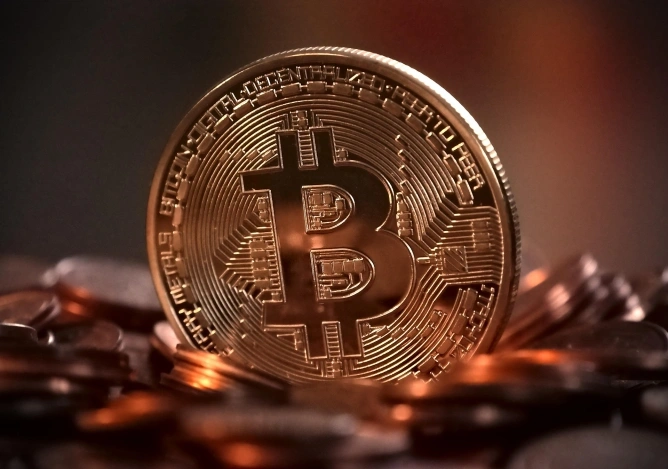
The package also changes the rules for companies providing services related to crypto assets in the European Union. Belarusian citizens and persons residing in Belarus were already prohibited from holding, controlling, or managing European companies that provide wallet, account, or custody services for crypto assets.
From August 25, 2026, the ban extends to all other services related to crypto assets defined by European legislation. This means that the rule will no longer be limited to holding digital assets in the name of clients.
Crypto services can include operating trading platforms, exchanging between crypto assets and regular currencies, exchanging between different crypto assets, executing orders, placing assets, transfers, and consulting in the field.
The ban concerns ownership, control, and functions in the governing bodies of companies registered under the legislation of a member state. A Belarusian citizen or resident cannot circumvent the rule through indirect participation or through a structure that retains effective control over the company.
The measure does not represent a general ban for Belarusian citizens to use any crypto service in the Union. The provided text concerns their position as owners, persons who control the company, or members of the management of service providers.
The rules include exceptions for individuals who hold citizenship of a member state, a state in the European Economic Area, or Switzerland. Individuals who hold a temporary or permanent residence permit in one of these states are also exempt.
Another component concerns the civilian electronic communications infrastructure in Belarus. The EU allows national authorities to authorize the export of certain equipment and the provision of associated technical or financial assistance when they are intended for non-military use and a non-military beneficiary.
The equipment must be intended for civilian electronic communications networks. For some exceptions, the network cannot belong to a publicly controlled entity or be owned in proportion of more than 50% by the state.
The purpose of this exemption is to maintain the goods and services necessary for the functioning of the internet infrastructure available to the population. It seeks to avoid a situation where sanctions against the regime and its strategic sectors would reduce ordinary citizens' access to communications.
The possibility of authorization does not mean that the respective exports are automatically permitted. The competent authority must verify the civilian use, the final beneficiary, and the destination of the equipment before granting approval.
If the network is controlled by a public entity or has a state participation of over 50%, some of the exemptions provided for civilian infrastructure cannot be used. This limit aims to prevent the transfer of equipment to structures controlled by Belarusian authorities under the pretext of civilian communications.
The new measures align part of the sanctions against Belarus with the restrictions imposed against Russia. Military and dual-use products, export revenues, and digital financial services are treated as areas where the two economies can cooperate or facilitate circumvention of the restrictions.
This alignment does not mean that the sanction regimes are identical. Belarus has a separate framework, built both around internal repression and the political situation in the country, as well as around the support provided for Russia's aggression against Ukraine.
EU companies must check not only whether the trading partner is individually sanctioned but also whether the product, service, or operation is prohibited by sectoral measures. A transaction can be blocked even if the Belarusian company does not appear on the asset freeze list.
The rules regarding exports and imports operate separately from individual sanctions. A company may not have frozen assets but may not be able to buy certain products from the EU or sell goods included on the list of prohibitions within the Union.
Operators must also check whether there are applicable authorizations, exemptions, or transition periods. The existence of an exception does not allow its extension to products, beneficiaries, or uses that are not described by legislation.
The competent authorities in member states are responsible for authorizing operations for which a derogation is permitted and for monitoring compliance with sanctions. Companies may be required to provide information about the end user, the commercial route, the ownership structure, and the purpose of the exported goods.
Belarus has allowed its territory to be used by Russian forces in the attack that began on February 24, 2022, and has continued to support Russia in the war against Ukraine. The European Union has gradually expanded sanctions against Minsk to limit its military, technological, and economic contribution.
The measures adopted on July 23, 2026, are part of the same set of decisions through which the EU has expanded sanctions against Russia. The separate regime for Belarus includes trade, financial, and technological restrictions, as well as individual designations and measures against companies that support the authorities led by Alexander Lukashenko.
In short, the EU adds to the list of restricted exports nickel powders and alloys, beryllium powders, materials for the aerospace industry, and equipment used for operating, jamming, launching, and controlling drones. New restrictions on imports from Belarus are introduced, including copper, nickel, lead ores, and precious metals, unrefined zinc, certain chemicals, glass articles, and auto components. From August 25, 2026, Belarusian citizens and residents will no longer be able to hold, control, or occupy management positions in any EU company that provides services related to crypto assets. Some contracts concluded before July 24, 2026, for newly restricted products can be executed until October 25, to allow the completion of already assumed commercial obligations. The EU retains the possibility of authorizing certain equipment and services intended for civilian electronic communications networks, to avoid affecting the internet infrastructure used by the population in Belarus.
A central part of the new sanctions concerns products that can contribute to the military and technological capacity development of Belarus. The expanded list includes materials used in aviation, the aerospace industry, drone production, and other defense systems.
These include powders, metals, and nickel alloys used to create corrosion-resistant coatings in jet engines. Beryllium powders, which can be used in fuels for propulsion systems and in high-performance alloys, are also included.
The restrictions also cover foils, tapes, and self-adhesive sheets used in the aerospace and defense sectors. These products may appear to be ordinary industrial materials, but their technical properties can make them useful in manufacturing, insulating, or protecting components intended for aircraft and military equipment.
Another category concerns equipment directly related to drones. The EU restricts Belarus's access to ground support facilities, jamming and interception systems, launch equipment, servomotors, and systems that can stop the flight of drones or missiles.
Servomotors are components that convert electronic commands into precise mechanical movements. They can control flight surfaces, direction, or other mechanisms of a drone. Jamming and interception equipment can be used to disrupt communications, navigation, or remote control.
The inclusion of these products does not mean that each of them has exclusively military use. Some may also have civilian applications, but they are restricted because they can contribute to the development or production of military systems or can be used in the defense and security sector.
European operators can no longer sell, supply, transfer, or export the targeted products to Belarus under normal conditions. The restrictions may also cover technical assistance, financing, and other services related to the respective goods, depending on the category in which they are classified.
The measures also target the revenues obtained by Belarus through trade with the European Union. The EU expands the list of goods that can no longer be purchased or imported from Belarus, considering that these exports can provide the regime with economic resources that allow it to continue supporting Russia's war.
The new restrictions cover copper, nickel, and lead ores, as well as ores containing precious metals. Unrefined zinc and alkaline-earth metals are also included, a category that encompasses elements used in various industrial and chemical processes.
The bans also include certain inorganic chemicals, such as zinc oxides and chromium oxides. These can be used in industrial production, including in pigments, coatings, material treatment, and other technical applications.
Other targeted products are tall oil, obtained as a by-product in the pulp industry, several categories of glass articles, and certain parts and components for vehicles. The legal list identifies the products by the customs codes used in European trade.
The bans do not apply retroactively to all contracts already concluded. For some of the newly added products, contracts signed before July 24, 2026, and the auxiliary contracts necessary for their execution can continue until October 25, 2026.
This period allows operators to fulfill commercial obligations assumed before the introduction of the new restrictions. After the deadline, the continuation of the contract will no longer be allowed solely because it was signed before the sanctions.
The transition exception does not automatically apply to any commercial relationship with Belarus. The contract must concern the products for which the completion period was provided and must have been signed before the established date.
European companies must check the customs code of the product, the date of the contract, and the nature of the auxiliary obligations. A new order, an extension, or a substantial modification after the sanctions come into effect is not automatically protected by the transition period.
The package also changes the rules for companies providing services related to crypto assets in the European Union. Belarusian citizens and persons residing in Belarus were already prohibited from holding, controlling, or managing European companies that provide wallet, account, or custody services for crypto assets.
From August 25, 2026, the ban extends to all other services related to crypto assets defined by European legislation. This means that the rule will no longer be limited to holding digital assets in the name of clients.
Crypto services can include operating trading platforms, exchanging between crypto assets and regular currencies, exchanging between different crypto assets, executing orders, placing assets, transfers, and consulting in the field.
The ban concerns ownership, control, and functions in the governing bodies of companies registered under the legislation of a member state. A Belarusian citizen or resident cannot circumvent the rule through indirect participation or through a structure that retains effective control over the company.
The measure does not represent a general ban for Belarusian citizens to use any crypto service in the Union. The provided text concerns their position as owners, persons who control the company, or members of the management of service providers.
The rules include exceptions for individuals who hold citizenship of a member state, a state in the European Economic Area, or Switzerland. Individuals who hold a temporary or permanent residence permit in one of these states are also exempt.
Another component concerns the civilian electronic communications infrastructure in Belarus. The EU allows national authorities to authorize the export of certain equipment and the provision of associated technical or financial assistance when they are intended for non-military use and a non-military beneficiary.
The equipment must be intended for civilian electronic communications networks. For some exceptions, the network cannot belong to a publicly controlled entity or be owned in proportion of more than 50% by the state.
The purpose of this exemption is to maintain the goods and services necessary for the functioning of the internet infrastructure available to the population. It seeks to avoid a situation where sanctions against the regime and its strategic sectors would reduce ordinary citizens' access to communications.
The possibility of authorization does not mean that the respective exports are automatically permitted. The competent authority must verify the civilian use, the final beneficiary, and the destination of the equipment before granting approval.
If the network is controlled by a public entity or has a state participation of over 50%, some of the exemptions provided for civilian infrastructure cannot be used. This limit aims to prevent the transfer of equipment to structures controlled by Belarusian authorities under the pretext of civilian communications.
The new measures align part of the sanctions against Belarus with the restrictions imposed against Russia. Military and dual-use products, export revenues, and digital financial services are treated as areas where the two economies can cooperate or facilitate circumvention of the restrictions.
This alignment does not mean that the sanction regimes are identical. Belarus has a separate framework, built both around internal repression and the political situation in the country, as well as around the support provided for Russia's aggression against Ukraine.
EU companies must check not only whether the trading partner is individually sanctioned but also whether the product, service, or operation is prohibited by sectoral measures. A transaction can be blocked even if the Belarusian company does not appear on the asset freeze list.
The rules regarding exports and imports operate separately from individual sanctions. A company may not have frozen assets but may not be able to buy certain products from the EU or sell goods included on the list of prohibitions within the Union.
Operators must also check whether there are applicable authorizations, exemptions, or transition periods. The existence of an exception does not allow its extension to products, beneficiaries, or uses that are not described by legislation.
The competent authorities in member states are responsible for authorizing operations for which a derogation is permitted and for monitoring compliance with sanctions. Companies may be required to provide information about the end user, the commercial route, the ownership structure, and the purpose of the exported goods.
Belarus has allowed its territory to be used by Russian forces in the attack that began on February 24, 2022, and has continued to support Russia in the war against Ukraine. The European Union has gradually expanded sanctions against Minsk to limit its military, technological, and economic contribution.
The measures adopted on July 23, 2026, are part of the same set of decisions through which the EU has expanded sanctions against Russia. The separate regime for Belarus includes trade, financial, and technological restrictions, as well as individual designations and measures against companies that support the authorities led by Alexander Lukashenko.

Latest News
00:32
Aleksandar Vucic acknowledges the student opposition’s victory in Serbia’s snap election
22:56
Germany will participate with aircraft in the first military exercise of the Coalition of the Willing for Ukraine, which will also partly take place in Romania
22:37
Alexandru Nazare, on the audit requested by Sorin Grindeanu at all ministries: “There is absolutely no problem, it is actually a joy”
22:23
Traian Băsescu claims that Sorin Grindeanu will control the government through Marian Neacșu, while Prime Minister Luca Niculescu could become the target of criticism
22:09
Tens of thousands of Czechs protested in Prague against the reform of public media funding
See more news
NEWS ON THE SAME TOPICS




Personalized news feed, AI-powered search, and notifications in a more interactive experience.