ECB keeps the deposit rate at 2.50% and warns that more expensive energy threatens prices and economic growth




Always see our news on Google
The European Central Bank keeps the three key interest rates unchanged after the September hike. Euro area annual inflation reached 3.8%, but the bank does not yet see a significant wage response to the energy shock and does not promise a specific decision for December.
The European Central Bank kept the deposit facility rate at 2.50% on Thursday, October 29, in an economy where rising energy prices are pushing inflation up, while more expensive financing risks slowing activity. The Governing Council also kept the other two rates unchanged, at 2.65% for main refinancing operations and 2.90% for the marginal lending facility, without announcing in advance the direction of the next decision.
In brief
1.The three ECB interest rates remain at 2.50%, 2.65% and 2.90%. These are the levels that took effect on September 16, following a 0.25 percentage-point increase.
2.Euro area annual inflation rose from 3.2% in August to 3.8% in September. Energy prices were 18.9% higher than a year earlier, not 18.9% higher than in August.
3.The ECB warns that a broader and more prolonged energy shock could push inflation up and reduce growth. Core inflation, however, remained broadly stable, and wages do not yet show a significant response to the shock.
4.Banks tightened lending standards for companies in the third quarter. Demand for housing loans fell sharply, although approval standards for this category remained broadly unchanged.
5.The next monetary policy decision is scheduled for December 17. The ECB will decide based on the data, without promising either an increase or a reduction in interest rates.
The October pause leaves in place the increase decided on September 10 and implemented six days later. At that time, the bank raised all three rates by 25 basis points. Keeping them unchanged now does not cancel that tightening, nor does it in itself indicate that the next move will be a reduction.
The difficulty for the ECB stems from the different effects of the same price increase. More expensive energy directly increases bills and production costs, but it also reduces the money households have left for other purchases. If companies pass these costs on to prices, inflationary pressure may spread; if demand weakens, economic activity may lose momentum.
Eurostat data for September show annual inflation of 3.8% in the euro area, compared with 3.2% in August. The energy component reached 18.9%, up from 14.3% in the previous month. These percentages compare prices with those in the same month of the previous year. They do not measure a monthly price increase of the same magnitude.
The ECB states that energy exceeded the path anticipated in its September projections. The bank expects this to raise inflation in the short term and keep it well above the 2% target in the coming quarters. The subsequent return toward the target depends, among other things, on a decline in energy inflation and the effects of higher interest rates.
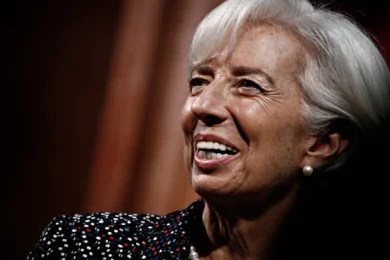
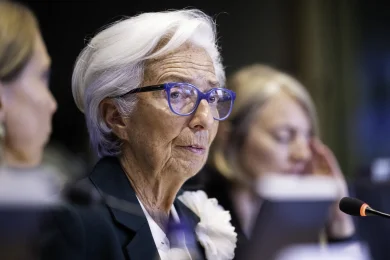
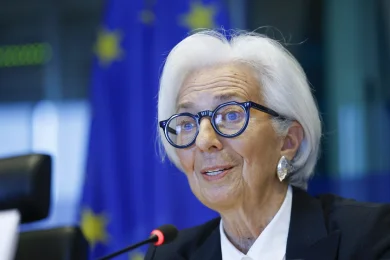
However, the bank distinguishes higher energy prices from the emergence of a price-wage spiral. Core inflation indicators have remained broadly stable, and wage pressures are moderate. At the press conference, Christine Lagarde explained that the ECB is closely monitoring second-round effects, without so far observing a significant additional risk beyond that included in the September projections.
Nor is the growth outlook presented as an already established recession. Available data suggest that the euro area economy continued to expand in the third quarter, supported by a recovery in services, investment related to artificial intelligence, and public spending on infrastructure and defence. By contrast, higher energy and financing costs are weighing on confidence and may restrain demand.
Financial conditions have tightened since the previous meeting, according to the ECB. Its bank lending survey shows more restrictive standards for loans to companies and a decline in their demand. For real estate loans, demand fell sharply amid higher interest rates, although approval standards remained unchanged in net terms. Approval standards and the actual price of a loan are different things.
This transmission through lending is one of the channels through which monetary policy can reduce pressure on prices, but also investment and consumption. It does not mean that every borrower pays one of the ECB's three interest rates. Rates on loans offered by commercial banks also depend on the contract, maturity and the customer's risk.
The ECB maintains a meeting-by-meeting approach, based on the inflation outlook, economic data and the way interest rates are transmitted through the economy. The December 17 meeting will bring a new assessment. The October decision keeps the cost of money at its existing level, leaving the response to the evolution of the energy shock open.
Latest News
21:51
21:38
21:38
21:26
21:13
See more news
NEWS ON THE SAME TOPICS


.webp)