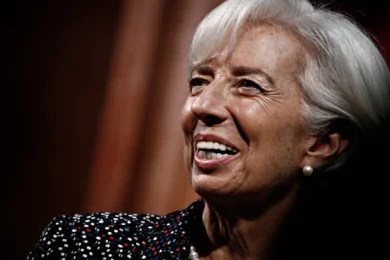
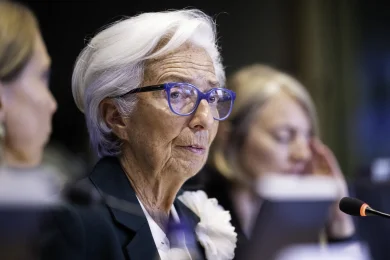
Lagarde warns that inflation will remain high in the euro area, but the ECB sees no more-than-anticipated second-round effects



Always see our news on Google
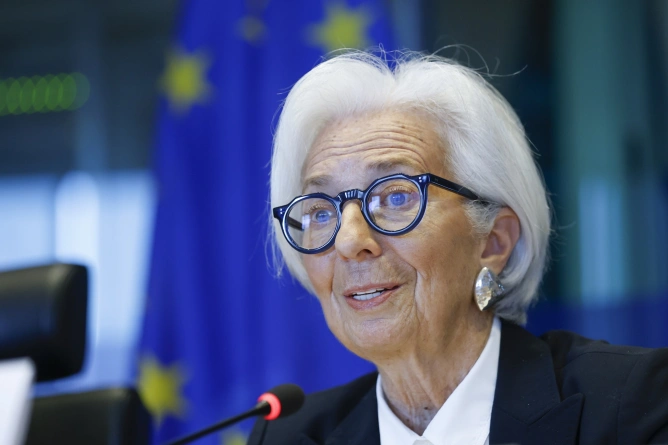
Euro area inflation will remain high in the coming quarters amid rising energy prices, warns European Central Bank President Christine Lagarde. In an interview with the Japanese daily Yomiuri Shimbun, conducted on November 4 and published on November 7, she says that the ECB does not currently see spillover effects beyond those included in its projections. The duration of the energy shock remains essential for decisions on interest rates, which the institution will make based on data, from one meeting to the next.
In brief
1.Eurostat’s flash estimate indicates annual inflation of 4% in the euro area in October 2026, up from 3.8% in September. Energy prices rose by 20.8% year on year, while core inflation remained at 2.5%.
2.Lagarde says the ECB is not observing spillover effects beyond those anticipated, but is monitoring wage agreements and companies’ expectations. Detailed data will show whether higher service prices mainly reflect energy costs or a broader pass-through of price pressures.
3.The ECB kept interest rates unchanged on October 29. The December projections will assess the effects of more expensive energy on futures markets and of higher long-term interest rates; Lagarde does not announce the next monetary policy decision in advance.
4.The ECB president warns that highly indebted countries are more vulnerable to rising financing costs. She does not rule out any of the bank’s instruments, but the use of each depends on the applicable criteria and the decision of the Governing Council.
5.Lagarde, who will leave office on February 7, 2027, wants to intervene more freely in public debates, but says she does not plan to run for the presidency of France. She also calls for cooperation among central banks against cyberattacks amplified by artificial intelligence.
The warning starts with Eurostat’s flash estimate for October: annual inflation of 4% exceeds the ECB’s 2% medium-term target and is higher than the bank expected a few months ago. Energy plays a decisive role, with the annual rate of price increases rising from 18.9% in September to 20.8% in October. Lagarde attributes the pressure to the conflict in the Middle East and reduced global refining capacity. The pace of food price increases also accelerated.
Beyond the headline index, the picture is more stable. Core inflation, which excludes energy, food, alcohol and tobacco, remained at 2.5%, while services inflation rose from 3.2% to 3.3%. Lagarde says the latter development is within the range observed over the past four months. At the time of the interview, the ECB was awaiting detailed data to determine whether higher service prices mainly stemmed from highly energy-intensive activities, such as transport, or indicated more widespread indirect effects.
The bank separately monitors spillover effects, which can arise when initial price increases influence wages and, subsequently, the prices charged by companies. Multi-year wage agreements and companies’ wage expectations do not currently show a change beyond the assumptions already included in the projections, Lagarde explains. This finding does not mean that the energy shock has no effects on the economy or that the risk has disappeared: the longer inflation remains higher and more persistent, the greater the risk to returning to the 2% target.
The new projections will have to take into account changes that have occurred since the September assessment, when the ECB estimated average inflation at 3% in 2026, 2.5% in 2027 and 2.1% in 2028. Energy price curves in futures markets have risen, although oil has become cheaper more recently, and long-term interest rates have increased. These developments affect both inflation and economic activity. Lagarde does not anticipate the direction of the revisions before the forecasting exercise is completed.
At the October 29 meeting, the Governing Council kept the three key interest rates unchanged: 2.50% for the deposit facility, 2.65% for main refinancing operations and 2.90% for the marginal lending facility. The ECB warned that a more intense and prolonged energy shock could raise inflation and reduce economic growth, while tighter financing conditions could dampen both activity and price pressures. In the interview, Lagarde avoids announcing what the bank will decide in December and states that, based on the available information, significant changes would be needed to alter the direction she anticipates.
Caution also reflects the experience of 2021–2022. Lagarde acknowledges that central banks initially regarded the supply shock and the resulting inflation as transitory. The reopening of economies after the pandemic, however, also generated a demand shock, supported by consumers spending their accumulated savings. In retrospect, the initial assessment was wrong, she says. The lesson cited is the need to assess simultaneously the factors affecting supply and demand, in an environment marked by trade and geopolitical disruptions that are difficult to anticipate.
In her assessment, the rise in long-term interest rates is a global phenomenon. It is driven by inflation fueled by geopolitical tensions, large public debt issuance and competition for financing between governments and technology companies investing in artificial intelligence. European countries with high debt are more sensitive to additional costs, which is why Lagarde insists on compliance with the EU’s fiscal rules.
Asked whether the ECB would use the Transmission Protection Instrument, Lagarde does not rule out any instrument in advance. It is available to counter disorderly and unjustified market developments that seriously threaten the transmission of monetary policy in the euro area. The use of the instruments, however, depends on specific criteria and conditions, as well as on the assessment of the Governing Council. The answer does not constitute an announcement of activation.
The interview also provides explanations about her departure from the ECB, announced for February 7, 2027. Lagarde wants to speak more freely in defense of the rule of law and international cooperation and to participate in the debate ahead of the French presidential election. She says she does not plan to run herself. Leading the World Economic Forum remains one of the options for the future, with no decision having been made.
Regarding financial stability, Lagarde warns that artificial intelligence makes cyberattacks more dangerous and increases the importance of defense and institutional cooperation. Central banks depend on one another and must jointly prepare a response to potential attacks, including through the Financial Stability Board and the Bank for International Settlements. She explicitly includes the Bank of Japan in this cooperation.
The ECB’s next monetary policy meeting will take place on December 16–17, with the decision and press conference announced on the second day. Until then, the bank is monitoring whether the persistence of rising energy prices changes the inflation outlook and wage behavior, without committing in advance to a particular interest-rate path.

Latest News
18:58
18:50
18:30
18:25
18:19
See more news
NEWS ON THE SAME TOPICS