EASA updates the order for Airbus A320 aircraft following the JetBlue incident with an uncommanded descent
2eu.brussels


EU
Foto: 2eu.brussels

Always see our news on Google
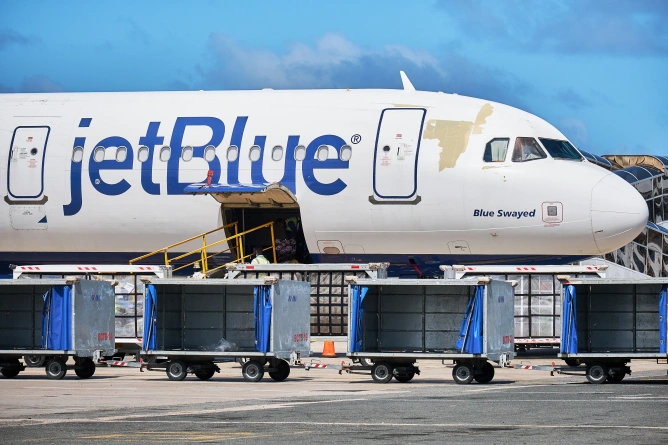
The European Union Aviation Safety Agency has issued a new airworthiness directive for certain Airbus A319, A320, and A321 aircraft, following the incident that occurred on JetBlue flight 1230 on October 30, 2025. Directive 2026-0134 replaces the emergency order issued on November 28, 2025, and clarifies how operators should address the issue identified in one of the aircraft's flight control computers.
In short, EASA has updated the safety measure for certain Airbus A319, A320, and A321 aircraft, following the JetBlue 1230 incident on October 30, 2025. In that incident, an Airbus A320 experienced an uncommanded limited descent; the autopilot remained engaged, and the altitude loss was brief and limited. Airbus's preliminary assessment indicated a malfunctioning ELAC computer, part of the flight control system, as a possible contributing factor. EASA states that, in the worst-case scenario, the issue could lead to uncommanded elevator movement and exceed the aircraft's structural capacity. The 2025 emergency directive required the replacement or modification of the affected computer before the next flight; the new 2026 directive maintains this requirement but clarifies the targeted parts, Airbus documents, and accepted compliance methods.
The EASA directive targets Airbus A319, A320, and A321 models, including CEO and NEO variants, for all serial numbers listed in the document. It applies to aircraft that had, as of November 29, 2025, an affected configuration of the Elevator Aileron Computer, ELAC B L104.
ELAC is part of the flight control system. In the case analyzed by EASA, an Airbus A320 experienced a limited uncommanded descent event. The autopilot remained engaged, the altitude loss was brief and limited, and the remainder of the flight proceeded without further events. The preliminary technical assessment conducted by Airbus identified a malfunctioning affected ELAC as a possible contributing factor.
EASA indicates that if this situation is not corrected, in the worst-case scenario, uncommanded elevator movement could occur, potentially leading to exceeding the aircraft's structural capacity. For this reason, the 2025 emergency order required the installation of a serviceable ELAC and prohibited the installation of the affected computer on the targeted aircraft.
The new directive does not change the nature of the safety issue. It maintains the requirements of the emergency order but updates the definitions for affected ELAC and serviceable ELAC, clarifies the requirements for updating the Aircraft Flight Manual, and adds additional requirements regarding the installation of parts.
In its updated form, the affected ELAC is defined as ELAC B L104 in two configurations: Part Number 3945129118, for the data loadable variant, and Part Number 3945128224, for the non-data loadable variant. Serviceable ELAC includes ELAC B L103+ in the configurations indicated by EASA or any subsequent ELAC eligible for installation according to Airbus instructions, provided it is not an affected ELAC.
For Group 1 aircraft, the main requirement remains the replacement or modification of each affected ELAC. The directive specifies that this action must be completed before the next flight after the effective date of the 2025 emergency directive, that is, November 29, 2025. A repositioning flight was allowed, up to three flight cycles, without passengers and non-ETOPS, to move the aircraft to a location where the work could be done.
After modification, Group 1 aircraft can no longer receive an affected ELAC. For Group 2 aircraft, the directive prohibits their modification to a Group 1 configuration starting from November 29, 2025.
The new directive also introduces additional compliance paths. Modifying an aircraft according to Airbus Service Bulletin A320-27-1315, A320-27-1316, or A320-27-1317 is accepted as a method of compliance. EASA also accepts the installation of a serviceable ELAC according to Airbus-approved instructions.
Operators of Group 1 aircraft must update the Aircraft Flight Manual within seven days of the entry into force of directive 2026-0134, depending on the aircraft configuration and the instructions in Airbus Flight Operations Transmission 999.0073/25.
Directive 2026-0134 comes into effect on July 22, 2026. The document was initially published for consultation as PAD 26-050, between April 16 and April 30, 2026. EASA states that it may approve alternative compliance methods if they are requested and justified accordingly.
The airworthiness directive is a mandatory safety instrument. An aircraft to which such a directive applies cannot be operated unless it complies with the requirements of the document or unless the competent authority has approved a deviation. In this case, EASA is addressing a technical issue identified in a family of aircraft widely used in European and global air transport.
In short, EASA has updated the safety measure for certain Airbus A319, A320, and A321 aircraft, following the JetBlue 1230 incident on October 30, 2025. In that incident, an Airbus A320 experienced an uncommanded limited descent; the autopilot remained engaged, and the altitude loss was brief and limited. Airbus's preliminary assessment indicated a malfunctioning ELAC computer, part of the flight control system, as a possible contributing factor. EASA states that, in the worst-case scenario, the issue could lead to uncommanded elevator movement and exceed the aircraft's structural capacity. The 2025 emergency directive required the replacement or modification of the affected computer before the next flight; the new 2026 directive maintains this requirement but clarifies the targeted parts, Airbus documents, and accepted compliance methods.
The EASA directive targets Airbus A319, A320, and A321 models, including CEO and NEO variants, for all serial numbers listed in the document. It applies to aircraft that had, as of November 29, 2025, an affected configuration of the Elevator Aileron Computer, ELAC B L104.
ELAC is part of the flight control system. In the case analyzed by EASA, an Airbus A320 experienced a limited uncommanded descent event. The autopilot remained engaged, the altitude loss was brief and limited, and the remainder of the flight proceeded without further events. The preliminary technical assessment conducted by Airbus identified a malfunctioning affected ELAC as a possible contributing factor.
EASA indicates that if this situation is not corrected, in the worst-case scenario, uncommanded elevator movement could occur, potentially leading to exceeding the aircraft's structural capacity. For this reason, the 2025 emergency order required the installation of a serviceable ELAC and prohibited the installation of the affected computer on the targeted aircraft.
The new directive does not change the nature of the safety issue. It maintains the requirements of the emergency order but updates the definitions for affected ELAC and serviceable ELAC, clarifies the requirements for updating the Aircraft Flight Manual, and adds additional requirements regarding the installation of parts.
In its updated form, the affected ELAC is defined as ELAC B L104 in two configurations: Part Number 3945129118, for the data loadable variant, and Part Number 3945128224, for the non-data loadable variant. Serviceable ELAC includes ELAC B L103+ in the configurations indicated by EASA or any subsequent ELAC eligible for installation according to Airbus instructions, provided it is not an affected ELAC.
For Group 1 aircraft, the main requirement remains the replacement or modification of each affected ELAC. The directive specifies that this action must be completed before the next flight after the effective date of the 2025 emergency directive, that is, November 29, 2025. A repositioning flight was allowed, up to three flight cycles, without passengers and non-ETOPS, to move the aircraft to a location where the work could be done.
After modification, Group 1 aircraft can no longer receive an affected ELAC. For Group 2 aircraft, the directive prohibits their modification to a Group 1 configuration starting from November 29, 2025.
The new directive also introduces additional compliance paths. Modifying an aircraft according to Airbus Service Bulletin A320-27-1315, A320-27-1316, or A320-27-1317 is accepted as a method of compliance. EASA also accepts the installation of a serviceable ELAC according to Airbus-approved instructions.
Operators of Group 1 aircraft must update the Aircraft Flight Manual within seven days of the entry into force of directive 2026-0134, depending on the aircraft configuration and the instructions in Airbus Flight Operations Transmission 999.0073/25.
Directive 2026-0134 comes into effect on July 22, 2026. The document was initially published for consultation as PAD 26-050, between April 16 and April 30, 2026. EASA states that it may approve alternative compliance methods if they are requested and justified accordingly.
The airworthiness directive is a mandatory safety instrument. An aircraft to which such a directive applies cannot be operated unless it complies with the requirements of the document or unless the competent authority has approved a deviation. In this case, EASA is addressing a technical issue identified in a family of aircraft widely used in European and global air transport.

Latest News
22:23
Dominic Fritz warns that a technocratic government without a parliamentary majority would become the target of criticism and political deadlock
22:11
The Emmy Awards are moving to Amazon Prime Video in 2027, in a historic shift for the ceremony broadcast for decades by American television networks
22:10
George Simion admitted on TVR that he does not know how Călin Georgescu makes a living, although he says he has a close relationship with him
21:56
SNSPA launches center for youth addictions / New structure to develop prevention and reintegration policies
21:50
Emmanuel Macron calls a crisis meeting after protests over education conditions spread
See more news
NEWS ON THE SAME TOPICS





Personalized news feed, AI-powered search, and notifications in a more interactive experience.