


COP17 Presidency launches platform to help countries recognize conserved areas outside protected areas



Always see our news on Google
Armenia’s presidency of the UN biodiversity conference COP17 launched a platform in Yerevan on October 28 designed to help countries identify and assess areas where nature is conserved over the long term, even though they do not have protected-area status. The initiative aims to make recognition of these territories and their contribution to the global 2030 conservation target more consistent.
In brief, Armenia’s COP17 presidency launched a platform on October 28 intended to help countries identify, assess and report areas effectively conserved outside protected areas. The initiative is led by Armenia together with the Secretariat of the Convention on Biological Diversity, FAO and IUCN. The announced support includes coordinating expertise, exchanges among specialists and technical assistance. The platform supports the global target of conserving at least 30% of land areas and inland waters and at least 30% of marine and coastal areas by 2030. Agricultural, forest or marine areas can contribute only if they meet the criteria for long-term conservation. Recognition must respect the rights and participation of the communities that manage them. The launch does not automatically recognize new conserved areas and, according to the COP17 presidency, does not seek to create new obligations. No budget was announced; the results will depend on assessment, management and monitoring.
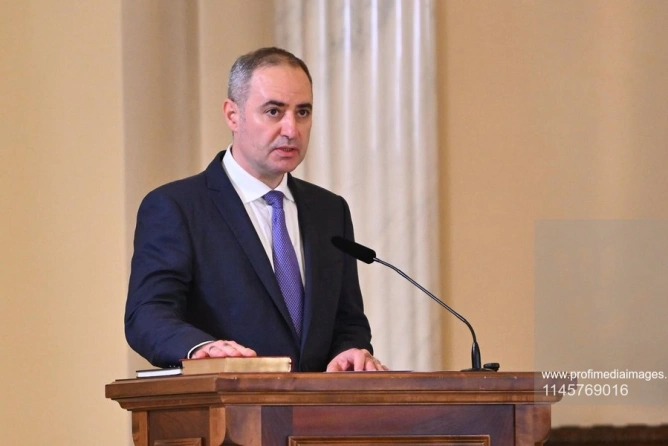
Called the Yerevan Global OECM Action Hub, the platform is led by Armenia in cooperation with the Secretariat of the Convention on Biological Diversity, the Food and Agriculture Organization of the United Nations (FAO) and the International Union for Conservation of Nature (IUCN). Hambardzum Matevosyan, Armenia’s environment minister and COP17 president, invited countries and interested partners to participate in the initiative, which emphasizes expertise, experience-sharing and technical assistance.
The aim is to recognize conservation results that also exist outside national parks or reserves. Within the Convention, such areas are known as OECMs, after the English term Other Effective Area-based Conservation Measures. Their definition and criteria were adopted in 2018. They are geographically defined areas outside protected areas whose governance delivers positive and sustained outcomes for biodiversity, conserving species and habitats in their natural settings. Conservation may be the primary or secondary objective, or a result of management for other purposes.
A territory managed by a community for the sustainable use of resources could meet these criteria without becoming a national park. It is not enough, however, for it to have trees, be managed using traditional methods or restrict certain economic activities. The assessment must show what biodiversity it conserves, who is responsible for management and how the results can be maintained over time. The distinction matters so that reported areas reflect actual conservation, rather than merely a change in administrative labeling.
Identifying and reporting these areas is precisely where difficulties arise. According to IUCN, countries use methods that are not always comparable and face conceptual, technical and institutional constraints. The platform aims to connect administrations needing support with organizations and experts able to provide it, using existing guidance, learning networks and case studies.
Assistance for countries is expected to rely on regional working groups and a repository of case studies and good practices. They form part of a structure that combines technical support with closer international coordination of guidance and assessment methods, under the political leadership of the COP17 presidency.
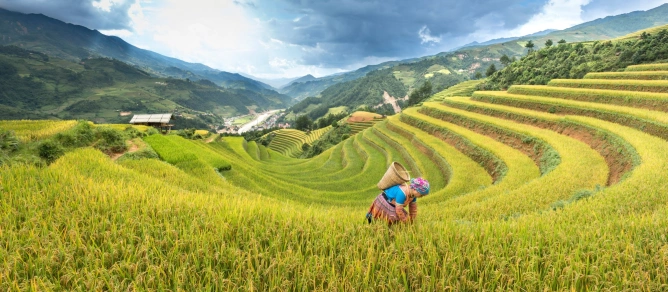
Special attention is being paid to agricultural and forest landscapes and marine areas where productive activities take place. Godfrey Magwenzi, FAO deputy director-general and chief of staff, said, according to an IUCN statement, that agrifood systems have too often remained at the margins of conservation policies, although they can help reduce biodiversity loss. FAO’s role is linked to the involvement of producers and communities that manage resources. Sustainable economic activity does not, however, automatically meet OECM criteria; recognition depends on demonstrated conservation outcomes.
The initiative supports the target known as 30x30 under the Kunming–Montreal Global Biodiversity Framework, adopted in December 2022. By 2030, the goal is to conserve and effectively manage, globally, at least 30% of land areas and inland waters and at least 30% of marine and coastal areas. The target can be met through protected areas and OECMs, with recognition of Indigenous and traditional territories where applicable. Their size is not the only consideration; ecological representativeness, habitat connectivity and equitable governance also matter. Permitted uses must be compatible with conservation.
For Indigenous peoples and local communities, recognition of an area can make their contribution to protecting nature visible, but it must respect their rights over territories and resources. The global framework provides for effective participation in decision-making, while OECM guidance includes free, prior and informed consent under applicable conditions. These safeguards are part of existing standards; they are not rules created by the new platform.
Data used to track progress are collected through Protected Planet, the World Database on Protected and Conserved Areas, WDPCA, a joint UNEP–IUCN product managed by UNEP-WCMC with support from governments and other data providers. In November 2025, the database brought together previously separate records for protected areas and OECMs. The Yerevan platform aims to improve the assessment and reporting of areas using agreed criteria, without replacing this system.
No budget for the platform was announced at the launch. Organizers presented a mechanism for cooperation and technical assistance, not a grant allocation for national projects. Matevosyan said in a statement published by IUCN that the initiative does not seek to create new obligations or replace existing initiatives. The launch does not, in itself, mean that additional areas have been recognized as conserved.
For participating countries and communities, the platform’s usefulness will depend on access to expertise and the ability to turn assessments into long-term management and monitoring. The result relevant to the 2030 target will be the preservation of biodiversity in recognized areas, not simply an increase in the area recorded in databases.
იკ,
Latest News
20:39
20:21
20:04
20:04
19:50
See more news
NEWS ON THE SAME TOPICS












.webp)


