The Commission is preparing a new SAFE round for all 27 EU member states, including those that did not initially request loans



Always see our news on Google
The European Commission will invite all 27 Member States to express their interest in a new SAFE round, including countries that did not initially request loans. Thomas Regnier put the remaining resources at just over €21 billion, following the Commission’s approval of Hungary’s plan. The call is being prepared; the regulation allows it to be launched by 31 December 2026, while financing requires the assessment of the plans and Council decisions.
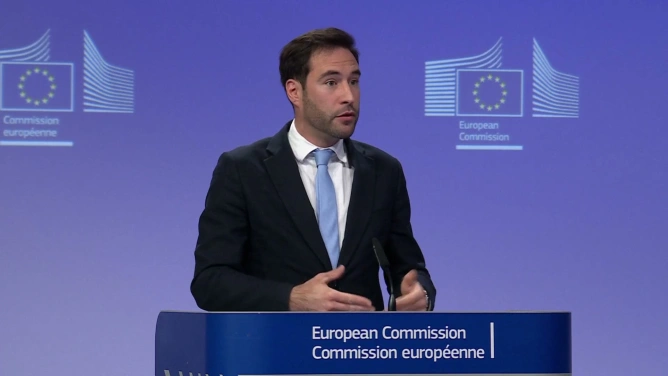
The European Commission will invite all 27 Member States to express their interest in loans from a new SAFE round, including countries that did not request funding in the first stage. Defence spokesperson Thomas Regnier said on Wednesday, 28 October, that the forthcoming call would be open to all EU countries, after the Commission completes its assessment of the initial plans. He put the remaining resources at just over €21 billion. The call is being prepared, and the financing must still go through the assessment and approval procedures.
In brief
The new SAFE round will be open to all 27 EU countries, including those that did not initially request loans, Thomas Regnier said at the Commission briefing on 28 October.
Regnier put the remaining resources at just over €21 billion. This amount is available capacity within the existing €150 billion ceiling, not additional funding added to the instrument.
The Commission will contact the countries to ask them to express their interest and will assess the plans submitted. The new call is being prepared; no allocation by country has been announced.
The Commission approved Hungary’s €5.4 billion plan, but it must also receive approval from the Council of the EU. This stage does not represent payment of the loan.
The regulation allows a new call to be launched by 31 December 2026 and requires the Council decisions to be adopted by 30 June 2027. The two dates are not deadlines for the full payment of the financing or the delivery of equipment.
SAFE provides Member States with repayable loans and primarily supports joint defence procurement. Effective access to the new round will depend on applications, eligibility and the necessary approvals.
Regnier was answering a question about whether countries that did not participate initially could request part of the available resources. His clarification concerns participation in the future call, without changing the instrument’s general conditions. In the first stage, 19 Member States requested SAFE loans; the new round would also allow the others to express their interest in funding.
According to the spokesperson’s explanation, the Commission will contact governments to inform them of the available amount. The countries will then be able to express their interest in additional loans, and the Commission will have to assess the plans submitted. Participation in the call does not guarantee that funding will be obtained: applications must comply with the SAFE regulation, within the limits of the available resources.
The announcement came after the Commission completed, that same morning, its assessment of the last national plan from the first round, Hungary’s. Regnier indicated a value of €5.4 billion for this plan and said that approval by the Council of the EU would follow. Commission-level approval therefore does not represent the completion of the loan-award procedure or the making of a payment to Budapest.
In his response about Hungary, Regnier described the resources remaining in SAFE as just over €21 billion, without specifying an exact amount for the future call. This is available lending capacity within the instrument’s existing ceiling of up to €150 billion. The new round would use this capacity, without an increase in the ceiling resulting from the announcement at the briefing.
The Commission is aiming to launch the call this year. The regulation allows a new invitation to express interest to be published by 31 December 2026, if amounts remain available after the funding decisions. This deadline concerns the opening of the procedure, not the completion of all assessments, the granting of loans or the payment of the funds by the end of the year. The Council’s implementing decisions must be adopted by 30 June 2027.
SAFE, the acronym for Security Action for Europe, was established by the regulation adopted by the Council on 27 May 2025 and provides Member States with repayable loans for defence investments. The Union raises the funding on the capital markets, while applicant countries submit plans explaining the products and activities to be funded, the estimated costs and compliance with the eligibility criteria. The Council decision is followed by loan agreements and the conditions for making payments.
The instrument primarily supports joint procurement. This involves at least one Member State benefiting from the funding and another Member State, a country of the European Free Trade Association that is part of the European Economic Area, or Ukraine. Eligible areas include ammunition and missiles, air and missile defence, drones, cybersecurity and military mobility. The aim is to aggregate orders and increase the capacity of the European defence industry.
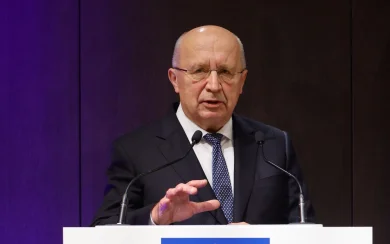
The possibility of a new round had been presented by the Commissioner for Defence and Space, Andrius Kubilius, in Paris on 26 October. In statements reported by 2EU in the article published on 27 October, he estimated the remaining resources at around €21 billion and expressed the Commission’s intention to support joint projects with Ukraine. Regnier has now explained whom the call will be addressed to and the preparation steps, following the completion of the assessment of the Hungarian plan.
For Romania, as for the other Member States, any additional funding will depend on the interest expressed, the proposed plan and the necessary approvals. The briefing does not establish a new allocation by country. The reference point for governments and industry will be the publication of the call, with the amount available and the conditions for the new stage.
Latest News
22:52
22:29
22:14
22:02
21:54
See more news
NEWS ON THE SAME TOPICS
.webp)