



The EU wants to develop the Freyja missile defense system with Ukraine and use SAFE funds left over for joint industrial projects


.webp)

Always see our news on Google
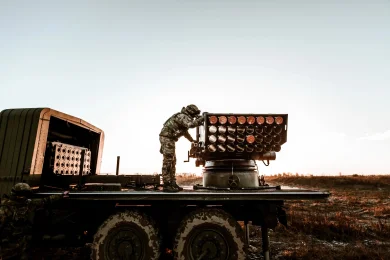
The cooperation would combine Ukrainian missiles and launchers with European technology to reduce dependence on a single supplier. Freyja is still under development, and the program announced for Ukrainian companies has no specified allocation in the speech.
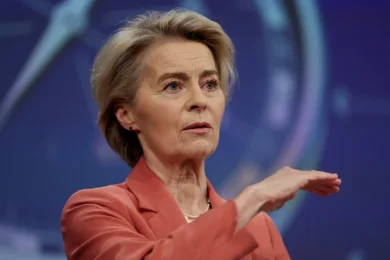
The European Union wants to develop a missile defense system together with Ukraine and use funds remaining from SAFE for a new program of joint projects with Ukrainian companies, European Commission President Ursula von der Leyen announced in her State of the Union address. The cooperation would focus on the Freyja project and aims to reduce dependence on a single supplier, alongside the urgent delivery of Patriot interceptors already approved for purchase.
In brief
Von der Leyen proposes developing with Ukraine an affordable and modular missile defense system based on Freyja. The objective is to diversify supply by combining Ukrainian expertise with European technology and production.
Freyja is a project under development, with a coalition of ten countries formed in July. Ukrainian authorities are seeking initial results by the end of 2026; this objective does not confirm the existence of an operational system.
The approved Patriot purchases are financed separately from SAFE, through the EU loan for Ukraine. The approval allows the interceptors to be purchased, without confirming their delivery.
SAFE operates through repayable loans granted to EU countries, and Ukrainian industry can participate in procurements. The new program would use funds remaining in the instrument, but the speech does not establish the allocated amount or its selection rules.
Von der Leyen proposes an affordable and modular system combining Ukraine’s combat experience and capacity for innovation with European technology and production capacity. The announced industrial program would also cover other joint projects with Ukrainian companies. The speech sets out this direction for cooperation without announcing a contract for Freyja, a dedicated budget for the system, or a date when it could be used in combat.
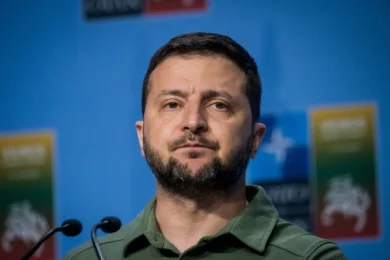
Freyja already has a structure for cooperation among states. On July 13, 2026, in Paris, ten countries, including Ukraine, France, Germany and the United Kingdom, formed a coalition for defense against ballistic missiles. At the time, Ukrainian President Volodymyr Zelensky presented Kyiv’s planned contribution and its complementarity with partners. “Others have radars and other essential components,” he said, according to an account published by the Ukrainian presidency.
At the meeting in Oslo on September 9, Zelensky said that Ukraine could develop and manufacture the interceptor missile and launcher. Representatives of companies including Fire Point, Kongsberg, Saab, Hensoldt and Thales took part. The Ukrainian side presented its progress and discussed the partners’ contributions and steps for the coming months. The cooperation thus involves bringing together industrial components and expertise to create the joint system.
The timeline remains one of development. The Ukrainian presidency indicated the objective of achieving concrete results by the end of 2026 or the beginning of 2027. Ukraine’s National Security and Defense Council refers to initial results by the end of the year. These objectives do not amount to confirmation that the system is operational or that a delivery date has been set.
Until then, financing for existing interceptors follows a separate mechanism. On September 11, the Commission approved a €6.1 billion package from the €90 billion Ukraine support loan. The package covers several military needs and allows the purchase of American PAC-3 missiles for Patriot systems through exemptions from the usual eligibility conditions. The Commission checks the contracts before releasing the funds.
For longer-term industrial cooperation, SAFE already provides a framework for joint procurements. The “Security Action for Europe” instrument can provide up to €150 billion in loans to member states, based on national defense investment plans. Beneficiary states repay the money. Ukraine can participate in procurements, and its companies can receive orders under the program’s conditions; the €150 billion ceiling does not represent a new allocation for Kyiv.
An eligible joint procurement can bring together an EU country benefiting from the loan and Ukraine. The support also aims to expand production and reduce delivery times through joint orders. This mechanism finances member states’ procurement efforts, without automatically providing research grants to participating companies.
Access to the money also involves industrial conditions. The basic rule limits to 35% the share of components originating outside the EU, Ukraine and European Free Trade Association states that are part of the European Economic Area, calculated as a share of the estimated cost of the final product’s components. For air and missile defense systems, contractors must be able to decide on the design and modification of the product without restrictions imposed by third countries or entities from those countries, including being able to replace components subject to such restrictions.
The amount intended for the new program with Ukraine remains to be specified. Euronews reports that between €10 billion and €15 billion remained unused in SAFE after some states reduced their requests. The speech does not confirm this range and does not set the program’s allocation, selection procedure or distribution of funds among projects. The Commission’s announcement also does not specify how much Freyja might receive or when systems delivered through this funding could emerge.
https://2eu.brussels/ro/news/ue-vrea-sa-dezvolte-cu-ucraina-sistemul-antiracheta-freyja-si-sa-foloseasca-fondurile-ramase-din-safe-pentru-proiecte-industriale-comune
0,Latest News
20:05
19:50
19:49
19:45
19:38
See more news
NEWS ON THE SAME TOPICS

.webp)



.webp)


