European Commission flags 164 suspected cases of agri-food fraud, including honey and Kalamata olive oil with Romania indicated as the origin



Always see our news on Google
The report for September 2026 selects 164 cross-border suspicions from 803 iRASFF notifications. Czechia reported honey with foreign alpha-amylases, while Germany reported extra virgin olive oil marketed online under the protected name Kalamata and identified as counterfeit. Romania appears in the origin field for both products. These are suspicions, not definitive investigation conclusions; the report does not identify the operators and does not announce recalls related to the two notifications.
The European Commission selected 164 cross-border suspicions of agri-food fraud for its September 2026 report, from 803 notifications recorded on the European iRASFF notification platform. Two entries indicate Romania as the origin: honey for which Czechia reported foreign alpha-amylases and extra virgin olive oil marketed online under the protected name Kalamata, reported by Germany as counterfeit. The Commission specifies that the document describes non-compliances involving suspicions of fraud, not confirmed fraud.
In brief
1. 164 suspicions were selected from 803 iRASFF notifications. The report concerns cross-border situations and does not measure the proportion of fraudulent food on the EU market.
2. Romania appears alone in the origin field for honey and Kalamata olive oil. Another notification concerning supplements marketed online mentions France and Romania together; origin information does not automatically identify the responsible producer.
3. Dietetic foods, supplements and fortified products form the largest category, with 48 reports, followed by fish and fish products, with 14, meat and meat products other than poultry, with 10, and fats and oils, with nine.
4. Market controls generated 82 reports, border controls 25, and consumer complaints 20. Company checks and media monitoring produced 14 each, while whistleblower reports produced nine.
5. For the two notifications concerning the honey and oil, the report does not publish brands, batches, quantities or the names of the operators. It does not announce product recalls or definitive sanctions related to them.
The report is published by DG SANTE, the Commission department for health and food safety. It uses information from the European Alert and Cooperation Network (ACN), which brings together the Rapid Alert System for Food and Feed (RASFF), the Administrative Assistance and Cooperation (AAC) network and the Agri-Food Fraud Network (FFN). Situations limited to a single Member State and not communicated through the network are not included. The 164 entries do not represent a general rate of food fraud or the probability that a purchased product is counterfeit.
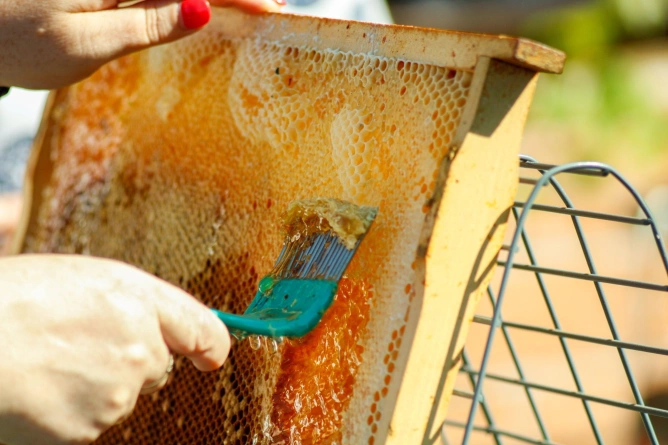
In the case of the honey, the table indicates Romania as the origin and Czechia as the notifying country. The recorded issue is the presence of foreign alpha-amylases associated with Aspergillus oryzae, in the category of adulteration through ingredient dilution. The report does not describe how the enzymes reached the product and does not establish an operator’s intent. Other notifications concerning foreign alpha-amylases concern honey associated with Spain, China, Ukraine or an unknown origin, without the document establishing a connection between the cases.
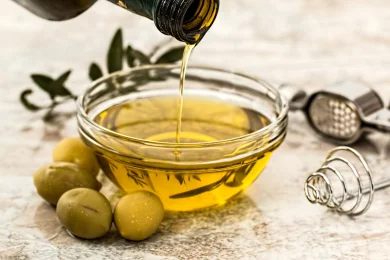
For the Kalamata extra virgin olive oil, Romania appears as the origin, while Germany is the notifying country. The entry is classified under the use of EU protected names and describes a counterfeit product marketed online. The table also contains a similar notification, also from Germany, with Denmark indicated as the origin; it does not specify whether this concerns the same trader.
Kalamata is a protected designation of origin for olive oil from the delimited area in Greece, which must comply with the product specification. Romania’s mention in the notification does not prove the actual place of manufacture and does not identify a Romanian producer. The case should not be confused with two separate entries in the report, associated with Belgium and Greece, concerning the presence of other vegetable oils, including sunflower oil. The document does not attribute such dilution to the Kalamata oil with Romania indicated as the origin.
Romania also appears alongside France in a notification sent by Germany concerning food supplements marketed online, with Hieracium pilosella extracts and pumpkin seeds, as well as claims about health effects. This is a separate entry, from the section on products or ingredients unauthorized in the EU. It does not allow the entire product or the non-compliance to be attributed to a particular Romanian operator.
By product category, dietetic foods, food supplements and fortified products total 48 reports, fish and fish products 14, meat and meat products other than poultry 10, and fats and oils nine. Honey and royal jelly have six entries, as do fruit and vegetables. The number of notifications describes the report’s selection, not a ranking of product hazardousness.
The Commission groups the entries into 48 suspicions concerning product manipulation, 41 concerning the manipulation of documents and commercial information, and 75 other non-compliances. The last category includes, among other things, unauthorized foods or ingredients and issues concerning the registration or authorization of operators. The classification covers composition as well as labeling, origin, traceability and the use of protected names.
Examples of composition discrepancies include a brownie with Spain indicated as the origin, for which 3.31 grams of protein per 100 grams are reported, compared with eight grams declared. For a can of pork with the origin indicated as Poland, notified by Czechia, the recorded value is 78.6% meat, compared with 89% on the label.
A notification from Poland concerning supplements marketed online, with the United States indicated as the origin, records less than 0.32 mg per capsule of both eicosapentaenoic acid (EPA) and docosahexaenoic acid (DHA), compared with 500 mg and 250 mg, respectively, as declared. The product contained 70 capsules, compared with the 90 indicated. These examples are distinct from the notifications with Romania in the origin field.
Market controls are the source of 82 suspicions, while border controls account for 25. Consumer complaints generated 20 entries, companies’ own checks and media monitoring 14 each, and information provided by whistleblowers nine. The total of these categories is 164.
The operational definition of a fraud notification refers to a non-compliance related to an alleged intentional action designed to mislead buyers and obtain an undue advantage. Classifying a notification in the report may trigger investigations; it does not replace their results. For the honey and oil with Romania indicated as the origin, the document does not specify whether the products reached consumers in Romania and does not publish recalls or definitive sanctions.
The Commission publishes the reports to support authorities’ controls and businesses’ assessment of vulnerabilities. The selected information may guide checks concerning suppliers, composition, origin and traceability; the document does not publish the definitive results of investigations for each notification.
Latest News
23:00
22:55
22:47
22:39
22:33
See more news
NEWS ON THE SAME TOPICS