Leonardo Badea explains why trust influences consumption, investment and the success of economic reforms



Always see our news on Google
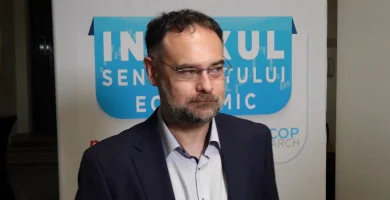
In an analysis focused on Romania’s economic future, Leonardo Badea, First Deputy Governor of the National Bank of Romania, argues that trust is an essential factor in the decisions of households, companies and authorities. The novel aspect of this perspective is the proposal to view trust as a fourth form of capital, alongside financial, physical and human capital.
Economic behavior is determined not only by indicators such as inflation, GDP, wages or credit, but also by perceptions and expectations. Under conditions of uncertainty, these influence consumption, saving and investment, sometimes before changes become visible in official statistics.
Badea cites the ideas of Adam Smith and John Maynard Keynes, as well as contributions from behavioral economics and Robert Shiller on the role of narratives. Sentiment indicators can anticipate turning points, but they must be interpreted alongside real-economy data, as they are volatile and can generate false signals.
Trust reduces coordination costs, extends the time horizon of decisions and encourages investment. To be useful, it must be measured consistently, comparably and with distinctions across regions, generations and income groups.
Latest News
15:23
15:19
15:11
15:08
15:04
See more news
NEWS ON THE SAME TOPICS


.webp)