ANALYSIS Nicușor Dan, observer at Trump's Peace Council: The agenda of the meeting, the stakes, and the image costs for Romania



Always see our news on Google
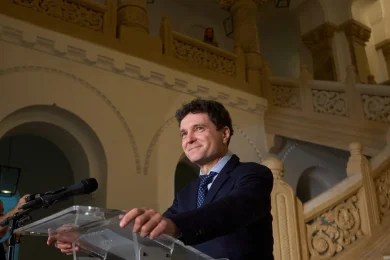
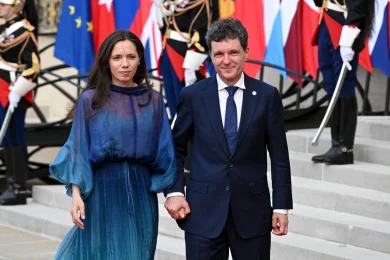
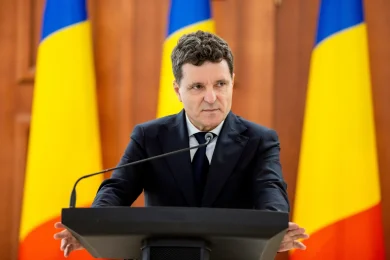
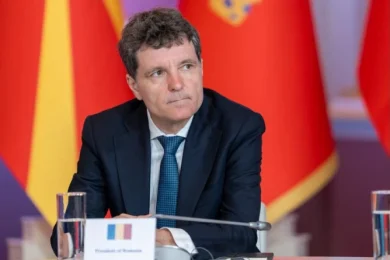
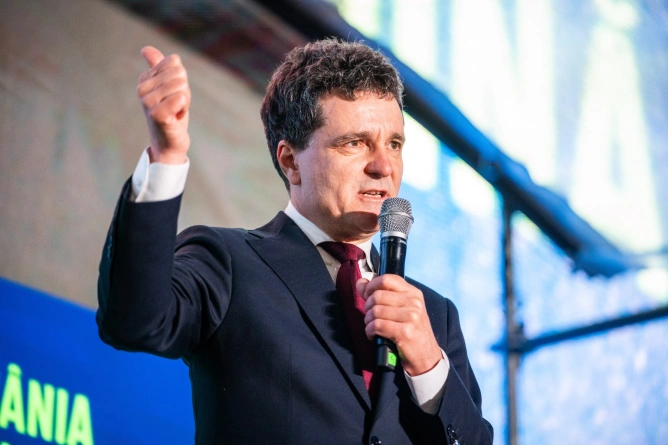
The President of Romania, Nicușor Dan, is participating today, in Washington, at the first meeting of the Peace Council initiated by the US President, Donald Trump, as an observer, not as a member state, which limits his formal role, but not the political stakes of his presence.
The Agenda and Program of the Peace Council
The summit takes place at the Institute for Peace in Washington, with the first meeting scheduled for Thursday, around local noon (evening, Romania time), and will be presided over by Donald Trump. The inaugural meeting is dedicated exclusively to the Gaza file: the future of the Gaza Strip after the fragile Hamas-Israel ceasefire, the creation of an International Stabilization Force, and outlining a technocratic governance plan during the transition period. A central point of the agenda is the financial mobilization for the reconstruction of Gaza: member states have already announced pledges of 5 billion dollars for reconstruction and humanitarian aid, while the UN estimates total needs at approximately 70 billion dollars.
The Council, a structure dominated by Washington, operates in parallel with the UN, having Trump as president with unlimited mandate and veto power over decisions and institutional architecture, which fuels fears that the project may become an informal competitor to the classic multilateral system.
The Status of Romania and Expectations from Nicușor Dan
Romania participates in the meeting as an observer, alongside Italy, Greece, Cyprus, and the European Union, after deciding not to join as a member due to provisions in the Charter that contradict obligations assumed within the EU, especially regarding sanctions. Nicușor Dan explained, in an interview with Radio Romania Actualități, that his presence in Washington is intended as a message of strategic reassurance to the Trump administration, against the backdrop of the distrust generated by the cancellation of the 2024 presidential elections, but also as a reconfirmation of Romania's willingness to contribute to the reconstruction process in Gaza.
Beyond the photo and protocol, the stakes are for the head of state to mark some clear red lines: not affecting European obligations in the field of sanctions, maintaining an institutional world in which the UN remains the center of gravity of the security architecture, and avoiding any perception that Romania is "rowing towards" a Trumpist unilateralism. Internally, Nicușor Dan bets on transforming participation – symbolic as a decision-making weight – into a first step towards de-escalating relations with Washington and, eventually, into a future bilateral visit with concrete strategic and economic content.
Reactions from Analysts and Political Scientists
The decision to go to Washington has divided the intellectual and analytical scene in Bucharest, among those who see in Nicușor Dan's presence a "controlled opportunism" and those who speak of a "simulacrum of institution" with an imperial agenda.
For Alina Mungiu-Pippidi, in a reaction for HotNews, participation as an observer, in line with other European states, will not cost Romania in its relationship with the EU, but it may become unnecessary if the president fails to propose something "constructive, helpful, for the European position and of interest to Americans at the same time", beyond the pro-war rhetoric and the "reconstruction visions" that have dominated the European discourse in recent years. Cristian Pîrvulescu emphasizes, however, that the very level of representation sends an ambiguous message: while Italy or Poland send ministers, Romania presents itself at the highest level, as head of state, assuming a political association that exceeds the formal status of observer.
It is worth mentioning here that even the Prime Minister of Italy, Giorgia Meloni, is not present in the US, despite the close relationship with Trump. Instead, Italy will be represented by Antonio Tajani.
In a pragmatic register, Teodor Baconschi believes that, under the conditions in which Romania's security depends on the American military infrastructure at Deveselu, Kogălniceanu, or Cincu, "it was in our interest to be present, at least as observers", in order not to leave the relationship with Washington in the hands of the sovereignists from AUR and to anchor Romania in the hard core of the strategic relationship with the US. In contrast, Cristian Preda fears that in Paris, London, or Bonn the gesture will be read as a "disengagement without a precise purpose", especially under the conditions in which Bucharest does not come up with substantial proposals on the topic of Gaza's reconstruction, which amplifies the impression of alignment with Trump's agenda, without a clear gain.
From the left flank, Costi Rogozanu appreciates that Nicușor Dan "had a good opportunity to remain silent", accusing him of trying to be simultaneously "Georgist" and Westernist, while accepting to participate – even as an observer – in a council that legitimizes a vision of Gaza criticized as "imperialist" even by Palestinian organizations. The poet and essayist Radu Vancu describes the situation as a "compromise that does not compromise" – Romania being caught "with its hand behind its back" between economic dependence on the EU and security dependence on the US – with the condition that the president succeeds, after Washington, in convincing European partners that loyalty to the Union remains "unfailing", and that participation in what he calls "the ridiculous and disgusting farce of Trump" does not transform into a change of strategic orientation.
Who Participates in the Peace Council as an Observer
We remind that among the states present as observers are also the Czech Republic (Foreign Minister Petr Macinka), Cyprus (Foreign Minister Constantino Combos), Croatia (Secretary of State for
Commerce and Development), Finland (ambassador), Greece (Deputy Foreign Minister), Italy (Deputy Prime Minister, Foreign Minister Antonio Tajani), Poland (Head of the Office for International Politics within the Presidential Administration Marcin Przydacz), Slovakia, the Netherlands (ambassador), Sweden (ambassador), Norway (special representative for the Middle East).
Of the at least 60 invited countries, 27 have accepted so far the invitation to be part of the Council.
Bulgaria, Hungary, Albania, and Kosovo are the only European countries that have joined the Council as members.
How Nicușor Dan Flew to the US
Nicușor Dan flew to the US on a rented private plane, a Bombardier Global 6000 from the fleet owned by Ion Țiriac, not with the Spartan of the Air Forces, according to Boarding Pass.
The aircraft is operated by Avcon Jet, is registered in Austria, can carry up to 14 passengers, and has the range for a direct flight Bucharest-Washington, with an estimated cost for the round trip of about 170,000–200,000 euros.
Analysis conducted with the support of NewsVibe and Perplexity
Latest News
08:15
08:03
07:53
07:37
07:20
See more news
NEWS ON THE SAME TOPICS