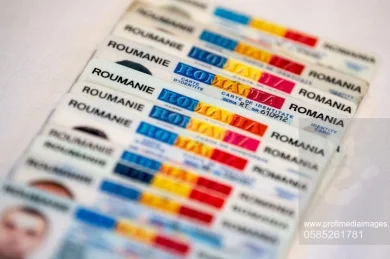
SPECIAL Informat.ro / Blocked vacation at the border: the bureaucratic trap of the ID card without a chip for Romanians, in the Schengen area




Always see our news on Google
Many Romanians change their ID card without knowing that the new simple identity card is no longer a travel document within the European Union. Unlike the old ID cards without a chip, still valid in the EU until expiration, and the new documents used only within Romania, the difference is essential: a wrong choice can stop you at the border even on the day of your departure for vacation.
You can still travel within the European Union with the old ID card without a chip, as long as it is valid, but the new simple identity cards without a chip are no longer recognized as travel documents and can only be used in Romania.
The "bureaucratic trap" of the ID card without a chip
The rules have changed discreetly, but with very concrete effects for those who are changing their ID card now and want to travel in the EU only with the identity card.
The new simple identity card (without a chip) is designed only as an internal identification document: it no longer serves as a substitute for a passport and is no longer accepted for free movement within the European Union.
The bureaucratic trap appears in two common situations:
Your old "classic" ID card expires and, for reasons of confidentiality or religious beliefs, you choose the new simple card without a chip, believing that you will be able to travel with it in the EU as before;
The official only tells you that it is "valid as an identity document," without emphasizing that abroad you will definitely need a passport.
The result: you risk arriving at the border or at check-in with a perfectly valid document in Romania, but useless for crossing the border and boarding in the Schengen area.
The difference between the old ID cards and the new ID cards without a chip
The old identity cards ("large" format, without a chip)
Issued since 1997, they can be used as travel documents in the EU until expiration, but no later than August 3, 2031. They are recognized as travel documents for exercising the right to free movement in the member states of the European Union, according to Regulation (EU) 1157/2019. After 2031, they lose validity as travel documents even if they are still administratively valid.
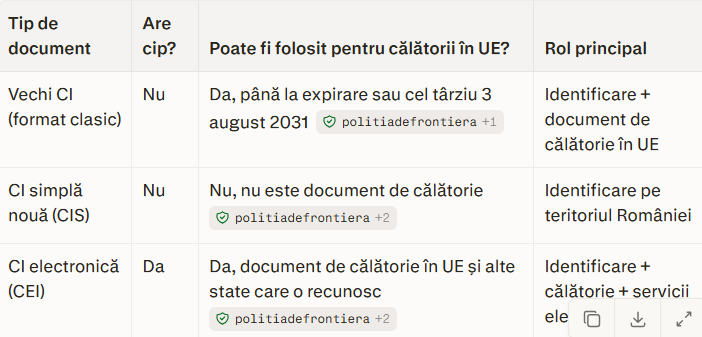
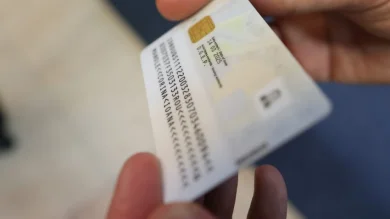
The simple identity card does not store biometric data and does not meet the security requirements required for travel documents, which is why it is no longer accepted as a passport equivalent.
In contrast, the electronic identity card with a chip meets ICAO standards and is recognized as a travel document, similar to a passport, in the EU, Turkey, and the Republic of Moldova.
Since the new ID card without a chip is only for national use
Romania is gradually applying Regulation (EU) 1157/2019, which imposes uniform standards for identity cards used as travel documents in the EU.
The Romanian authorities have publicly clarified that all current "ID cards" (old format, without a chip) remain travel documents until expiration or at the latest until August 2031, but the new simple cards, without a chip, can no longer be used outside the borders.
The message from the Ministry of Internal Affairs is explicit: "The simple identity card is not a travel document and you cannot travel abroad with it," and "only the electronic card will be able to be used as a passport in the Union."
In practice, for any newly issued identity card in simple format, without a chip, its validity as a travel document is limited to zero: from the moment of issuance, it can only be used for identification on the territory of Romania, not in the Schengen area.
Useful tips for Romanian citizens traveling in Schengen
1. Check the type of identity document
If you have the old identity card ("large" format), check the expiration date: if it is still valid and has not reached 2031, you can use it for entry into EU and Schengen states that accept the identity card. If you have a new simple identity card (without a chip), make sure to take your passport: without a passport, you will have problems at the border or at boarding. If you have an electronic identity card with a chip, you can use it as a travel document in the EU and in countries that recognize it, including for flights to/from the Schengen area.
2. Attention to Schengen flights after March 31, 2024
Romanian-Schengen border controls have been eliminated for flights and maritime traffic, but security checks and identity verifications remain at airports.
Even if you no longer go through the Border Police counter, the airline and authorities in the destination country may require a valid travel document (passport or accepted ID), not just an internal identification document.
3. Do not confuse "identity document" with "travel document"
Identity document: any document issued by the Romanian state for establishing identity on national territory (in this sense, the simple card without a chip is included). Travel document: passport or identity card that meets EU and ICAO standards and is recognized as such by other states (the old ID until 2031, respectively the electronic ID with a chip). When making flight or accommodation reservations, carefully check the forms: many platforms ask for "passport/ID card," but in reality, the host country does not accept any "ID card," but only documents compliant with EU rules.
4. If you refuse the chip, build your travel strategy
For those who do not want an electronic document with a chip:
Accept that the new simple ID is only useful in Romania; for any exit from the country, you need a valid passport. Keep your passport up to date and do not wait for the vacation to approach to renew it, as processing times may increase during the summer season. Inform your family: if you have children who will have electronic IDs, they will be able to use the electronic card as a travel document, but you, with a simple ID, will need a passport.
5. Other good identification practices in Schengen
Always keep the same travel document (passport or electronic ID) with you, even if there are no systematic checks within the Schengen area: police or other authorities may ask for proof of identity and right of residence. Make copies (in physical or digital, secure format) of your passport/ID, for situations of theft or loss; the original remains indispensable. Check the official "Your Europe" website for specific requirements for non-Schengen EU countries (Ireland, Cyprus), where there are slightly different rules regarding accepted documents at the border.
Analysis conducted with the help of Perplexity
Latest News
22:52
22:48
22:43
22:38
22:20
See more news
NEWS ON THE SAME TOPICS