After two hundred and fifty years




Always see our news on Google
The new world is often terrible, with outlines still unclear and contradictory tendencies, in which we have begun to live with everyone for some time now has at least one truly innovative characteristic, which I do not know if universal history presents anymore or at least if it presents it with as much relevance as now: a still hegemonic power that undermines itself, consciously, the frameworks, institutions, and principles that it itself largely created at some point and which ensured it a long period of hegemony, without these principles proving to be counterproductive.
Neither did the Athenians destroy the Delian League by themselves, but they were forced by the Spartans to do so. The Romans, in the late imperial period, made political (Diocletian) or religious (Constantine) reforms that ensured the maintenance of the empire for at least another two hundred years; they did not destroy their empire by themselves. Later, the Spaniards, the British, the French, etc. tried to expand and conserve their colonial empires. When, after World War II, they had to consent to their dissolution, they did so under pressure from the colonized peoples who wanted independence. They did not proceed with this dissolution at the height of their power and willingly, but forced by necessity. Empires and powers rise and fall – this is known from the Assyrians and Persians, and global hegemony passes from one to another over the centuries (Translatio imperii). But it seems to me that no power until now has strived with such energy and enthusiasm to destroy a still functional, solid system, supported by all allies and which – with all the inherent defects of any human construction – has ensured them until now global hegemony, but also a not negligible soft power.
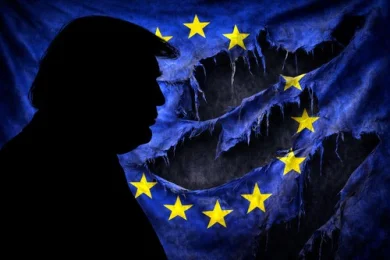
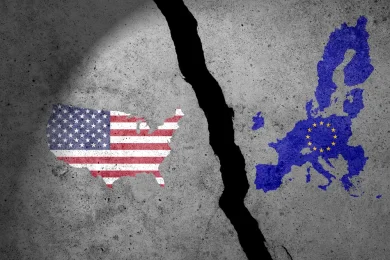
For what else is this self-undermining of the United States under Donald Trump's leadership? It renounces the institutions that it itself created: the UN and its organizations (from which it withdraws); then undermines NATO, which it treats with increasing disregard, threatening to leave it, although the organization has ensured peace in Europe for many decades; and it mocks and takes in disdain its most loyal allies. Instead, it prefers to engage with the enemy, Putin, rather than with the friend, the EU, Ukraine. It hates and despises the European Union, which it once supported and in alliance with which it is stronger against the rival China. Where, when, has any superpower ever done something similar, so self-destructive? The ousting of Maduro from Venezuela is not in itself something new or deplorable. But the continuation of the Chavista regime, with American support, is. And Trump's idea of treating Venezuela like a colony for oil and other resources, a goal openly and cynically stated, undermines the principle of intervention for establishing a democratic regime that the United States has supported so many times. Some would say that the results of applying this principle have been unsatisfactory in the past. Sometimes, perhaps, but that does not mean that the idea of 'taking over' Venezuela and governing it through proxies, like a vassal state, is ethically attractive or even politically feasible.
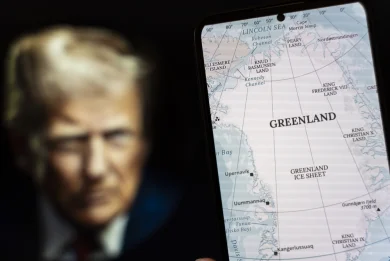
As for the idea of 'taking over' Greenland from an ally, based on the already famous 'Monroe Doctrine', it truly brings us back to a revolutionary political paradigm that the United States itself has done much to eliminate. Was it not President Wilson who imposed America's hegemony after World War I, imposing at the Treaty of Versailles the 13 points, among which was the principle that peoples freely dispose of themselves and their territory? Did not the USA introduce and support this principle and later, after World War II, enshrined in the UN Charter and in the international security arrangements that followed? The principle that great powers can dispose of populations and territories as they please, which they can negotiate, exchange, buy as private goods, at the conclusion of a peace, has become a relic of history and due to American hegemony (and was accepted with reluctance at first by the 'old imperialists', Great Britain and France, but also by the USSR). So, what do we see today? An American government willing to negotiate territories and populations in the old, long-dead style of European imperialisms, which even the United States has rejected and contributed much to discredit and annihilate. And did the USA not again reject the principle of 'limited sovereignty' applied by the USSR in the satellite communist countries, in the name of the right of nations to freely dispose of themselves?
We could go even further back in time: the current American administration (echoing the tone of autocrats like Putin, Xi, or semi-autocrats like Erdogan, Netanyahu) disregards those human rights (see incitement to hatred and violence within the USA against political opponents, the hunt for immigrants, intimidation of judges, justification of the killing of anti-government demonstrators, etc.) that it first enshrined, officially, precisely 250 years ago during the American Revolution. Those – those principles from the Declaration of Independence – not only created somehow this great homeland of immigrants, but also ensured the ideological armor on which American and Western hegemony has been built in the last century and with which totalitarianisms of the time have been successfully combated. Of course, these principles have often been violated, in domestic or foreign policies. The same has happened with the Christian or Buddhist principles of compassion for the poor, weak, and humble: they have been violated countless times in practice and even by the institutions that should have promoted them. This does not mean that anyone from those institutions thought to eliminate them. At worst, hypocrisy has reigned – which, however, as has been said, is the reverence that vice pays to virtue. Yet we have not seen the Pope adopting Nietzsche's moral language. Something equivalent is being done today by Trump and his allies: they reject, not only in fact but also in discourse, the principles on which their state is based, as well as, once with it, the modern world: 'We hold these truths to be self-evident, that all men are created equal, that they are endowed by their Creator with certain unalienable rights, that among these are life, liberty, and the pursuit of happiness.'
https://www.dilema.ro/situatiunea/dupa-doua-sute-cincizeci-de-ani
Latest News
11:45
11:42
11:31
11:29
11:24
See more news
NEWS ON THE SAME TOPICS