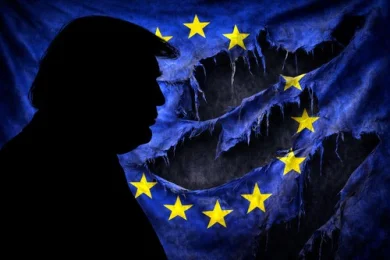
Valeriu Stoica, Dilemma: Falsifications of the stakes of political game



Always see our news on Google
After the recent visit to Beijing, Marco Rubio stated that the reunification of China with Taiwan should not be done by force, but only through a democratic process, that is, through the expression of the free will of the citizens of Taiwan. The statement is insidious. Discouraged from resorting to risky military action, China is invited to set the trap of manipulation. A trap in which the stimulation of the feeling of belonging to a millennia-old civilization, the cultivation of the seduction of a hegemonic power, the increase of the fear of war, and, last but not least, the use of social networks to undermine trust in the values and institutions of constitutional democracy are intertwined. There is no need for war, just manipulative waiting for the annexation of Taiwan to China. And waiting is a constant of the Chinese strategy. The freedom of Taiwan is the stake in this political game in which China alternates between bellicose threats, enticing rhetoric, and deceptive waiting. The slogan "One country, two systems" is replaced with the pragmatic goal "One country, one dictatorship." But the stake of freedom is hidden under the veil of the generous ideal of national reunification.
There are many other forms of falsification of the true stake of the political game that takes place in overlapping plans: global, European, and national.
The discourse of dictators of all orientations – ideological and religious – obsessively reiterates in recent years the theme of building a multipolar international order that would put an end to American hegemony. The theme was evoked by Xi Jinping, with a cold tone of firm warning, during the meeting with Donald Trump. What else could the Chinese leader's reference to "Thucydides' trap" be, a political concept created by Graham Allison, based on the Peloponnesian War, to explain the springs of confrontation between a rising power and a hegemonic power? Although it is unlikely that Donald Trump read the Harvard political scientist's book, some advisor might have explained to him what it was about.
The leaders of political regimes in Russia, Iran, North Korea, Belarus, and other countries – where the culture of freedom has not had the chance to develop – cultivate the same anti-American discourse. This way, they disguise the objective of the common strategy of authoritarian political regimes to preserve their dominance over their own citizens and to stifle the expansion of the culture of freedom. Skillfully speculating on older and newer errors and failures of U.S. policy in different regions of the world, this discourse unites the entire Free World. The real stake of the global political game is, in this century as well as in the last, freedom. The discourse about a multipolar international order – beyond which the dictators' desire to extend their dominance becomes visible – falsifies this stake.
The most dangerous falsification of the stake of the political game occurs, however, even in the Free World through the absolutization of pluralism. This principle of functioning of constitutional democracy has a condition of existence: the mutual acceptance of the participants in the political game and the respect for the values and principles established by the Fundamental Law. The absolutization of the political identity of the participants hinders dialogue, cooperation, and respect for the principles of the game, premises without which pluralism no longer allows mutual recognition and becomes a source of division, of mutual denial.
Initially, conservatism, as a guardian of tradition, and progressivism, as a driver of change, were doctrinal identification patterns that presupposed pluralism, a natural principle of the democratic political game. For several years now, these doctrinal currents have acquired increasingly pronounced fundamentalist traits. Through alteration, conservatism has become the expression of the tyranny of the rule, while progressivism has raised the flag of the tyranny of the exception. The rule refuses exceptions, and each exception tends to become the rule, denying the other exceptions. Communication, dialogue, the assumption of the framework of the game and community projects are becoming increasingly difficult, gradually being replaced by the demonization of the other.
Associated with ethnic nationalism and national sovereignty, conservatism is a mutant that fights with another mutant, progressivism intertwined with the denial of culture, political correctness, the inflation of human rights, and transhumanism. The original meaning of pluralism is abandoned, negotiation and compromise procedures erode, and citizens drift away from the values of constitutional democracy and lose trust in parties and politicians. Opinion polls register tectonic shifts at the level of the collective mentality, from which erupts the confused desire to reset the political system.
This is a favorable context for disinformation and manipulation on social networks. Deluded by the illusion of a miraculous reset, citizens, the most important actors in the democratic political game, are oriented towards a utopia, resulting from a total rupture, from an explosion of the social system, instead of being motivated for gradual reforms, primarily for the reform of political parties and public authorities, necessary conditions for regaining trust in constitutional democracy as a regime of dignity, freedom, and security for individuals and nations.
Valeriu Stoica is a lawyer and professor of civil law at the Faculty of Law of the University of Bucharest.
https://www.dilema.ro/tilc-show/falsificari-ale-mizei-jocului-politic
Latest News
14:15
13:59
13:43
13:23
13:00
See more news
NEWS ON THE SAME TOPICS