Analysis. The effect of frost on gas and electricity markets in the last week and the role of wind energy




Always see our news on Google
When the frost comes, Romania enters survival mode. Not in a mode of efficiency, not in a mode of strategy, not in a mode of functional state. The mode is "God help us and may nothing break." Between January 14 and 18, 2026, the cold pressed on two pedals simultaneously: gas and electricity. And, as usual, the country felt the effect instantly.
The daily gas consumption increased during this period by 5% – for heating the population, for district heating plants, for industry, and the gas transit to Moldova by 15%. The peak hourly electricity consumption jumped by 7%, especially in areas where people plug in anything that keeps their homes warm, whether it’s an emergency solution or a desperate measure.
Normally, this "cocktail" means one conclusion: price increases. Because, in Romania, energy is not cheap when it is needed.
And then, against the backdrop of the frost, the price of gas began to rise. The gas market price increased by 13% from January 14. This is not a "fluctuation." It is a clear alarm signal: demand has suddenly increased, supply pressure has intensified, and import and transit capacities have become critical points. In other words, Romania has entered a zone where gas becomes a pressured resource, and every cubic meter saved starts to count financially and operationally.
 This situation automatically triggered a reflex, preserving gas for priority consumers, without being burned in thermal power plants. If you have alternatives, when gas is expensive, you do not convert it into electricity, because that means higher bills, higher imports, greater dependence, and, ultimately, vulnerability.
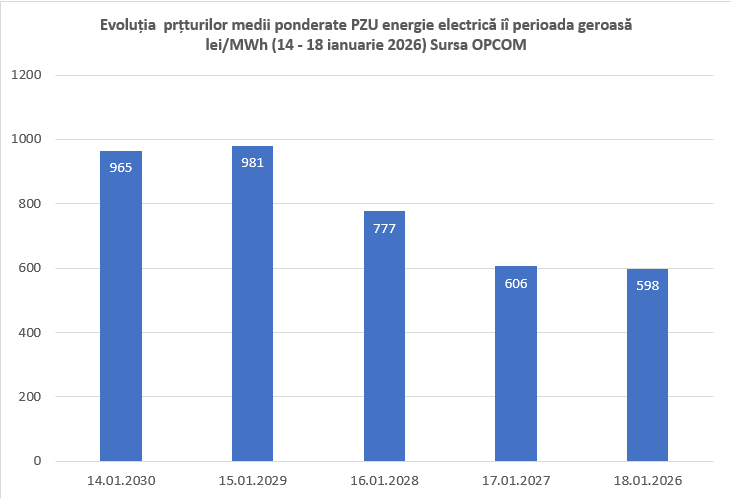
And yet, in January 2026, the seemingly "paradoxical" phenomenon appeared. In the same period when gas became more expensive, the market price for electricity decreased by 35%. This should raise eyebrows for anyone who has lived in Europe in recent years, where the rule has been simple and brutal: expensive gas = expensive electricity. And not just expensive, but painfully expensive, with the economy hit, industry suffocated, and the population forced to choose between heating and food.
But Romania, on January 18, 2026, had a rare window of protection. Not because the government was brilliant. Not because the authorities planned masterfully. But because the wind blew and the cheap supply increased massively. Imports decreased relative to consumption. Coal decreased. Wind energy increased. And the essential effect is one that anti-wind propaganda intentionally ignores: the price of electricity dropped, demand decreased, and alternative supply was sufficient to replace expensive production.
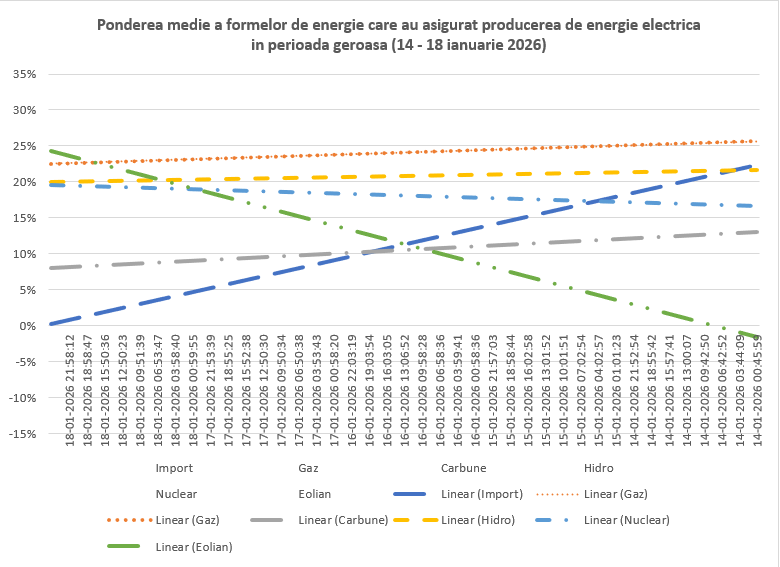 On January 18, 2026, what is called "decoupling" in economic terms occurred between gas and electricity. Gas became more expensive, electricity became cheaper. Demand increased for both forms of energy, but the electricity market received a gust of wind.
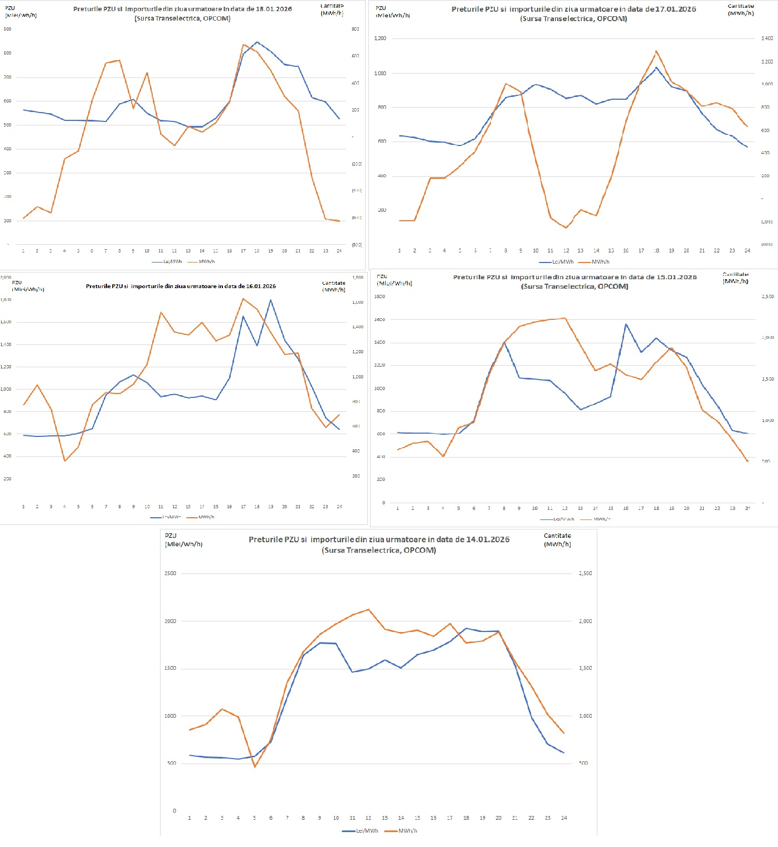 And here comes the part that no one should ignore: hydrocarbons used for electricity production halved overnight from January 17 to 18 and decreased by 25% in the first part of January 18. We are not talking about small adjustments. We are talking about a massive impact mix change: lower production costs, reduced pressure on the gas market, lower imports, lower emissions, and a system that breathes instead of gasping.
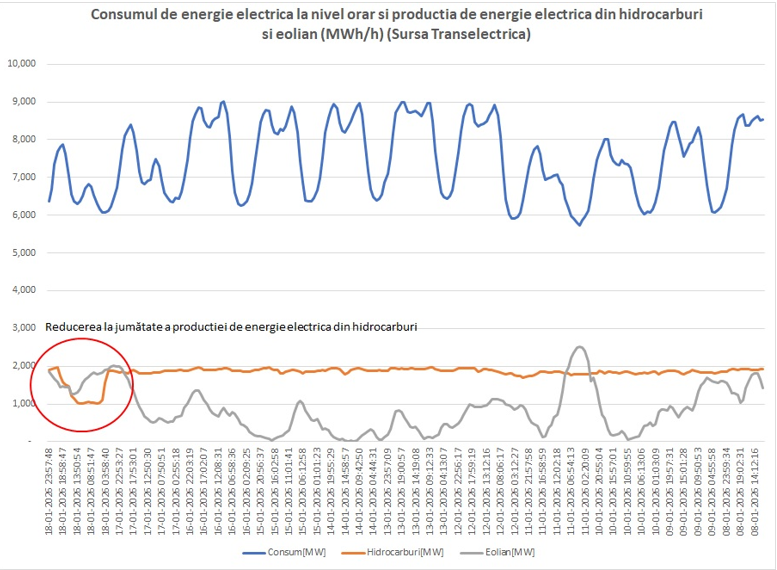 Moreover, about 2.8 million cubic meters of gas were saved in one day – January 18, 2026 - with high gas consumption in Romania and significant quantities of gas transited to Moldova. This means energy security management. Not through brochures, not in speeches, but in reality, in tough days, when the frost presses and the market tightens, gas becomes gold. Not just in volume, but in value. When the gas market price rises, every cubic meter "that can be saved" is important.
Without this "safety net" provided by wind production, Romania would have needed up to 2.8 million cubic meters/day extra, which could have pushed imports + gas transit to problematic limits. Unconsumed gas in Romania means more stability and predictability across the Prut. This is real energy solidarity, not social media posts.
The conclusion is that Romania has won on two fronts at the same time. It protected electricity consumers from price increases, saved a quantity of gas just when gas was expensive, and reduced dependence on imports at a critical moment. And this happened because, on that day, the energy system had alternatives.
So the right question is not whether wind energy "helps us." January 18, 2026, was not just a windy day. It was a day when Romania saw, black on white, what an episode of energy security looks like, not improvisation, not "let's see how it goes," but a real, cheap, and available alternative.
Sure, there is also the possibility of having even lower temperatures, but without wind, which can significantly reduce electricity production just when consumption may increase. Therefore, without denying the current role of wind energy, this scenario must be treated as a strategic concern for the future. Such a context requires the preparation of safety measures: diversifying sources, flexible capacity reserves, energy storage, and smart demand management, alongside the development of "energy autonomy." Anticipatory planning reduces the risk of imbalances in the system and limits economic and social costs in critical periods.
In this context, which proves the importance of a unified national dispatching, AEI proposed since 2016 the establishment of the National Energy Security Dispatch Center. This would ensure the energy and economic security of Romania, not just the operational dispatching of a single form of energy, as is currently the case. Such a structure would allow the integrated coordination of production, transport, storage, and consumption of all forms of energy and optimize costs, especially in critical situations, such as periods with very low temperatures and lack of wind. Through a unique, rapid, and data-driven decision, system imbalances can be avoided, and costs and implicitly prices for the economy and population can be reduced.
Latest News
09:19
09:15
09:14
08:57
08:38
See more news
NEWS ON THE SAME TOPICS