Energy prices will increase by 3% from January 1, 2026, due to rising tariffs, but we can break the cycle!



Always see our news on Google
Before saying "it must be done", we must ask ourselves "why have we reached here". Analyzing the causes of the increase in electricity prices is not a theoretical step, but the foundation of any responsible energy policy. Only through a complete understanding of the context can we propose realistic, sustainable, and efficient solutions — both for the economy and for citizens.
In the framework of the Energy Barometer conducted by INSCOP, Romanians were asked what the main cause of the increase in electricity prices is: 42.8% of Romanians indicate the wrong decisions made by the authorities in Romania, 27.3% the desire of companies in Romania to obtain higher profits, 11.1% general inflation, 6.7% the evolution of prices on the international stage, 6.1% the level of taxes/royalties, and 0.8% weather conditions (weaker winds, less precipitation), while 5.2% did not respond.
The analyses conducted by AEI for the period 2021 – 2025, regarding the share of the price increase of energy due to the increase in demand for imported energy in Ukraine and Moldova, and the congestion in Central Europe, which prevents cheap electricity from reaching Romania, as well as the evolution of prices on international markets, place the evolution of prices due to international conditions in second place among the causes of price increases, after wrong decisions, followed by the increase in tariffs and taxes, company profits, and lastly, weather conditions. The decrease in electricity prices in Romania depends on a complex mix of economic, technological, and political factors. From an economic perspective, a competitive market based on transparency and the elimination of speculation that leads to unjustified price fluctuations is essential. Investments in modernizing transport and distribution infrastructure would reduce losses in the network and, implicitly, the final costs borne by consumers. From a technological standpoint, the development of renewable sources along with storage and the implementation of smart consumption management systems can contribute to increasing energy efficiency. Politically, legislative stability, reducing taxation in energy, and a long-term energy strategy are essential for attracting investments and protecting national interest. Additionally, a balanced collaboration between the state, the private sector, and the European Union can ensure a sustainable framework that favors price reductions without compromising energy security and safety.
Specifically, how can we reduce the price of electricity:
1. Reducing losses and technological consumption in networks
Transport and distribution networks lose about 10–12% of produced energy annually (over 10 TWh). These losses are directly reflected in the bill, as operators include them in the tariff.
How can they be reduced:
• Modernizing transformers and cables (low-loss technologies). • Digitalizing the network (smart grid) – automatic control of energy flow.
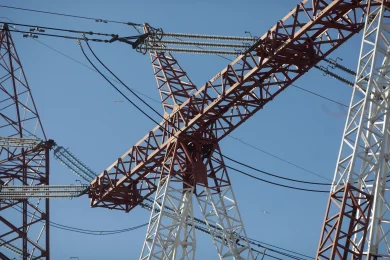
• Replacing old high-voltage lines with efficient ones.
The impact consists of reducing losses by 3–4%, which can lead to a final price reduction of 5–8%.
2. Increasing the share of cheap energy
A large part of the energy price comes from coal production or expensive imports, which are used during peak hours.
Solutions:
• More cheap energy from clean renewable sources (solar, wind) reduces dependence.
• Completing the hydroelectric plants that are underway will add secure energy and eliminate extremely expensive peak hour imports.
• Developing storage capacities, not just in batteries, but also hydrogen-based systems and pumped storage.
• Completing the new nuclear reactors at Cernavodă (3 and 4).
• Expanding hydro and onshore/offshore wind capacities.
The impact consists of more "cheap" energy that will bring a lower average market price (up to 10% in the medium term).
3. Partially disconnecting the internal price from the European market (PZU)
Romania is connected to the European market (PZU – Day-Ahead Market).
When Greece, Bulgaria, or Hungary have high prices, we pay more.
Solutions:
• Long-term bilateral contracts between producers and industrial consumers.
• National mechanisms for temporary capping during energy crises.
The impact consists of stability and a reduction in price volatility by an average of 10–15%.
4. Increasing domestic production and reducing imports
Romania sometimes imports energy during peak hours when external prices are high. The solution is to increase domestic peak production:
• New modern gas plants (efficiency > 60%),
• Better management of hydroelectric plants during high demand periods,
• Using renewable sources for local self-consumption.
The impact consists of more internal supply that will bring a lower market price by 5-10%.
5. Reducing the tax burden and regulated markups
In the final bill, only 40–50% is the actual cost of energy, the rest are taxes, tariffs, and contributions. Solutions:
• Reducing VAT from 21% to 9%.
• Eliminating the pole tax, surcharges, and applying VAT to other taxes.
• Reducing regulated transport/distribution tariffs.
• Simplifying taxes on green certificates and cogeneration.
The impact consists of an immediate reduction of 8–12% in the bill.
6. Energy efficiency and smart consumption
If demand decreases or shifts to cheaper hours, the average market price decreases.
• Smart meters that adjust consumption to hourly prices.
• Thermal insulation, LED lighting, efficient heat pumps.
• Differentiated day/night tariffs.
The impact consists of real savings of 10–20% at the household or firm level, but also in reducing tariffs due to shifting peak consumption and demand for expensive energy by at least 5%. Thus, the realistic potential for reducing electricity prices is: 38 - 50% of the current price, if these combined measures are applied over 3–5 years.
Latest News
22:55
22:48
22:22
22:14
21:54
See more news
NEWS ON THE SAME TOPICS