Roxana Bratu, INSCOP Research: The distrust on the streets



Always see our news on Google
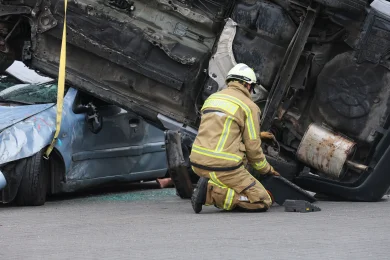
According to Barometrul Informat.ro – INSCOP Research from March 2026, three-quarters of Romanians consider traffic on public roads to be unsafe. This is not an irrational perception, but one anchored in a harsh reality: Romania continues to rank among the countries with the highest road mortality rates in the European Union.
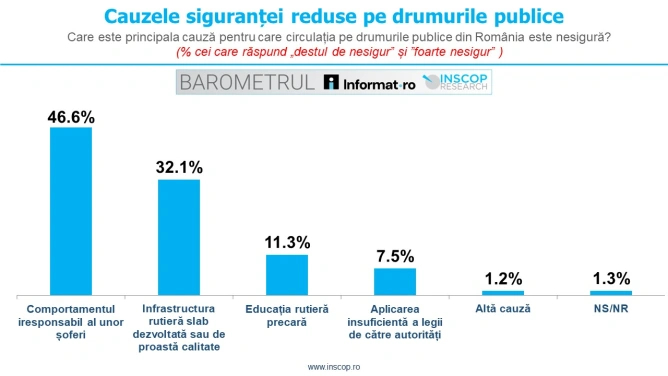
More interesting than assessing the level of road safety is how Romanians explain the problem. Almost half of the respondents (46.6%) indicate the irresponsible behavior of some drivers as the main cause. Sociologically, this explanation speaks of a crisis of trust: Romanians are not only afraid of bad roads but especially of other traffic participants. Moreover, traffic safety experts point out that the road space has become more of a competitive arena than a space for cooperation, increasingly marked by aggressive behaviors behind the wheel and violations of traffic rules.
The second most mentioned cause of traffic insecurity concerns road infrastructure. One-third of respondents (32.1%) blame poorly developed or low-quality road infrastructure. Here we are talking about shifting responsibility from individual behavior to that of the state. If traffic indiscipline is linked to education and civic culture, infrastructure reflects institutional capacity.
At the bottom of the list of causes for which traffic on public roads in Romania is unsafe are: poor road education (11.3%) and insufficient law enforcement (7.5%). The lower percentages for these two causes indicate an underestimation of the capacity of institutions in training, controlling, and sanctioning behaviors.
Beyond placing responsibility at the level of deviant behavior of some drivers or at the level of the state, from the perspective of public policies, the solution cannot be a singular one. There is a simultaneous need for serious road education programs, extensive investments in infrastructure, and consistent law enforcement. Only in this way can public roads become a safer space.
Methodology: The data for the eighth edition of the BAROMETRUL Informat.ro – INSCOP Research were collected between March 2-6, 2026. Research method: interview via questionnaire. The data were collected using the CATI method (telephone interviews), with a simple stratified sample volume of 1100 people, representative of significant socio-demographic categories (gender, age, occupation) for the non-institutionalized population of Romania, aged 18 and over. The maximum allowable error of the data is ± 3%, at a confidence level of 95%.
Latest News
22:59
22:55
22:44
22:40
22:40
See more news
NEWS ON THE SAME TOPICS