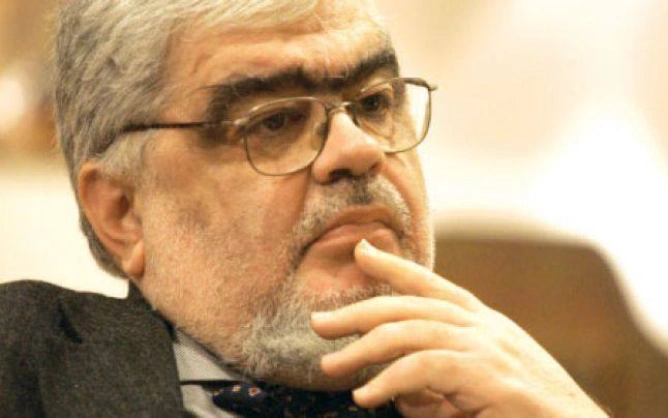
Andrei Pleșu, Dilema.ro: How to miss a debate



Always see our news on Google
Every time I attend the debates organized by local television stations, I am reminded of the lesson about the "dialogable" partners, which, years later, was offered to several younger friends by a great thinker ignored in our marketplace of ideas: Alexandru Dragomir. His idea was that, under certain conditions, despite all appearances, the exchange of replies between two or more discussion partners does not fall into the category of "dialogue." For example, Mr. Dragomir said, dialogue is not possible (nor useful) when people with "convictions" face each other. A person with "convictions" is, in principle, unfit (and unwilling) to negotiate them. They do not come to others to be converted, but to convert them. They do not come for a "joint inquiry," but for a war that must be won. And they leave the table as they came. In short, they are "non-dialogable"...
1) Those who enter into dialogue with the sole concern of appearing more intelligent than the rest of the interlocutors are non-dialogable. They simply want to show that they are smart, smarter than others, the smartest. They have no convictions, no rules. They only have the cult of their own excellence (sometimes masking a complex of inferiority...). This is, among other things, the case of many forum participants, who jump into any topic, with the sole aim of being included in the discussion. "Playing the smart one" is one of the most widespread forms of stupidity.
2) Those who have decided to always be "cool," always on the "good" side of the barricade, are non-dialogable. Representatives of the latest ideological fashion, embodiments of the absolute "new" (in contrast to the inertia of the "reactionaries"), "enlightened" people, coming among us from the future.
3) Activists are non-dialogable. Their job is to carry out their "mission" to the end, that is, to the white flags. They have nothing to learn from dialogue; they only have to impose an infallible, glorious message, the message of their own partisanship. They are loyal to the "cause," their party's opposition, not to the truth, not to their fellow humans, but to an "ideal," generally incomprehensible to the rest of the world.
4) Those who, searching for a meaning in life and failing to identify it, embrace any "creed" that could inhabit (and camouflage) the existential void are non-dialogable. I know many "combatants" who choose activism, "engagement," because otherwise they have no identity. They are not themselves. They are the "camp" they cling to in order to justify themselves. Rebellion and trendy propaganda as a substitute for destiny.
5) Those greedy for glory are non-dialogable. They want to be successful, they want to create a public image, to play a "role" that brings them into the spotlight. A sure way to achieve such a goal is to become an "exponent": you are on the side of human rights, defending homosexuals from general persecution, or, conversely, safeguarding "traditional values," with the Dacians, with the homeland, with the ancestors. You parasitize on a ready-made gesticulation, on an "opinion" that appeals to a certain audience.
It should be said that, usually, in almost all the rapidly enumerated categories above, there are also those who come to believe authentically in what was initially a "strategic choice." They have no convictions, but they believe they do; they have no arguments, but they believe they do; they have no face, but they believe they have one. In short, in the search for "personality," they end up deconstructing the "person," becoming the puppets of a project foreign to their real essence. They are a "schema," a mechanism of predictable words and attitudes.
The reader will wonder, frustrated, how it remains, after all, with the amendment of the Constitution. What is my opinion? Am I for "progress" or for "tradition"? By nature and intellectual placement, I am rather with tradition. But I sincerely reject any regulation that would distort the individual's right to a private life free from any constraints and prejudices (as long as, of course, the rights and freedoms of others are not affected). I tend to believe that we are witnessing, rather, a symbolic struggle, the result of which will not decisively modify either the coexistence of gay couples (especially if a "partnership" legislation is consolidated), nor the habits of heterosexual couples. I admit that I have a problem with the adoption of children in gay families. The institution of motherhood has not existed since yesterday or today. It knows of the original composition of man and involves a conglomerate of affections, values, and meanings that cannot be annulled by a momentary discourse about "otherness," "tolerance," "private orientation." It does not enter my mind that a child can grow up in a world without the feminine presence of a mother or by calling a gentleman "mom"... I know that by stating this, I make myself unpleasant to my interlocutors, more "progressive" than I am in political correctness. But here too I have a small confusion. How is it that the partisans of "legitimate difference," of non-discriminatory democracy, of the right to opinion and self-definition unpolluted by totalitarian dogmatism forbid me to have, possibly, a different opinion than theirs? How do they know that truth and justice are, unconditionally, definitively, and irrevocably, on their side? What if I say that they are in a serious error in all respects? Good. And if they are truly in error, what should I expect? Stigma? Public opprobrium? Arrest? Well, aren't we fighting against these things?
https://www.dilema.ro/situatiunea/cum-se-rateaza-o-dezbatere
Latest News
23:03
22:44
22:40
22:37
22:34
See more news