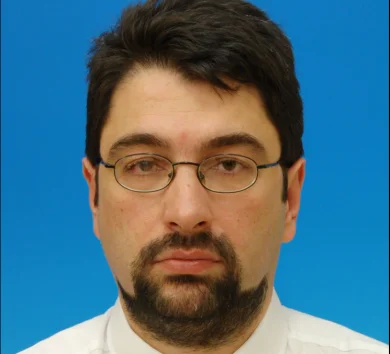
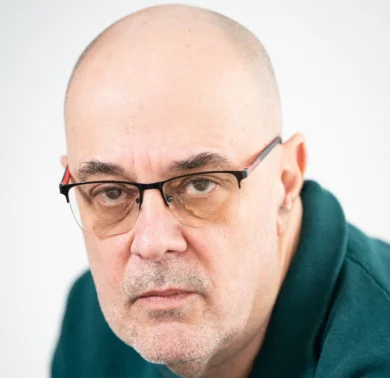
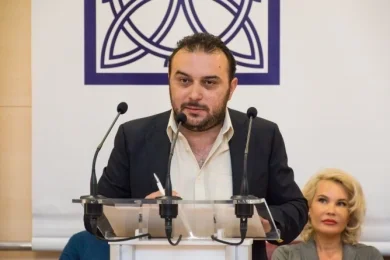
Sever Voinescu: What Is the “Mafia”?



Always see our news on Google
Political chaos is driving Romania toward catastrophe. Let us not deceive ourselves: what still keeps us plausible and functional (in the way we know how to function) is the close connection we have with the West’s economic and political reality through our membership in the EU and NATO. Nothing we do administratively and politically within the country could support, even to the slightest degree, the vital functions of the patient called Romania. Our good fortune is that, on the one hand, there are no clear procedures or precedents for expelling members from NATO or the EU and that, on the other hand, the two organizations were designed in such a way as to function through the continuous integration of their members. NATO and the EU are not standard organizations, designed to do one thing and only that, as most international organizations are, but organizations designed to do more and more things, to bring members together for increasingly numerous and varied objectives. This is our salvation now: the fact that relations within the EU and NATO are so complex and the degree of interdependence among members is so great that, no matter how much we beat our own country over the head, this network keeps it afloat, like a life preserver.
Those who say that, nevertheless, the collapse of our democracy as it did in the interwar period is no longer possible, no matter how much our years resemble the 1930s, base their view on this entirely new reality of Europe. Besides, this time the hostile and aggressive element is no longer right in the heart of Europe, as it was in the 1930s, but at its edge. This does not mean, however, that the collapse of our democracy, as we know it, with all its weaknesses, all its contradictions, and all its hypocrisy, cannot take place. It can happen, for, as President Ronald Reagan prophetically said, democracy is always only one generation away from extinction. This time, the more plausible scenario is that the Romanian people themselves, directly, could destroy it. In the 1930s, we entered the Carolist dictatorship, degenerated into the Legionary state, then into the Antonescu state, and finally into communism, mainly because of external events that we were too weak to change—not their course, then at least their consequences for us. At that time, everything was decided by a series of political decisions about which our nation was not called upon to express its opinion. Then, as now, the nation did not understand what was happening to it, but the difference between the misunderstandings is enormous. If 100 years ago the nation certainly did not understand what was happening to it because it was not informed and could not broadly debate the information, now the nation is exposed to all possible information and debates it in the broadest possible forum, through the media and social networks. This abundance of information leads to disinformation, just as the lack of information did, according to a paradox that has been much discussed and written about. Now, unlike in the 1930s, we can ruin democracy with our own hands, in complete freedom, drowning in an unprecedented abundance of information, when knowledge in a quantity never before available is within anyone’s reach.
I am seriously intrigued by the behavior of our political class. Composed of weak people, devoid of values, vision, real competence, and responsibility, the Romanian political class is doing everything that needs to be done to bring the country down. Today, politics is the heaviest millstone around Romania’s neck. Almost all political appointments are made in contempt of the idea of competence and responsibility. Step by step, Romanian politicians are working as if from a manual on triggering national catastrophes. Do they realize it?
In his book Cose di Cosa Nostra, the legendary anti-Mafia magistrate Giovanni Falcone recounts that one of his colleagues, interrogating the Italian-American Mafioso Frank Coppola in 1980, when he was already approaching the age of 90, asked him at one point: “What, actually, is the Mafia?” Coppola is said to have remained thoughtful for a moment, with the air of “hmm, how can I put this more clearly?” and, after a while, replied: “Signor Giudice, let us suppose that the position of chief prosecutor is vacant and three prosecutors enter the competition. The first candidate is intelligent, honest, and competent. The second candidate has very strong political backing. The third candidate is 100% an idiot (in the original, cretino). In the end, after all the competitive examinations, this third candidate gets the position. That is the Mafia...” And further on, Flacone summarizes: “Where the Mafia is in control, positions in institutions tend to be entrusted to idiots” (“Dove comanda la Mafia, i posti nelle Istituzioni vengono tendenzialmente affidati a dei cretini“). It is obvious why the idiot is preferred. The competent candidate is difficult to deceive. The candidate with political backing has a clear agenda to which he must adhere. The idiot, on the other hand, is easy to deceive and helps the Mafia without knowing that he is helping it. He is the perfect candidate for the Mafia, because he is the cheapest and easiest to manipulate—being an idiot, he does things that should not be done without realizing what he is doing.
This episode came to mind not long ago, when someone, exasperated by what is happening in our Romania, told me that they increasingly believed in the following scenario. The prolongation of the political crisis, the result of the parties’ deadlock in foolish stubbornness and presidential impotence, is already producing an economic downturn that is beginning to be disastrous. Thus, Romania is being pushed toward economic bankruptcy, which will lead to the hasty departure of the major Western corporations that will sell their assets here for next to nothing to the first person who comes along. These “first arrivals” after the great departures are eagerly waiting and are already primed. They do not, of course, belong to the Western economic world, nor are they among prestigious companies or businesspeople, but will come from the gray zones of the global economy. In this sinister plan, destructive for the country but enormously beneficial for “them,” the politicians and the galleries of political ultras who loudly shout their exasperation in large choruses on social networks, the political journalists on television, the brokers and little brokers known or unknown to the powers on the banks of the Dâmbovița play the role of useful idiots or fellow travelers of these “them.” The person who told me that they increasingly believed in this scenario called “them” precisely that: “a mafia.” But who or what could this mafia be?—I wondered. That was how the episode from Falcone’s book came to mind.
Latest News
23:05
22:44
22:20
22:04
21:44
See more news
NEWS ON THE SAME TOPICS