2025 – A complicated year
Remus Pricopie, Revistacultura.ro


Opinions
Foto Facebook

Always see our news on Google
The year 2025 cannot be read as a simple succession of political events, but rather as an accumulation of tensions, decisions made under pressure, and fragilities that only became visible when the state and society were seriously tested. Romania did not face a single crisis, but rather the overlap of several – political, budgetary, and social – unfolding in a deeply unstable and sensitive geopolitical context. Therefore, the assessment of the year requires more of an exercise in lucidity than hasty verdicts or reflexes of self-indulgence.
Romania entered 2025 carrying the shock of losing the presidential elections in November-December 2024, an episode that revealed real vulnerabilities of the democratic space, amplified by an aggressive hybrid attack. It was a moment of institutional and strategic testing. The fact that, despite this shock, the democratic and Euro-Atlantic direction of the country was maintained remains the main gain of the year, even if the price paid was high.
The first half of 2025 was dominated by the search for a political balance, in a context marked by uncertainty and the postponement of difficult decisions. This period was also a test of democratic maturity, in which Romanian society was called to choose between the continuity of the constitutional and Euro-Atlantic path and the temptation of radical solutions, marked by geopolitical ambiguities, authoritarian reflexes, and a hostile discourse towards democratic institutions. By electing Nicușor Dan, Romanians sent a signal of political lucidity and understanding of the difficult context in which the country finds itself, rejecting extremism, strategic confusion, and the rhetoric of permanent confrontation.
Major budgetary adjustments came after July 2025, with the installation of the government led by Ilie Bolojan, bringing additional tensions in an already fragile context. At that moment, the focus shifted from political clarification to correcting structural imbalances. The executive firmly pressed the pedal of reforms, trying to repair the budgetary excesses accumulated over the years and to restore a minimum of fiscal discipline. Tax increases and austerity measures were part of this recalibration effort, but they had a significant social and political cost. The government was perceived, rightly so, as a government of tough decisions; at the same time, the communication style and the lack of cohesion and negotiation within the coalition fueled the image of a state that operates correctly technically, but sometimes rigidly politically. Conflicts within the coalition often eclipsed even the radical discourse of pro-Russian extremists in the opposition, which is clearly not a good indicator.
Accidents and point crises amplified this state. The explosion of the building in Ferentari, the water crisis in the Paltinu-Prahova area, the serious issue at the Praid mine, or other serious incidents highlighted the limits of administrative capacity and the persistence of improvisation as an institutional reflex. Each episode of this type further eroded public trust in a state already under multiple pressures.
At the political level, tensions were also fueled by the elections for Bucharest, which became more of a catalyst for polarization than an exercise in democratic clarification. Instead of a debate about solutions and urban vision, the competition accentuated existing divides and contributed to the overall tension of the year. However, there was also a positive element: the invalidation of the thesis of "sovereignist level," persistently presented as a force capable of sweeping away everything considered "classic" in Romanian politics. Even if these results are strictly valid for Bucharest, they represent a relevant signal about the real options of the electorate, a signal that contradicts alarmist narratives and relativizes the credibility of opinion polls used more as manipulation tools than for analysis.
Another major factor of instability was the lack of political continuity in strategic areas such as Defense and Education. In 2025, Defense experienced a rapid succession of ministers – three in a single year – in an extremely sensitive regional context, where decision-making coherence and predictability are essential. Education, in turn, remained caught in a logic of frequent changes and fragmented reforms, even though it is the field that, by definition, needs stability, patience, and long-term policies. Both cases indicate the same structural difficulty: the incapacity of the political system to ensure continuity and coherence where the stakes are not electoral, but strategic.
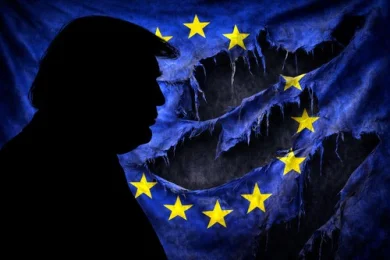
Regional comparisons were inevitable. Some pointed out that Bulgaria entered the Eurozone, while Romania does not even have an assumed calendar. Others invoked the case of Hungary, pointing to Prime Minister Viktor Orban's style, who personalizes foreign relations through highly publicized gestures around Donald Trump. However, these comparisons say less about the actual performances of the states and more about the fragmentation of public trust and the need for symbolic validation.
The strategic partnership between Romania and the United States is built on substance, not visibility. Cooperation in the field of security, military presence, strategic coordination, as well as cultural and educational exchanges give substance to this relationship. Authentic strategic relations are not measured in demonstrative meetings or in gestures with immediate media value, but in the ability to work consistently and predictably towards common fundamental objectives. Time, not this form of diplomatic reality show, is the real criterion for validation.
On a European level, the year 2025 provided an important contrast to the internal turbulence. Although Romania was represented, within a twelve-month period, in the European Council by three different presidents, the relationship with Brussels remained stable and predictable. There were no hesitations, blockages, or deviations from Romania regarding the commitments made, and its positioning in the European Union remained coherent and credible, despite the internal political noise.
The relationship with the Republic of Moldova remained solid and mature. The difficult electoral tests faced by both states in 2024-2025 did not weaken this bond, but rather strengthened it. Political and institutional cooperation between Bucharest and Chișinău continued in a register of responsibility and solidarity, confirming the strategic nature of this relationship.
In relation to Ukraine, Romania acted as a rational and responsible partner, attentive to regional developments and constantly coordinated with its allies in the EU, NATO, and the USA. Without promising what it cannot deliver, Romania did not shy away from the obligations arising from its status as a responsible state. Support for the Republic of Moldova and Ukraine remains, in this context, the strongest gesture of defense of its own security and sovereignty. Without this dimension, the discourse on patriotism becomes devoid of content. It is relevant that opinion polls show that Romanians understand this and do not validate the pro-Russian discourses promoted by some politicians.
A distinctive element of the year 2025 was the increased visibility of radical discourses, including with fascist and legionary accents, often camouflaged under aggressive patriotism. A serious aspect of this process was the Romanian state's inability to consistently apply the law when public discourse exceeded acceptable limits. Freedom of expression is a fundamental right, but it cannot be invoked to justify Holocaust denial, glorification of war criminals, or promotion of ideologies responsible for crimes against humanity. These are not protected opinions, but crimes, sanctioned as such in all consolidated democracies. The authorities' hesitation sent a dangerous signal, encouraging deviations even from the podium of the Romanian Parliament. 2026 should bring increased firmness in law enforcement, as an expression of respect for historical memory and democratic responsibility.
In this context, expectations regarding the presidential institution remain high. The role of the President of Romania is to exercise his mandate with firmness, balance, and in full accordance with the Constitution, as a factor of stability and institutional coherence. The President must know when, where, and how to be present, in accordance with both the limits of the function and the legitimate expectations associated with a presidential mandate. He must inspire and give direction to a nation, position himself above political camps, but remain permanently connected to the concerns, needs, interests, and aspirations of the people he represents.
Looking towards 2026, the degree of complexity increases. Alongside external pressures, a major risk is political irresponsibility, both from the extremes and from parties considered "classic," which are already projecting next year under the logic of permanent electoral competition. There is talk of motions of censure, early elections, and even the suspension of the President. This is exactly the dynamic that Romania does not need. Every public actor should exercise their constitutional role in the interest of the country, not become a prisoner of pride or electoral illusions. Recent experiences of democratic societies show that, most often, those who force early elections end up losing them, and the costs are borne by the entire society.
Beyond this often tense politics, there is a Romania that moves forward. It is the Romania of people who work, who build, and who maintain institutions, communities, and economies in function, even when some politicians seem determined to block the present or push the country towards reflexes of the past. Without rhetoric and without demonstrative gestures, these people carry Romania forward, day by day.
The entire year 2025 confirmed the existence of a solid professional layer – diplomats, experts, civil servants, and specialists – capable of ensuring the continuity of the state and keeping the "ship" on the right course. The absence of major economic and diplomatic shocks, despite attempts to suggest otherwise, shows that Romania has people who do their duty discreetly, without seeking public visibility. They are decent people, essential for the functioning of the state, even if the public space is often dominated by scandal and media superficiality.
2025 was a complicated year. It was a year of failures, but also of resilience; of tensions, but also of continuity. Its assessment, viewed lucidly, remains positive from the perspective of democratic dynamics, even if painful from many other points of view.
2026 will show whether Romania succeeds in transforming this experience into a step towards maturity or whether it will continue to struggle with its own hesitations. The answer depends not only on politicians but also on the calm, constant, and responsible pressure of society on those called to lead it.
Romania entered 2025 carrying the shock of losing the presidential elections in November-December 2024, an episode that revealed real vulnerabilities of the democratic space, amplified by an aggressive hybrid attack. It was a moment of institutional and strategic testing. The fact that, despite this shock, the democratic and Euro-Atlantic direction of the country was maintained remains the main gain of the year, even if the price paid was high.
The first half of 2025 was dominated by the search for a political balance, in a context marked by uncertainty and the postponement of difficult decisions. This period was also a test of democratic maturity, in which Romanian society was called to choose between the continuity of the constitutional and Euro-Atlantic path and the temptation of radical solutions, marked by geopolitical ambiguities, authoritarian reflexes, and a hostile discourse towards democratic institutions. By electing Nicușor Dan, Romanians sent a signal of political lucidity and understanding of the difficult context in which the country finds itself, rejecting extremism, strategic confusion, and the rhetoric of permanent confrontation.
Major budgetary adjustments came after July 2025, with the installation of the government led by Ilie Bolojan, bringing additional tensions in an already fragile context. At that moment, the focus shifted from political clarification to correcting structural imbalances. The executive firmly pressed the pedal of reforms, trying to repair the budgetary excesses accumulated over the years and to restore a minimum of fiscal discipline. Tax increases and austerity measures were part of this recalibration effort, but they had a significant social and political cost. The government was perceived, rightly so, as a government of tough decisions; at the same time, the communication style and the lack of cohesion and negotiation within the coalition fueled the image of a state that operates correctly technically, but sometimes rigidly politically. Conflicts within the coalition often eclipsed even the radical discourse of pro-Russian extremists in the opposition, which is clearly not a good indicator.
Accidents and point crises amplified this state. The explosion of the building in Ferentari, the water crisis in the Paltinu-Prahova area, the serious issue at the Praid mine, or other serious incidents highlighted the limits of administrative capacity and the persistence of improvisation as an institutional reflex. Each episode of this type further eroded public trust in a state already under multiple pressures.
At the political level, tensions were also fueled by the elections for Bucharest, which became more of a catalyst for polarization than an exercise in democratic clarification. Instead of a debate about solutions and urban vision, the competition accentuated existing divides and contributed to the overall tension of the year. However, there was also a positive element: the invalidation of the thesis of "sovereignist level," persistently presented as a force capable of sweeping away everything considered "classic" in Romanian politics. Even if these results are strictly valid for Bucharest, they represent a relevant signal about the real options of the electorate, a signal that contradicts alarmist narratives and relativizes the credibility of opinion polls used more as manipulation tools than for analysis.
Another major factor of instability was the lack of political continuity in strategic areas such as Defense and Education. In 2025, Defense experienced a rapid succession of ministers – three in a single year – in an extremely sensitive regional context, where decision-making coherence and predictability are essential. Education, in turn, remained caught in a logic of frequent changes and fragmented reforms, even though it is the field that, by definition, needs stability, patience, and long-term policies. Both cases indicate the same structural difficulty: the incapacity of the political system to ensure continuity and coherence where the stakes are not electoral, but strategic.
Regional comparisons were inevitable. Some pointed out that Bulgaria entered the Eurozone, while Romania does not even have an assumed calendar. Others invoked the case of Hungary, pointing to Prime Minister Viktor Orban's style, who personalizes foreign relations through highly publicized gestures around Donald Trump. However, these comparisons say less about the actual performances of the states and more about the fragmentation of public trust and the need for symbolic validation.
The strategic partnership between Romania and the United States is built on substance, not visibility. Cooperation in the field of security, military presence, strategic coordination, as well as cultural and educational exchanges give substance to this relationship. Authentic strategic relations are not measured in demonstrative meetings or in gestures with immediate media value, but in the ability to work consistently and predictably towards common fundamental objectives. Time, not this form of diplomatic reality show, is the real criterion for validation.
On a European level, the year 2025 provided an important contrast to the internal turbulence. Although Romania was represented, within a twelve-month period, in the European Council by three different presidents, the relationship with Brussels remained stable and predictable. There were no hesitations, blockages, or deviations from Romania regarding the commitments made, and its positioning in the European Union remained coherent and credible, despite the internal political noise.
The relationship with the Republic of Moldova remained solid and mature. The difficult electoral tests faced by both states in 2024-2025 did not weaken this bond, but rather strengthened it. Political and institutional cooperation between Bucharest and Chișinău continued in a register of responsibility and solidarity, confirming the strategic nature of this relationship.
In relation to Ukraine, Romania acted as a rational and responsible partner, attentive to regional developments and constantly coordinated with its allies in the EU, NATO, and the USA. Without promising what it cannot deliver, Romania did not shy away from the obligations arising from its status as a responsible state. Support for the Republic of Moldova and Ukraine remains, in this context, the strongest gesture of defense of its own security and sovereignty. Without this dimension, the discourse on patriotism becomes devoid of content. It is relevant that opinion polls show that Romanians understand this and do not validate the pro-Russian discourses promoted by some politicians.
A distinctive element of the year 2025 was the increased visibility of radical discourses, including with fascist and legionary accents, often camouflaged under aggressive patriotism. A serious aspect of this process was the Romanian state's inability to consistently apply the law when public discourse exceeded acceptable limits. Freedom of expression is a fundamental right, but it cannot be invoked to justify Holocaust denial, glorification of war criminals, or promotion of ideologies responsible for crimes against humanity. These are not protected opinions, but crimes, sanctioned as such in all consolidated democracies. The authorities' hesitation sent a dangerous signal, encouraging deviations even from the podium of the Romanian Parliament. 2026 should bring increased firmness in law enforcement, as an expression of respect for historical memory and democratic responsibility.
In this context, expectations regarding the presidential institution remain high. The role of the President of Romania is to exercise his mandate with firmness, balance, and in full accordance with the Constitution, as a factor of stability and institutional coherence. The President must know when, where, and how to be present, in accordance with both the limits of the function and the legitimate expectations associated with a presidential mandate. He must inspire and give direction to a nation, position himself above political camps, but remain permanently connected to the concerns, needs, interests, and aspirations of the people he represents.
Looking towards 2026, the degree of complexity increases. Alongside external pressures, a major risk is political irresponsibility, both from the extremes and from parties considered "classic," which are already projecting next year under the logic of permanent electoral competition. There is talk of motions of censure, early elections, and even the suspension of the President. This is exactly the dynamic that Romania does not need. Every public actor should exercise their constitutional role in the interest of the country, not become a prisoner of pride or electoral illusions. Recent experiences of democratic societies show that, most often, those who force early elections end up losing them, and the costs are borne by the entire society.
Beyond this often tense politics, there is a Romania that moves forward. It is the Romania of people who work, who build, and who maintain institutions, communities, and economies in function, even when some politicians seem determined to block the present or push the country towards reflexes of the past. Without rhetoric and without demonstrative gestures, these people carry Romania forward, day by day.
The entire year 2025 confirmed the existence of a solid professional layer – diplomats, experts, civil servants, and specialists – capable of ensuring the continuity of the state and keeping the "ship" on the right course. The absence of major economic and diplomatic shocks, despite attempts to suggest otherwise, shows that Romania has people who do their duty discreetly, without seeking public visibility. They are decent people, essential for the functioning of the state, even if the public space is often dominated by scandal and media superficiality.
2025 was a complicated year. It was a year of failures, but also of resilience; of tensions, but also of continuity. Its assessment, viewed lucidly, remains positive from the perspective of democratic dynamics, even if painful from many other points of view.
2026 will show whether Romania succeeds in transforming this experience into a step towards maturity or whether it will continue to struggle with its own hesitations. The answer depends not only on politicians but also on the calm, constant, and responsible pressure of society on those called to lead it.
Latest News
23:12
Florin Manole: “The discussion about the minimum wage must begin in the coming weeks / On January 1, 2027, the minimum wage will be what it is currently, 4,325 gross”
22:53
Alexandru Rogobete promises a new payment mechanism for doctors’ shifts. Residents will also be paid
22:53
Sever Voinescu: Playing at Sovereignty
22:25
The Minister of Labour announces that he is preparing the indexation of pensions: “We will submit to the Ministry of Finance and the prime minister the proposal to comply with the law, because after two years it is no longer bearable for pensioners”
22:06
Dan Neculăescu, discussions with his French counterpart Jean-Noël Barrot about security in the Black Sea
See more news
NEWS ON THE SAME TOPICS
.webp)


Personalized news feed, AI-powered search, and notifications in a more interactive experience.