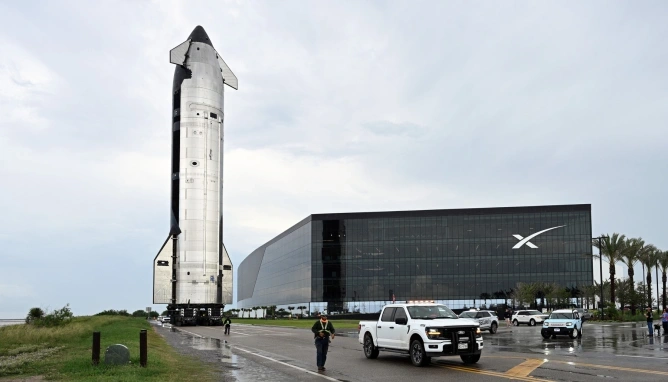
SpaceX invests over 15 billion dollars in Starship. The amount has exceeded the cost of developing the Falcon 9 rocket.
Cristina Petrache


IT&C knowledge
Credit: JOE MARINO / UPI / Profimedia

Always see our news on Google
SpaceX, the company founded by Elon Musk, is investing heavily in the Starship rocket, which will support the launch of satellites and missions to the Moon and Mars. This investment exceeds the development cost of the Falcon 9 rocket, estimated at 400 million dollars, and underscores the ambition to create a fully reusable system. Starship is essential for expanding the Starlink network, generating significant revenue. The rocket can carry up to 60 satellites in a single launch, and SpaceX aims for thousands of launches annually. However, the project faces technical challenges, including in-orbit refueling and launch infrastructure. Tests have brought both progress and failures, and the V3 prototype is now in development. NASA has invested 3 billion dollars in the Artemis lunar program, in which Starship will play a crucial role. SpaceX is rapidly expanding its production capabilities, but the risks associated with design changes remain significant.
Sources

SpaceX a investit peste 15 miliarde de dolari în racheta Starship. Suma a depășit costul dezvoltării rachetei Falcon 9

Elon Musk a "pariat" 15.000.000.000 $ pe racheta spațială Starship. Va câștiga "Războiul stelelor"? * Newsweek România

Dezvoltarea rachetei de nouă generație Starship a SpaceX, pariul lui Musk pentru revoluția lansărilor spațiale, a costat peste 15 miliarde de dolari

SpaceX a investit peste 15 miliarde de dolari în Starship, pariul lui Musk pentru revoluţia lansărilor spaţiale
Latest News
23:03
German trade unions denounce abuses on farms in the state of Hesse, where many Romanian seasonal workers work up to 12 hours a day without being paid properly
22:44
Dominic Fritz: “Many of Nicuşor Dan’s voters tell us that they are disappointed”
22:40
The Foreign Ministry warns of traffic restrictions and diversions in Belgrade on October 22
22:37
Meta receives a record $25 billion fine / Judge accuses company of misleading the public
22:34
Kallas: The EU and Turkey support an arrangement for freedom of navigation in the Black Sea
See more news

Personalized news feed, AI-powered search, and notifications in a more interactive experience.