The EU establishes rules regarding exposure to carcinogenic substances in the workplace. New limits and new recognized risks.




Always see our news on Google
Brussels, December 2, 2025 The Council of the European Union has adopted its position on the sixth revision of the Directive on carcinogenic, mutagenic and toxic substances for reproduction (CMRD), strengthening European health and safety standards at work through new exposure limits, terminological clarifications, and the expansion of the official list of hazardous substances. The text provides significant health benefits, including the prevention of approximately 1,700 cases of lung cancer and 19,000 other occupational diseases in the coming decades.
In short
The EU introduces stricter limits for cobalt, inorganic compounds of cobalt, PAHs, and 1,4-dioxane.
The Council adds a new limit for isoprene and officially recognizes welding fumes as a professional risk.
The revision could prevent over 20,000 cases of occupational disease in 40 years.
The revision of the directive is based on the proposal from the European Commission dated July 18, 2025, which introduced new professional exposure limits for cobalt and its inorganic compounds, for polycyclic aromatic hydrocarbons contained in mineral oils previously used in internal combustion engines, as well as for 1,4-dioxane, a substance classified as possibly carcinogenic. Member States further strengthened the text by including a limit level for isoprene, an additional substance of concern for worker health, initially not covered by the Commission's proposal.
"No one should get sick at work. By updating the rules on exposure to hazardous chemicals, we reduce health risks and support decent working conditions for workers across the Union. I am pleased that we have managed to reach an agreement in the Council today on this important file. Kaare Dybvad Bek, Danish Minister of Employment"
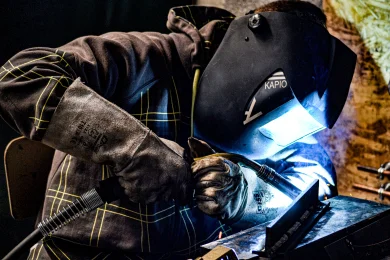
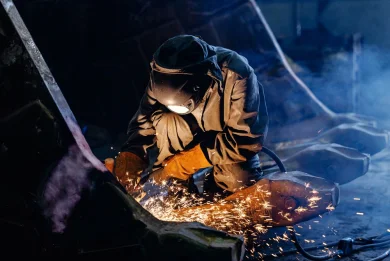
Welding fumes have been introduced in Annex I of the directive, marking the formal recognition of the professional risks associated with this activity. The Council also calls for the development of a technical guide to provide recommendations for reducing exposure, especially in small and medium-sized enterprises, where the adoption of preventive measures is more challenging.
The Council's position also includes clarifications regarding the definitions of "carcinogen," "mutagen," and "toxic substance for reproduction," aligning legislation with scientific developments and standard classifications used at the European level. These updates are intended to provide legal certainty for employers and workers and to facilitate risk assessment in the workplace.
During the discussions, member states emphasized the important role of European agencies, including ECHA and the Advisory Committee on Safety and Health at Work, in underpinning these new limit values. The Danish presidency of the Council welcomed the agreement, arguing that the modernized rules "will substantially contribute to the prevention of occupational diseases and to improving the protection of workers across the Union."
The adopted position serves as a negotiating mandate in the upcoming discussions with the European Parliament at the beginning of 2026. The final agreement is to be established in trilogues, and the revision of the directive will apply once the text is formally adopted.
Latest News
10:12
10:01
09:52
09:41
09:27
See more news
NEWS ON THE SAME TOPICS