The EU activates for the first time rescEU planes for the repatriation of 356 European citizens from the Middle East



Always see our news on Google
Two chartered repatriation flights directly organized by the European Commission have brought back to Romania 356 European citizens stranded in the Middle East, in an operation that marks the first mobilization of rescEU's own transport and logistics capabilities for consular support.
The European Union has activated for the first time its own rescEU transport and logistics capabilities to repatriate 356 European citizens stranded in the Middle East, through two chartered flights directly organized by the European Commission, which safely landed in Romania, following a request made by the Romanian authorities.
In brief
Two chartered flights directly organized by the European Commission have brought back to Romania 356 European citizens stranded in the Middle East.
This is the first mobilization of rescEU's own transport and logistics capabilities for consular support.
The operation was activated following a request from the Romanian authorities and coordinated through the ERCC, within the framework of the EU Civil Protection Mechanism.
Beyond these flights, the EU has supported up to now 42 flights that have safely brought back over 4,100 European citizens.
Other flights are planned, after 23 countries have requested assistance from the EU.
The two repatriation flights transported European citizens from Oman to Romania and mark, according to the Commission, "an important moment in the expansion of the EU Civil Protection Mechanism's response tools." The operation was made possible after the Commission mobilized, for the first time, its own rescEU transport and logistics capabilities, following a request from the Romanian authorities.
The rescEU capabilities were deployed by the EU Emergency Response Coordination Centre, ERCC. The Commission specifies that when no EU member state and no state participating in the EU Civil Protection Mechanism can provide transport capabilities following a request for assistance, rescEU can be mobilized to provide an additional level of European support when national capabilities are not available.
Beyond these two rescEU flights, the European Union has supported up to now 42 flights, which have safely brought back over 4,100 European citizens in Belgium, Bulgaria, the Czech Republic, Italy, Cyprus, Latvia, Lithuania, Luxembourg, the Netherlands, Austria, Portugal, Romania, Slovakia, and Sweden.
The Commission announces that other flights are planned in the coming days, under conditions in which a total of 23 countries have requested assistance from the EU, including Belgium, Bulgaria, the Czech Republic, Estonia, Ireland, France, Italy, Cyprus, Latvia, Lithuania, Luxembourg, Malta, the Netherlands, Austria, Poland, Portugal, Romania, Slovenia, Slovakia, Finland, Sweden, Bosnia and Herzegovina, and Montenegro.
The European executive states that it is "fully mobilized" to support repatriations and that it is coordinating with the European External Action Service and with EU delegations on the ground, maintaining contact on this matter with EU delegations and with the consular authorities of member states in the region.
In a statement included in the press release, the Commissioner for Equality, Preparedness, and Crisis Management, Hadja Lahbib, says: "When crisis strikes, Europe is there for its people. When national capabilities reach their limit, the EU intervenes with strong support. For the first time, rescEU planes are in the air to repatriate European citizens stranded in the Middle East. Our Civil Protection Mechanism works day and night to bring European citizens home. Europe, united in times of crisis."
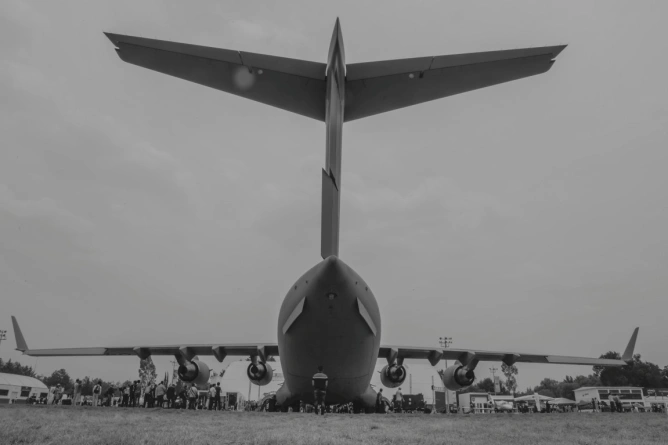
The Commission emphasizes that passenger planes represent a new rescEU capability from September 2025 and that this is the first activation for consular support since their introduction. The text specifies that the EU plays a key role in coordinating the transport and operational costs of repatriation flights. Under rescEU, the Commission can cover up to 100% of transport costs.
This regime differs from other forms of European support for repatriations, where cost coverage can reach up to 75%, if at least 30% of passengers are citizens of other EU member states or other participating states than the state that activated the mechanism.
The Commission reminds that consular repatriations remain a national competence. Member states or participating states for which rescEU capabilities are mobilized are responsible for coordinating all consular aspects related to operations, including the allocation of seats for citizens from other interested countries within the UCPM and deploying consular staff when necessary.
According to the press release, EU delegations on the ground have assisted member states to ensure maximum utilization of these repatriations by all EU citizens who need consular assistance.
The operation comes against the backdrop of developments in the Middle East and marks a practical expansion of the EU's civil protection and repatriation response tools. The institutional novelty of the file is the use, for the first time, of rescEU planes for consular support, following the introduction of this capability in September 2025.
From a procedural point of view, the mechanism functions as an additional level of support when member states and participating states in the UCPM cannot provide transport following a request for assistance. From a political and operational perspective, the file indicates an expansion of the Commission's role in coordinating repatriations, even if the consular dimension remains, formally, a national competence.
Latest News
16:42
16:37
16:35
16:33
16:32
See more news
NEWS ON THE SAME TOPICS