10 EU partner countries align with sanctions against the leadership of the Transnistrian region



Always see our news on Google
Brussels, November 11, 2025 — The Council of the European Union announced the extension of sanctions imposed on the leadership of the breakaway region of Transnistria until October 31, 2026, in the context of the continued support for the Republic of Moldova in defending its territorial integrity.
Decision (CFSP) 2025/2211, adopted on October 27, 2025, maintains the restrictive measures applied to Transnistrian leaders deemed responsible for obstructing the reintegration process of the Republic of Moldova and for violating fundamental rights in the region. Among the measures are travel bans within the European Union and the freezing of assets under the jurisdiction of member states.
The European Union welcomed the fact that ten partner countries, Albania, Bosnia and Herzegovina, Iceland, Liechtenstein, the Republic of Moldova, Montenegro, North Macedonia, Norway, Serbia, and Ukraine, have officially aligned with the sanctions regime and will ensure compliance of their national policies with the Council's decision. This coordination reflects regional solidarity towards the Republic of Moldova and support for the European security order.
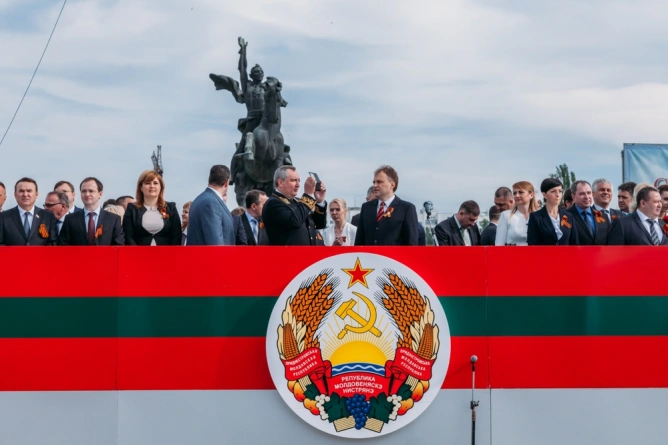
The Transnistria region, a strip of territory along the Dniester, declared itself a "republic" in 1990, but is not recognized by any UN member state. After the armed conflict in 1992, the region remained under the control of a separatist administration, politically, economically, and militarily supported by the Russian Federation, including through the presence of Russian troops illegally stationed on the territory of the Republic of Moldova.
The European Union has introduced specific restrictive measures against Transnistrian leaders since 2003, to deter actions that undermine Moldova's sovereignty. The sanctions regime is renewed annually and is part of the Union's Common Foreign and Security Policy (CFSP).
In recent years, with the war in Ukraine, the security dimension of the Transnistrian region has become a major concern in Brussels, being closely monitored by the EU Delegation in Chișinău, the European External Action Service (EEAS), and the EU Partnership Mission in Moldova (EUPM Moldova).
Latest News
09:52
09:40
09:25
09:02
08:56
See more news
NEWS ON THE SAME TOPICS
.webp)

.webp)