Before the incident involving the ICEYE satellite, there had been similar episodes: in May, four Russian satellites (Cosmos 2610–2613) approached an ICEYE spacecraft, and the U.S. Space Force interpreted the action as surveillance. German General Michael Traut later warned that such maneuvers could threaten networks like Starlink, including through maneuvers that force satellites to avoid collisions and thereby reduce their operational lifespan and the quality of their services. Germany is simultaneously developing its own space-monitoring and protection capabilities.
Russia accused of having rehearsed an attack on a Finnish satellite
Riana Gegiu


International
Foto: Shutterstock.com

Always see our news on Google
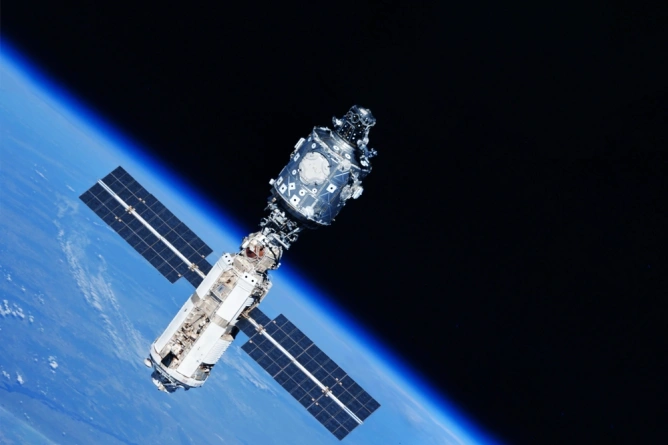
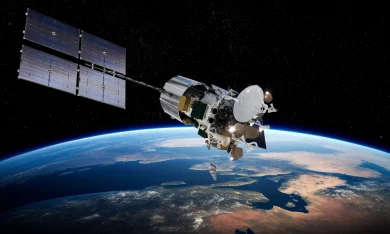
The Russian military satellite Kosmos-2612 dangerously approached the X36 radar satellite operated by Finnish company ICEYE, in a maneuver that could have been a rehearsal for an orbital attack. The approach took place on October 17, and the incident was observed by U.S. company LeoLabs and Dutch specialist Marco Langbroek.
The distance between the two satellites was estimated at between one and five kilometers before Kosmos-2612 moved away to approximately 400 kilometers. U.S. analyst Greg Gillinger said such a maneuver was not necessary for surveillance or radio interference and could have tested Russia’s ability to target the satellite.
Two other Russian satellites are approaching the orbit of another ICEYE spacecraft, X37. The Finnish company confirmed that X36 remains operational and said its network can withstand the loss of individual satellites.
U.S. officials and experts described the maneuvers as dangerous and as a form of “space intimidation,” warning that a collision could produce large amounts of orbital debris. Kosmos-2612 is part of a group of six Russian military satellites launched in April 2026. ICEYE provides Ukraine with radar imagery, including for operations conducted at night or in conditions of heavy cloud cover, while Moscow has warned that commercial satellites involved in supporting Kyiv could become targets.
Context: Russia has previously conducted orbital rendezvous maneuvers and was warned that these could affect megaconstellations such as Starlink
Sources

Reuters: Momentul în care satelitul "inspector" al Rusiei a hărţuit unul finlandez în spaţiu a fost un exerciţiu de atac

Rusia a repetat un atac asupra unui satelit occidental, spune un analist spațial

Rusia ar fi simulat un atac asupra unui satelit, ceea ce semnalează o nouă abordare (expert)
Latest News
21:23
EDPB launches “Privacy for Kids,” a portal with resources to protect children’s data at home and at school
21:08
Prime Minister Luca Niculescu supports Albania’s accession to the EU and the expansion of economic and military cooperation between the two countries
20:52
Natalia Intotero announces that the Ministry of Environment has lost more than €2.3 billion in NRRP funds
20:43
Friedrich Merz is skeptical that Donald Trump will change his governing style after Democrats took control of the U.S. Congress
20:42
Dan Neculăescu and Andrii Sybiha discussed Black Sea security and support for Ukraine
See more news
NEWS ON THE SAME TOPICS



Personalized news feed, AI-powered search, and notifications in a more interactive experience.