Ramona Chiriac, head of the European Commission Representation in Romania: young people will live the most with the decisions made today



Always see our news on Google
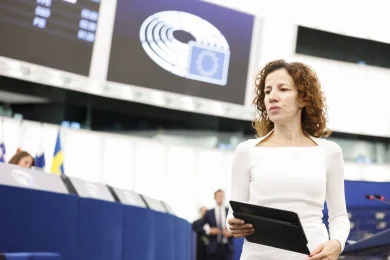
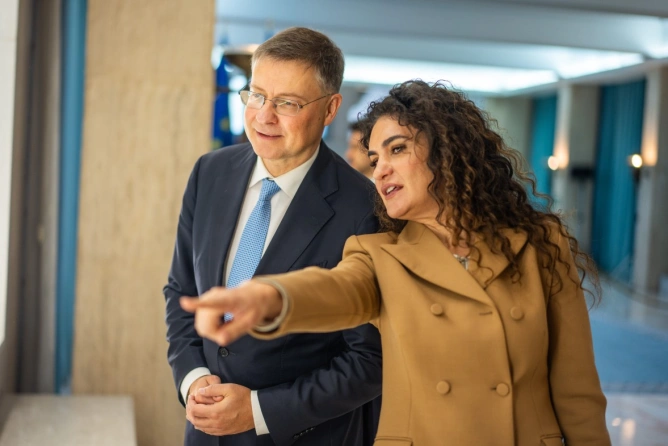
Ramona Chiriac, head of the European Commission Representation in Romania, speaks in an interview with 2eu.brussels about the Commission's priorities in recent years, how Romanians perceive European policies, and what is needed to strengthen a united Europe.
What have been, specifically, the priorities of the European Commission in Romania in the last two years and how have they translated into actions and visible results for citizens?
In the last two years, the European Commission has focused its attention in Romania on strengthening economic and democratic resilience and bringing the European Union closer to citizens, especially to young people, in a difficult geopolitical context. The European Commission Representation has played the role of concretely explaining EU policies and instruments, stimulating public dialogue, and combating disinformation, so that the European Union is perceived as a real partner in the daily lives of Romanians.
Romanians feel this impact: between 51 and 54% trust the EU and its institutions, and nearly 8 out of 10 people believe that membership in the Union brings concrete benefits. Agriculture has been the area where citizens have most requested the intervention of the Union. In the last two years, the European Commission has approved support schemes for Romanian farmers affected by drought, frost, and other extreme climate phenomena, including a compensation scheme of 400 million euros, to which 11.5 million euros were added from the EU agricultural reserve. Additionally, the simplification of the Common Agricultural Policy has significantly reduced bureaucracy for farmers.
Security has been another major priority. Romania benefits through the Security Action for Europe (SAFE) instrument of approximately 16.7 billion euros, the second-largest allocation in the EU, for strengthening defense capabilities and increasing strategic resilience. Education is also a priority. For example, European support in education and social inclusion has allowed for social scholarships for 40,000 students from vulnerable backgrounds, facilitating equal access to higher education.
Moreover, through the PNRR program, Romania has available 13.6 billion euros in grants and 7.8 billion euros in loans for investments and reforms from European funds that will transform the economy and society, from digitalization and infrastructure to green energy and education. The European Commission supports Romanian authorities in implementing the PNRR, monitoring progress and ensuring funding. Following the review and simplification of the Plan this autumn, the focus must be on implementation, considering the deadline for completion – August 31, 2026.
The role of the European Commission Representation has been to make these opportunities visible, to show how EU funds reach Romanians concretely, and to maintain an open dialogue with citizens, based on data and facts.
Which European policies implemented in Romania do you believe have had the clearest positive impact on the daily lives of citizens and why?
The cohesion policy, along with the common agricultural policy, remains essential for reducing regional disparities, and European energy policies have provided Romania with a framework of solidarity and protection during a period of successive crises. Last but not least, programs dedicated to youth, such as Erasmus+, have had a direct and visible impact on an entire generation.
Another relevant example is the National Recovery and Resilience Plan, which brings structural investments in infrastructure, education, health, digitalization, and the green transition of over 20 billion euros. The PNRR represents not only funding but also includes reforms aimed at modernizing the state and creating the premises for more efficient governance and a more competitive economy. The real impact of these reforms, however, depends on their effective implementation by national authorities.
Looking back at your mandate, what are the institutional achievements you are most satisfied with and what difference do you believe they have made in the relationship between the EU and Romanian society? I consider that one of the important achievements of my mandate was the opening of the European Commission Representation to real dialogue with society, not just information, but conversation, listening, and involvement.
I have constantly worked to ensure that the European message is clearer, more human, and more connected to the realities in Romania, in a context marked by polarization and distrust. I believe our role is to explain European policies, but also to defend the values that underpin them.
Is there a project or moment from your mandate that, beyond results, had a special symbolic significance for how Europe is perceived in Romania?
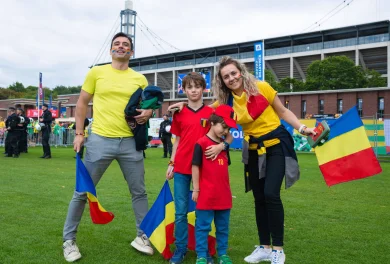
Yes. A project with a special significance was the celebration of Europe Day this year, on May 9.
For the first time, the European Commission Representation collaborated with the Presidential Administration and other European institutions represented in Romania, and during the event "Open Doors at Cotroceni," we were present with an information stand in the courtyard of the Cotroceni Palace from May 9 to 11. Over that weekend, we talked about Europe with more than 10,000 citizens, and in the palace garden, we displayed a symbolic message: I 💙 EU, in the colors of Romania and the European Union.
The marking of Europe Day began on May 9, with a debate with young people in the Unification Hall of the Cotroceni Palace, attended by the interim President of Romania, Ilie Bolojan, the Executive Vice-President of the European Commission, Roxana Mănzatu, and the Minister of Education and Research, Daniel David.
In the context of environmental concerns, what role does the European Commission Representation in Romania play and what concrete actions have you recently undertaken to raise public awareness?
Apart from the ongoing dialogue with Romanian authorities on environmental issues, technical briefings dedicated to journalists, and the European Commission's interest in environmental situations in Romania, I can say that the Representation continued in 2025 one of the successful activities dedicated to the environment and raising public awareness, namely the Beach Clean Up action. Through this action, the European Commission Representation highlighted the importance of protecting waters and the environment in the context of environmental policies, conducting a communication and awareness-raising action at the local level.
Thus, for #EUBeachCleanup 2025, the European Commission Representation (RCE) organized, together with the Mai Mult Verde organization, a beach cleaning event at the Cheson beach on the Danube, a beach located in Zimnicea, Romania. Along with our team, 10 student volunteers from the Faculty of Geography in Bucharest participated in the event, as well as over 20 young influencers concerned about environmental protection.
Moreover, a very important role is played by the ambassadors of the Climate Pact, who, through their grassroots actions, have managed to energize people and communities that believe in environmental protection and have an active role in local structures.
Gender equality remains a sensitive subject in Romania. How do you evaluate the progress made so far and what do you believe are the main obstacles that persist?
Feminism is making real but uneven progress in Romania. We see more visibility of issues related to gender equality, a more active presence of women in public spaces, and a younger generation more aware of their rights. However, these advances are still not well reflected in the representation of women in decision-making positions, in wage equality, or in effective protection against gender-based violence.
The main challenges remain the persistence of stereotypes, social tolerance towards inequality, and the gap between the legal framework and everyday reality. Gender equality is not just a matter of legislation, but also of mentalities, education, and equal access to opportunities.
At the European level, the European Commission promotes gender equality through a solid framework of policies and funding. The EU Gender Equality Strategy, the directive on pay transparency, measures to combat violence against women, as well as European programs that support education, female entrepreneurship, and women's participation in the labor market have a direct impact, including in Romania.
Our role, as the European Commission Representation, is to support these policies through public dialogue, partnerships with civil society, and promoting examples of good practice. Gender equality is not a "nice to have" topic, but an essential condition for a fair, competitive, and democratic society.
Can you provide some examples of initiatives carried out by the Representation that have had a direct impact at the local level and contributed to bringing citizens closer to the European project?
The European Commission Representation in Romania manages a network of 22 Europe Direct centers, which play an essential role in communication between the European Union and citizens at the local level. Through this network, European messages reach communities directly, in an accessible, clear, and locally adapted form. Europe Direct centers provide citizens with the opportunity to receive accurate and personalized information about the policies, programs, and opportunities of the European Union, contributing to a better understanding of how European decisions influence their daily lives.
Through their constant presence in the field, these centers strengthen trust in the European Union, support the fight against disinformation, and encourage civic and democratic participation, including involvement in European elections and European initiatives. I should give at least 22 or more examples, but I will only mention two memories from this year locally.
In general, all these centers go to schools, have solid partnerships, and this year, for example, EUROPE DIRECT Gorj met with over 600 students and 50 teachers. They discussed active citizenship (EU pro-active!), European values, developing skills for the labor market, about choices in life (EU choose!), and protecting the mental health of children and young people.
And the impact is seen both qualitatively and quantitatively. Not further back than this year, we gathered at Europe Direct Râșnov with over 100 young people and 15 professionals, during the event "Living Library – professions, skills, and European opportunities for youth." High school students from Brașov, Râșnov, Săcele, and other nearby small localities directly dialogued with "living books" – specialists from various fields, from journalism, scenography, and psychotherapy to IT, forensics, and the judiciary. We also talked with young Romanians and from other EU countries who accessed European programs such as Erasmus+, the European Solidarity Corps, and DiscoverEU, discovering new skills and career choices.
Another example is our campaign "Born in Romania, Born in the European Union," which we launched on December 1 this year and promotes the benefits of Romania's membership in the European Union. Citizens from all over the country, of all ages, illustrate this campaign and tell the story of 18 years of European Romania.
How do young Romanians perceive the European Union today and what is the European Commission Representation doing to transform this perception into real and constant involvement?
The European Commission Representation in Romania has placed and will continue to place young people at the center of the actions and campaigns launched. The "EU on the Road" caravans, events organized on the occasion of Europe Day, or debates related to the State of the Union Address (SOTEU) are just a few examples that have become a tradition, along with the school competitions we organize annually in partnership with the Ministry of Education – EuroQuiz and European Leader. We are always pleased to see that young people are involved, dedicated, and eager to actively participate in building the future of Europe.
What message do you send to young people who want to actively engage in European political life and influence the decisions that will shape their future?
More than ever, the future of the EU depends on our ability to create real spaces for participation, dialogue, and co-creation. And young people, through their energy, creativity, and vision, are the ones who can transform these processes into an authentic engine of change.
In recent years, the European Union has made significant strides towards including young people in political processes. A recent and very important example: on June 25, 2025, the European Commission made a historic decision: the creation of the President’s Youth Advisory Board, a permanent mechanism through which young people can directly express their opinions to the President of the European Commission.
This is not just a program or an institutional concept. It is a real commitment from the EU to listen to the voices of young people, to understand their needs, and to integrate them in a structured way into public policies.
We live in a time when young people are profoundly affected by rapid technological, social, economic, and, of course, political changes. Whether we are talking about the digital transition, climate change, access to education, or mobility, young people are the ones who will live the most with the decisions made today.
Therefore, I encourage young people to make their voices heard, because the future of Europe belongs to them.
And finally, on a more personal note: if you could have a "superpower" in the service of the European Union, what would it be and why?
I would choose ubiquity, the ability to be present everywhere, where dialogue is needed. Simone Weil said that "attention is the rarest and purest form of generosity." For me, this is the essence of this "special power": the desire to be everywhere not physically, but through real attention, in dialogue with authorities, with the business environment.
Latest News
23:00
22:55
22:47
22:39
22:33
See more news
NEWS ON THE SAME TOPICS