The killing of Mehdi Kessaci prompts the European Parliament to call for coordinated action against the violence of drug traffickers.



Always see our news on Google
The assassination of Mehdi Kessaci in Marseille has triggered an unprecedented call for joint action on drug trafficking in the plenary of the European Parliament, while the Commission warns that half of the murders committed in the EU are already associated with drug networks.
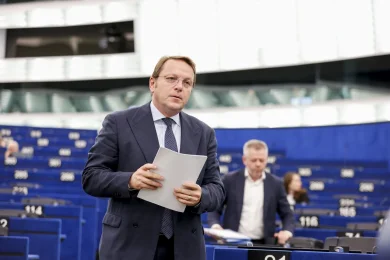
Strasbourg, December 15, 2025 – The assassination of Mehdi Kessaci, a 20-year-old executed in broad daylight in Marseille in a crime considered by French authorities as an act of intimidation by drug traffickers, has generated one of the most tense and united debates in the European Parliament in recent years. The European Commission, through Commissioner Christophe Hansen, issued a shocking warning: "Now, 50% of all murders in Europe are linked to drug trafficking. The situation is already out of control."
In short
1. Commissioner Christophe Hansen: "50% of murders in Europe are linked to drug trafficking."
2. MEPs qualify Mehdi's killing as a "mafia-style intimidation crime."
3. The Parliament calls for stricter controls in ports, police cooperation, and strengthening Europol, Frontex, and the EU Drugs Agency.
4. Political groups warn about the increase of "parallel economies" controlled by networks.
Hansen emphasized that the phenomenon transcends national borders and that ports like Marseille are used as "entry points for the entire continent." To respond to the threat, the Commission calls for strengthening Europol, Frontex, the EU Drugs Agency, and the new EU Customs Authority, as well as accelerating the implementation of the new European Drug Strategy and the associated Action Plan.
From the political groups, the reactions were exceptionally convergent. François-Xavier Bellamy (EPP) characterized Mehdi's killing as "an alarm signal for all of Europe," warning that "drug money seeks to replace the state and take control over neighborhoods and institutions." Nora Mebarek (S&D) insisted on the human dimension: "Criminals recruit children, promising quick money, but sending them to prison or death."
For the Renew group, Valérie Hayer described the crime as "a mafia-style intimidation execution" and called for "a European revolution against drug trafficking." Fabrice Leggeri (PfE) stated that "France will not become a narco-state, and Europe will not be a traffickers' paradise," emphasizing the need for a coordinated response at the EU level.
The debates also highlighted the central role of ports and large cities in drug distribution, as well as the rise of violence associated with networks – described by several MEPs as "silent terrorism." Sandro Ruotolo (S&D) and Grégory Allione (Renew) drew attention to the recruitment of minors in drug transport and collection operations.
A powerful emotional moment was the presence of Amine Kessaci, Mehdi's brother and a well-known activist against drug trafficking. Several MEPs paid tribute to his civic courage, stating: "Your voice will not be silenced, and Europe is on your side."
In conclusion, Commissioner Hansen emphasized: "To honor Mehdi's memory, we must act now. There are no compromises when protecting the lives of young Europeans."
The story of the Kessaci brothers The first act of the Kessaci family's tragedy dates back to 2020, when Brahim, the eldest brother, was killed in an attack related to drug trafficking. His death profoundly marked the family and triggered the transformation of the middle brother, Amine, into a public voice against narco violence. In a city like Marseille, where criminal networks shape daily life in entire neighborhoods, the act of speaking publicly represents a rare form of resistance.
Amine systematically denounced the mechanisms of the networks, culminating in the publication of his book Marseille, essuie tes larmes, inspired by Brahim's murder. He became a symbol of civic struggle, criticizing the state's inability to protect vulnerable communities. The narco networks gradually identified him as a threat – not through physical force, but through his visibility and influence.
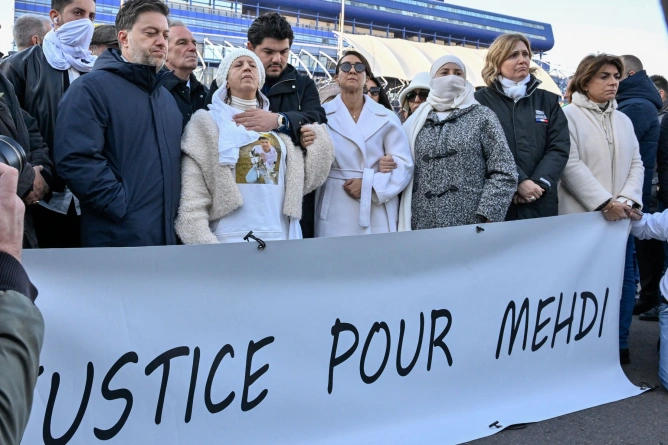
On November 13, 2025, the family was struck again. Mehdi, the youngest in the family, was executed in broad daylight. He was only 20 years old and wanted to become a police officer. French authorities described the attack as "an intimidation crime," targeting Amine by hitting his family. In the logic of the narco networks, silencing critical voices can go through eliminating their loved ones.
Mehdi's death became a symbol of a broader reality: narco violence is no longer just a local phenomenon, but a direct attack on civil society and the rule of law. That is why the case reached the plenary of the European Parliament, where it was treated as an alarm signal for all of Europe. Amine's presence in the hemicycle transformed the debate into a common plea – rare in European politics – for coordinated action against drug networks.
Latest News
23:06
22:49
22:37
22:22
22:03
See more news
NEWS ON THE SAME TOPICS
.webp)