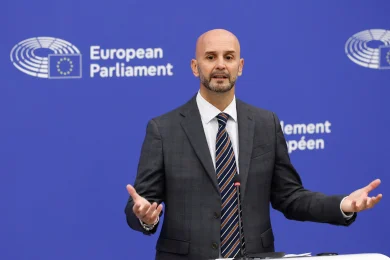
The European Parliament is debating a EU-wide ban on LGBTQ+ conversion practices.




Always see our news on Google
Members of the LIBE committee, along with PETI and FEMM, discussed legal options to introduce a ban on LGBTQ+ conversion practices into EU legislation, following a European Citizens' Initiative that gathered over a million signatures in a week, and the European Commission is expected to respond by May 18, 2026.
The European Parliament is debating an EU-wide ban on LGBTQ+ conversion practices, after a Citizens' Initiative with over a million signatures. The MEPs discussed in LIBE, together with PETI and FEMM, options for an EU-wide ban on LGBTQ+ conversion practices during a public hearing of the European Citizens' Initiative on this topic. Members of the committee on civil liberties, justice and home affairs discussed with the organizers of the European Citizens' Initiative about an EU-wide ban on LGBTQ+ conversion practices during a public hearing organized together with the petitions and women's rights and gender equality committees.
In short The public hearing focused on the European Citizens' Initiative Ban on Conversion Practices in the European Union, which gathered over a million signatures in a week.
The debate highlighted the need for EU legislation to cover protection gaps, cross-border enforcement difficulties, and the harms caused by these practices, recognized by the United Nations and the Council of Europe.
A large majority of MEPs discussed legal options, including classifying them as EU crimes or addressing them through a directive within existing competences, such as victim protection and non-discrimination.
The debate included the need for clear definitions between coercive practices and legitimate psychological or religious dialogue, the protection of minors, the role of guardians, educators, and healthcare providers, as well as the role of cross-border online platforms.
The idea was also discussed that EU funds should not be used to support organizations related to conversion practices, as well as strengthening support programs for victims and information actions.
Concerns were also expressed regarding a possible over-regulation, including the risk of restricting freedom of expression or religious counseling.
During the hearing, MEPs discussed ways to introduce a ban on LGBTQ+ conversion practices into European law, under the conditions in which the organizers of the Initiative invoked protection gaps, enforcement difficulties between states, and the lack of definitions and harmonized mechanisms that would allow practitioners to operate in multiple jurisdictions.
The organizers also presented experiences from the LGBTQ+ community and described the practices as often linked to family, religious, or social pressures, with long-term effects on victims, especially minors. They also cited the growing recognition from some religious and medical bodies that these practices are ineffective and harmful and supported the compatibility of their requests with the values outlined in the Charter of Fundamental Rights of the European Union.
In the interventions of the MEPs, the discussion focused on possible legal avenues for a ban, including the idea of treating the practices as EU crimes or addressing them through a directive based on existing competences, such as victim protection and non-discrimination. At the same time, the need for clear definitions that distinguish between coercive practices and legitimate psychological or religious dialogue was emphasized, as well as the need for measures to protect minors and clarifications regarding the role of guardians, educators, and healthcare providers.
MEPs also discussed the role of social networks and cross-border platforms, the coordination and consistent collection of data between member states, strengthening support programs for victims, and information actions to combat misinformation. At the same time, concerns were raised about a possible over-regulation, including the risk of restricting freedom of expression or religious counseling.
The next procedural milestone indicated is the response from the European Commission by May 18, 2026. The Commission also confirmed that it is conducting a study on conversion practices, with results expected in early 2027.
In the background document, conversion practices are described as interventions aimed at changing or suppressing a person's sexual orientation, gender identity, or expression, and it is noted that they remain legal in many member states, despite evidence of severe physical and psychological harm. The Parliament has repeatedly condemned since 2016 all forms of discrimination against LGBTQ+ individuals, including conversion practices and the pathologization of trans and intersex individuals, a position also reflected in a report on fundamental rights voted in LIBE in February 2026 and expected to be submitted to the plenary in March.
Latest News
18:18
18:04
17:46
17:40
17:36
See more news
NEWS ON THE SAME TOPICS