The former head of NATO's Military Committee warns that Europe must quickly transform its economy and society to prevent a major conflict.



Always see our news on Google
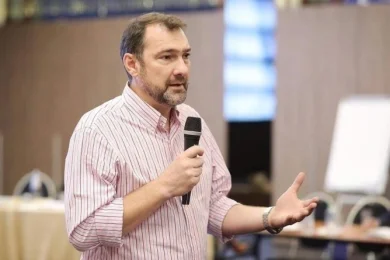
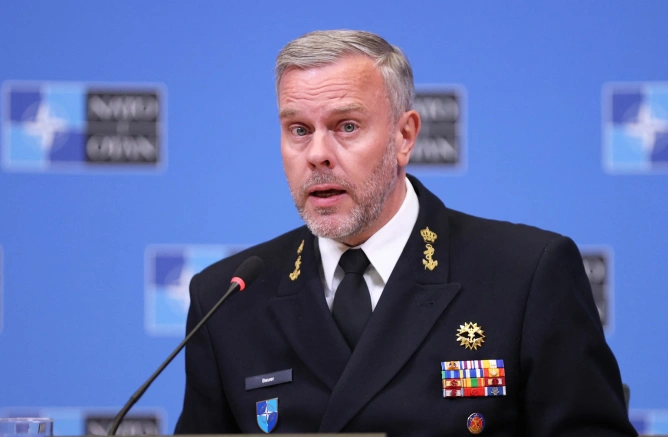
Brussels, December 2, 2025 - In an interview with the Danish publication Børsen, the former chairman of NATO's Military Committee, Dutch Admiral Rob Bauer, warns that Europe risks facing an extremely serious security scenario in the coming years, in which Russia and China could launch simultaneous military actions, putting unprecedented pressure on the United States and European allies. Bauer argues that the current geopolitical context requires a rapid structural change in Europe's social, economic, and industrial model, so that European states can ensure the credibility of deterrence and their own defense.
In short The former chairman of NATO's Military Committee warns of the risk of a simultaneous Russia-Europe and China-Taiwan offensive.
Europe must transform its economy and society at an accelerated pace to become a real deterrent factor.
Bauer states that Russia has no interest in stopping the war, and the U.S. remains essential for Europe's security.
Bauer claims that a possible Chinese attack on Taiwan could be accompanied by a major conflict initiated by Russia in Europe, aimed at diverting U.S. military attention. In his view, this scenario - considered by him "the greatest cause for concern for NATO at this moment" - could lead to a large-scale global conflict if not counterbalanced by a rapid increase in European deterrence capabilities. According to him, military coordination between Beijing and Moscow is possible and would make strategic sense for both regimes.
The former NATO official believes that Russia shows no real interest in ending the war in Ukraine and that internal pressures on the Putin regime are unlikely. He notes that Moscow has shifted to a war economy, has not achieved its strategic objectives, and that support from China, Iran, and North Korea sustains Russian military capacity in the long term. Bauer warns that regardless of how the conflict ends, the confrontation between Russia and Western democracies will continue.
In light of this context, Bauer argues that Europe must adopt a "societal mobilization model" similar to that in Ukraine, arguing that current European social and cultural norms are not suited to a severe crisis scenario. He compares the 12-hour work schedule of employees in the Ukrainian defense industry with the usual 40-hour schedule in Western European states, emphasizing that industrial transformation cannot occur without a major change in mindset and willingness.
He calls on institutional investors and the financial sector to engage in expanding European arms production, stating that an exclusive focus on quick profits ignores structural risks for the European economy in the event of war escalation. Bauer also criticizes the dependence on "just-in-time" efficiency principles, arguing that Russia's production pace is already superior and that Europe must shift to an accelerated industrial production model for defense.
The former NATO official expressed concern over a recent peace plan draft that would offer significant concessions to Moscow, deeming it "unacceptable." At the same time, Bauer states that he trusts the United States' commitments to NATO, including the application of Article 5, and rejects the idea that the alliance would be weakened. He believes that public debate regarding the withdrawal or weakening of American commitments undermines transatlantic unity and indirectly serves Moscow's interests.
In the discussion about European strategic autonomy, Bauer warned that a scenario of "independence from the U.S." would require defense spending of 5-10% of GDP to replace U.S. military, logistical, nuclear, and intelligence capabilities in Europe. In his opinion, Europe's inability to reproduce these capabilities in a short time makes the idea of decoupling from Washington "fundamentally dangerous."
Bauer concludes with a general warning: the faster Europe prepares for the scenario of a major conflict, the less likely it is to materialize. "If we do nothing, we will lose," he says, emphasizing that the time left for strengthening European defense "is constantly shortening."
Latest News
22:57
22:46
22:39
22:25
21:55
See more news
NEWS ON THE SAME TOPICS