Shhh, shhh... It's so quiet in Brussels



Always see our news on Google
The silence of the European Union in the face of the crisis in Venezuela is not an accident nor an institutional failure, but the expression of the limits of a project built for internal peace, not for geopolitical confrontation. The EU is caught between the expectation to react as a superpower and the reality of an architecture based on consensus, procedure, and strategic prudence. Almost eight months of waiting. The French called it Drôle de guerre, the English referred to it as Phoney War. Instead of confrontation, the warring parties threw tons of propaganda and defamatory leaflets. No one took the first strike, either out of concern for civilians or fear of providing the adversary with propaganda material.
In the absence of any concrete action, some soldiers cultivated gardens next to bunkers, while others spent their days in improvised cafes, trying to kill time in an imaginary war. In the cities, life continued as if nothing important had happened. Restaurants were open, shows accessible, social life did not seem disturbed enough to become unbearable. A few hundred kilometers away, camps were being built, and those who did not accept unconditional surrender received a bullet in the neck.
The West's hope was that time would work in favor of a peaceful solution, that economic sanctions and the blockade would bring the adversary to its knees without direct confrontation. Eight months of waiting. Eight months of hope. Eight months between the declaration of war and the first military action of the most devastating conflict in human history. After eight months, Nazi Germany attacked France, Belgium, the Netherlands, and Luxembourg, in a war that lasted for years and rewrote the history of the entire continent.
Almost any book about the European Union starts from this lesson of war. The European construction was born from a war that no one believed would live again. Europe has, officially, no opinion on what is happening in Venezuela, no unified and publicly assumed position. Now, of course, it is unclear who Europe is. Are we talking about Brussels, Paris, or Berlin? Does London still fit into this definition or not? Do Tallinn, Prague, or Bucharest count here? Who would be in a position to have a stance on this issue and what would be the natural process for validating this position?
As in any unclear situation, the questions are more numerous than the answers, especially since we are discussing a situation that seems to be, at most, secondary to European problems. Nevertheless, the discussion cannot be avoided, because what happened in Caracas opens themes that, to be honest with ourselves, we do not want to discuss: international law, transatlantic relations, the world of tomorrow, global security, and, especially, European security.
Sooner or later, someone has to talk about all this to avoid an anxiety that is increasingly present across Europe. The January discounts, open restaurants, disputes on social media, regulations and deregulations, Maduro dancing, generated by AI, do not completely mask the concerns of an entire continent. It is hard to be patient.
In Brussels, press briefings are held almost daily at the European Commission, where journalists ask about Venezuela and Greenland, and they are repeatedly given the same simple and uninvolved statements on issues that stir social media. More than 72 hours after the operation to extract Nicolás Maduro, none of the European institutions has published an official, institutionally assumed viewpoint. As strange as it may seem and as much as this fact may be criticized, the situation continues to fit within its normal limits.
The European Union was built as a world of peace, a peaceful construction dedicated to economic integration, which takes itself seriously when discussing the rule of law, sometimes so outdated that it seems anachronistic.
The EU does not conduct foreign policy because it was built not to conduct foreign policy.
Those who ask the EU to act in the field of foreign policy and are surprised or outraged by the silence or, possibly, the carefully chosen words of European representatives belong to two very clear categories. Either they lack the necessary knowledge related to the functioning of the institutions that make up the EU, or they engage in subtle anti-EU propaganda, by trying to highlight its incapacity, absence, or dysfunctionality, because it does not pronounce, does not engage, or does not act on foreign policy issues.
The foreign policy of the European Union is defined, above all, by what it is not and by what it cannot be in the context of the treaties in force. The EU's foreign policy is not a federal policy and does not belong to a single sovereign entity. The Union does not act as a state, but as a framework for coordination between national sovereignties. For this reason, any analysis that starts from the idea of a "Brussels foreign policy" as an autonomous entity misses the essence of the European construction and demands something that cannot happen.
For years, the role of the High Representative has been discussed, considered more symbolic than equivalent to a true foreign minister. Does anyone still remember how former holder of the position, Josep Borrell, was asked to resign for his visit to Moscow in February 2021, during which he was put in a situation described by commentators as humiliating by the Russian foreign minister, Sergey Lavrov? At that time, although he was publicly criticized, no European state assumed the situation in which the EU High Representative found himself, and Borrell continued his mandate until the end, in 2024.
Representation does not mean decision.
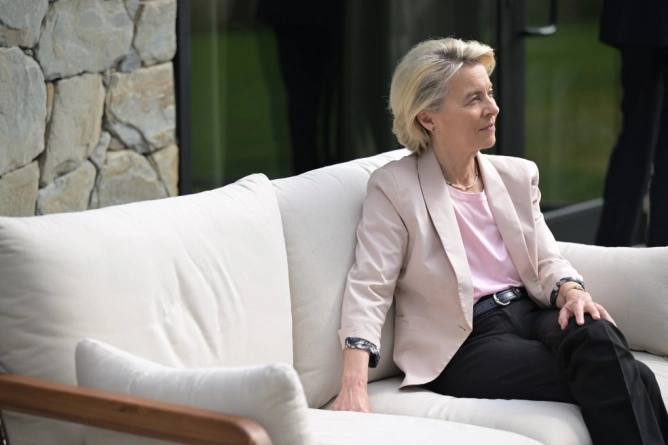
Thus, the EU's external representation is institutionally concentrated in the function of High Representative, but its authority is strictly derived from the will of the member states. Currently, this function is exercised by Kaja Kallas, former Prime Minister of Estonia, who combines the role of coordinator of foreign policy and that of Vice-President of the Commission. However, the High Representative does not define the political direction of the EU, but expresses and implements it. Their mandate is the result of decisions made collectively by the member states and cannot exceed the framework established by them.
The real center of decision-making in European foreign policy is the European Council, where major strategic directions, geopolitical priorities, and red lines of the Union are established. The rule of unanimity, applied almost systematically in this area, means that each member state holds a blocking instrument. This architecture explains both the EU's ability to act uniformly at certain moments and its difficulty in reacting quickly in crisis situations.
The need for a position in a situation like the one in Venezuela today may be legitimate, but to have it, so many things would need to change that it would be naive to believe that Europe can become a federation in 24 hours. The relationship between the EU and the member states in foreign policy matters is one of limited and reversible delegation. States have not transferred sovereignty, but have created a mechanism through which they can act together when their interests converge. The EU's foreign policy is thus a politically constructed consensus-dependent framework, not the expression of a central authority. In the absence of this consensus, the EU does not "fail," but operates exactly within the limits set by the treaties. It is not coincidental that the right-wing populist movements that contest the existence of the EU self-identify as sovereignists.
How real is the image of a Europe that should react as a superpower?
The image of a Europe that should react as a superpower was not created by a deliberate act, but through an accumulation of messages, compromises, and cultivated ambiguities over time. European institutions have communicated, for years, the idea of a "geopolitical," "strategic," "global" Union, without sufficiently explaining the concrete limits of this ambition. Added to this is the real regulatory power of the EU, visible in markets, technology, competition, or consumer protection, a type of authority that produces global effects and fuels the perception of a capacity for control that exceeds the physical borders of the Union. The discourse about a "European voice on the world stage" has been useful for legitimizing the European project internally, but has left the legal and political reality of the treaties in the shadows, creating a persistent dissonance between aspirational language and actual capacity for action.
This perception has also been reinforced by the constant rhetoric regarding the rule of law, which the EU has transformed into a central element of its political identity. Conditionality, reports, monitoring mechanisms, and economic sanctions have conveyed the idea of a Union capable not only of establishing rules but also of enforcing them. Internally, this has functioned as a tool of cohesion and discipline, while externally, it has created the impression of a moral and political authority with superpower reflexes. When the EU constantly speaks about values, norms, and respect for international law, public expectation is that these discourses should be accompanied by firm and immediate reactions whenever these principles are violated, including outside its borders.
This construction has also been decisively contributed to by national leaders, who have used the EU as a protective screen in political discourse. When decisions were popular, they became "European." When they were costly or unpopular, the responsibility fell to abstract Brussels. In foreign policy matters, this dynamic has been amplified by encouraging the image of a strong Europe, capable of regulating, sanctioning, and conditioning, without accepting, however, the real transfer of sovereignty necessary for a state-like response. Thus, the perception arose that the EU, a normative superpower, refuses to act as a military or strategic one out of fear, hypocrisy, or incapacity.
Concrete options regarding the discourse on the situation in Venezuela.
To understand what the concrete options are, it is necessary, first of all, to analyze the practical perspectives of the situation.
The legitimacy of intervention. The central problem is not whether Nicolás Maduro's regime is authoritarian or illegitimate from a democratic point of view, but who decides that this illegitimacy justifies coercive action. The international legal architecture places this competence in the hands of the UN Security Council or, in limited circumstances, within the framework of collective defense. A unilateral action, even if justified against a contested regime, remains legally problematic if it is not anchored in a recognized mandate. President Trump believed that the US, and he personally, could decide on this matter, and his statements during this mandate were more than explicit regarding the UN and other international institutions that would claim any form of jurisdiction over American decisions.
On the other hand, the European Union has built, for decades, a discourse based on the primacy of norms, procedures, and legal legitimacy. From this perspective, the EU is criticized for a possible tacit acceptance of an intervention without a clear basis in international law. This is about the risk of eroding the moral authority that the EU has constantly relied on as a fundamental argument. Therefore, the structural reluctance to validate or condemn the situation quickly is interpreted by critics as political ambiguity, while statements from officials suggest rather a strict dependence on legality.
Who has the right to judge. The political temptation is to turn the leader of the Venezuelan regime into an "obvious guilty party," a figure that must be sanctioned quickly, symbolically, and exemplarily. The problem is that political judgment is not equivalent to legal judgment, which, in this case, would most likely take place in a court in the United States. From the perspective of the EU's discourse over the last few decades, accepting a logic in which the capture, extradition, or sanctioning of political leaders occurs without a clear international judicial framework creates a dangerous precedent. If guilt is established through force, the rule of law risks becoming a selective instrument. For the EU, which has constantly supported the International Criminal Court and multilateral justice mechanisms, the Venezuela case creates a profound tension, as defending international justice becomes hard to sustain when accepting its circumvention seems politically convenient.
On the other hand, the position of the United States towards the International Criminal Court has always been clear and consistent. The US supports the idea of international criminal justice but refuses to recognize the Court's jurisdiction over American citizens. Washington believes that its national judicial system is sufficient to investigate and judge any crimes committed by its own citizens, rejecting any external authority that has not been explicitly accepted. In practice, the US selectively cooperates with the ICC when investigations target adversarial actors or isolated regimes, but reacts firmly when the Court tries to extend its jurisdiction over Americans or their allies. The chances of Nicolás Maduro reaching The Hague to be judged have been, realistically, nonexistent since the beginning.
Imposing democracy in Venezuela. For Europe, the idea of "exporting democracy" through coercive means raises a credibility problem. If the rule of law is imposed from the outside, without functional local institutions and without internal legitimacy, the result risks being a formal, fragile, and dependent democracy. Moreover, accepting selective interventions sends the signal that values are not universal but applied discretionarily, depending on the geopolitical context.
The EU has built a model in which the rule of law and democracy are strengthened through economic conditionality, gradual integration, and normative pressure. This logic underpins the Union's enlargement process, designed precisely to avoid democracies on the brink. Accession is not the result of external imposition but of a path in which candidate states must adopt, apply, and demonstrate the effective functioning of democratic institutions, judicial independence, and respect for the rule of law. Conditionality is not a punitive instrument but a mechanism for verifying the real acceptance of the rules of the game. Democracy becomes sustainable only when it is internally assumed, not when it is installed through pressure or force.
The fact that the enlargement process has intensified in the last year says enough about how the EU sees its future and about the model it is willing to accept. It is, however, again an internal process, not an external one. The EU does not export democracy or political models outside its borders.
In contrast to this European approach, the United States views Venezuela through a predominantly strategic lens, not procedural. From Washington's perspective, the main stake is not the gradual construction of accepted internal democratic institutions, but the removal of a regime considered illegitimate and hostile, in a geopolitical space traditionally perceived as a zone of direct influence.
As can be seen, the dissonance is total, and anyone who would publicly underline it could not do so without placing their ally, or former ally, in a delicate situation with explosive potential. Given that Venezuela is at a considerable distance from Europe and has never been a strategic point for the EU or its member states, except for statements regarding the rule of law, the only logical option remains silence, which involves much less risk than anything else that could be said.
Greenland is not Venezuela.
Although EU statements are just as reserved in the case of Greenland, the situations are, evidently, fundamentally different. The lack or restraint in declaration has, in both cases, the same diplomatic reason: it makes no sense to open a dispute that you cannot manage. The strategic problem is to avoid opening two fronts, two major crises simultaneously.
For the EU, Ukraine has become an existential issue, to a comparable extent to how it is perceived as such by Russia. The source of this confrontation is precisely the philosophy of EU enlargement explained above. It is debatable whether Ukraine would have been integrated into the EU or NATO in the absence of a direct threat to its existence, but this point is, today, outdated and analytically useless.
The idea that Ukraine could have followed the path of other Eastern European states that left the Soviet bloc and became full members of Western alliances is unacceptable to Moscow. A democratic, functional, economically prosperous Ukraine with a vote in Brussels represents a strategic nightmare for Russian political philosophy. Thus, if Ukraine's defense depended more on NATO and direct American involvement, and the EU had not been pushed to take on its own strategic destiny, perhaps Ukraine would not have become an existential problem for Europe. However, it is too late for such reflections.
Caught in this dilemma, the EU must accept the central, classic strategic rationale that you cannot open two major crises at the same time if you do not have the capacity to manage them simultaneously. For the EU, the eastern front, related to Ukraine, is already open and consumes political, economic, military, and internal legitimacy resources. Any serious political escalation on the Greenland dossier would mean straining relations with NATO and, implicitly, with the United States, precisely at a time when American support is indispensable for maintaining balance on the eastern flank.
The situation in which the European Union finds itself today, forced to prioritize fronts and accept uncomfortable strategic silences, has a reasonable historical parallel in Romania's experience around World War II. In 1940, Romania was faced with an unmanageable geopolitical reality: simultaneous territorial pressures from the east and west, at a time when great powers were redrawing spheres of influence without regard for the will of the states caught between them. Following the agreement between Nazi Germany and the Soviet Union, Romania was forced to cede territories successively, without the real capacity to open two diplomatic or military fronts at the same time. It was not about moral weakness, but about a structural limit of available power.
The parallel with the present is relevant not to equate the situations but to understand the decision-making logic. Romania in 1940 did not choose between good and evil, but between controllable losses and total collapse. Accepting the ultimatums was the result of a strategic constraint, not of a free political option. In a similar way, the EU today does not operate in a moral vacuum, but in a geopolitical environment where resources of attention, influence, and power are finite. Simultaneously opening major confrontations, whether political or strategic, risks leading to the loss of both. The historical lesson is that states and alliances do not fall because they do not react everywhere, but because they overestimate their capacity to react anywhere.
There is also a second, more subtle but essential parallel. Romania was caught between two imperial projects that did not recognize the right of small states to choose their own destiny. Today, Ukraine plays a similar role in relation to Russia, but the major difference is that the EU has chosen not to repeat the logic of tacit abandonment. That is why Ukraine has become existential for Europe. In 1940, Romania did not have an integration framework to offer it structural protection. Today, the EU knows that abandoning a state that has explicitly chosen the European model would undermine the entire enlargement project and its political credibility. In this sense, the EU's silences on other files are not a sign of indifference, but the expression of a painful historical lesson: when you are caught between multiple simultaneous pressures, survival depends on choosing the front that cannot be lost.
The parallel is one of strategic logic, not of a moral or historical nature. 2026 is not 1940. The political realities have nothing in common with those times, political actors play by different rules, and information travels around the globe in seconds. The world has become smaller and more sophisticated.
American skepticism towards the European Union.
It is a fact that President Trump is not a fan of the European Union. But it is equally true that what he believes is not new and has been supported by various American political scientists who have not hesitated to express and write about the shortcomings of the European model. Henry Kissinger and George Friedman viewed the EU as a remarkable project of internal stabilization, but problematic when evaluated with the classic tools of power politics. In a world that has returned to hard competition between states, to wars of attrition, and to the logic of spheres of influence, this distinction becomes essential.
For Kissinger, skepticism stemmed from the confusion between moral legitimacy and strategic capacity that the European Union has manifested since its inception. The quote attributed to him, "Who do I call if I want to call Europe?" remains famous, and so much has been written about this rhetorical formulation that it no longer matters whether he is the author or not. In today's context, this observation gains weight, as if someone expects the EU to react as a superpower, the failure is not institutional but one of expectation. Complementarily, George Friedman takes this argument further, explaining why the EU's limitations are not accidental but inherent to its architecture. For him, the Union is not a state in the making, but a temporary historical solution to the problem of European conflict. In a tense world, where great powers are reaffirming their geopolitical interests, the EU is forced to operate in a space that was not originally intended for it.
Perhaps this explains why, in many surprising cases for Europeans, President Trump seems to believe that Russia is stronger than the European Union. It is not a belief related to the size of the economy, the standard of living, or normative influence, but a strictly realist definition of power: power is understood as the ability to make quick decisions, impose costs on the adversary, and bear the consequences in the long term. Russia is a centralized state, with a clear chain of command, capable of acting coherently and accepting economic losses, diplomatic isolation, and human costs to defend its strategic interests. The European Union, on the other hand, operates through consensus, procedures, and compromises between member states, which gives it legitimacy but reduces its speed and, in the eyes of some external observers, clarity of decision-making. From this perspective, the EU appears as a fragile strategic actor, risk-averse and oriented towards minimizing internal costs, not towards assuming them. Russia knows what it wants and where it draws its red lines, while the EU constantly negotiates these limits internally.
This assessment is far from being a praise of Russia, but represents a cold observation of how power is perceived in realist logic and explains why Moscow manages to have supporters in some of the most surprising places.
It all comes down to how much time you have at your disposal.
Numerous estimates from security experts suggest that Russia is constrained by the American electoral calendar of 2026 to act decisively, if it does not want to lose an opportune moment in which it benefits from the understanding of the American president or his indifference towards the EU and Ukraine.
In 2026, the United States will hold midterm elections, renewing the entire House of Representatives and about a third of the Senate, along with a series of elections for governors and key state-level positions. Although the president is not on the ballot, these elections function as a political validation of the first two years of the mandate and can radically change the balance of power in Congress. The resulting legislative control directly influences the administration's ability to pass laws, approve budgets, confirm important appointments, and support or block foreign policy directions, making the 2026 election a decisive moment for US policy direction until the presidential elections of 2028.
Also in 2026, the United States will celebrate 250 years since the Declaration of Independence on July 4, 1776, a moment known as the Semiquincentennial. The significance is major, both symbolically and politically, as the anniversary marks a quarter of a millennium of the American state’s existence and can be used to reaffirm national identity, institutional continuity, and the global role of the US.
Together, the symbolic weight of the year 2026 becomes enormous in a world that appreciates relevant historical gestures, including for political actors interested in the legacy they leave to the societies they lead.
For the European Union, 2026 is the second year in the 10–15 years that European specialists estimate would be necessary for the development of relatively independent and functional defense capabilities. This timeframe assumes favorable political conditions and sustained investments. In more optimistic scenarios, which include accelerated industrial cooperation, joint acquisitions, integration of commands, and a constant political will, some key capabilities could become operational in 7–10 years. In more cautious scenarios, invoked in military and academic environments, the timeframe approaches 15–20 years, as defense means not only equipment but also common doctrines, real interoperability, secure supply chains, unified command, and, above all, political acceptance of the use of force.
For this reason, there is so much calm, statements are so restrained and calculated, and nothing is risked. What would be the point of starting to calculate that Greenland represents about 22% of the area of the US, that is, almost a quarter of American territory? What would be the point of responding nervously in an online meme exchange where no one convinces anyone of anything, but everyone flexes their muscles? Any change in the status of Greenland would produce a tsunami that would be hard to manage, and regardless of the invented scenario, the attempted prediction, or the simulation put on the table, the EU will not be the same after Greenland. It does not mean that it will disappear, although nothing is eternal, but it will no longer be able to exist in this form. For this reason, the calm in Brussels is a good sign, as long as it exists.
https://2eu.brussels/ro/analize/sss-sss-e-atat-de-liniste-la-bruxelles
Latest News
21:01
20:56
20:31
20:25
20:22
See more news