SPECIAL Informat.ro / The top international political topics of the last week. Effects on Romania


Always see our news on Google
The last week in global politics is dominated by a series of crises that are evolving simultaneously and testing, each in its own way, the resilience of the international order. The Iran-U.S. negotiations are in a deadlock over the "red lines" crossed, with Trump maintaining the blockade in the Strait of Hormuz and Tehran refusing any agreement without the prior release of frozen assets. At the same time, in the Caucasus, Rubio's visit to Yerevan and the signing of official documents with Armenia mark a new expansion of American diplomatic presence in the post-Soviet space.
The data was collected by the media monitoring platform NewsVibe Romania, during the period of May 19 - 25, 2026, identifying over 10,000 articles published in the global press. The ranking of international security themes is based on the number of mentions and their visibility in press articles from the last seven days, taking into account the estimated impact of each material and the recurrence of the subject in distinct sources.
The Iran-U.S. dossier: sanctions, the "red line" and nuclear negotiations
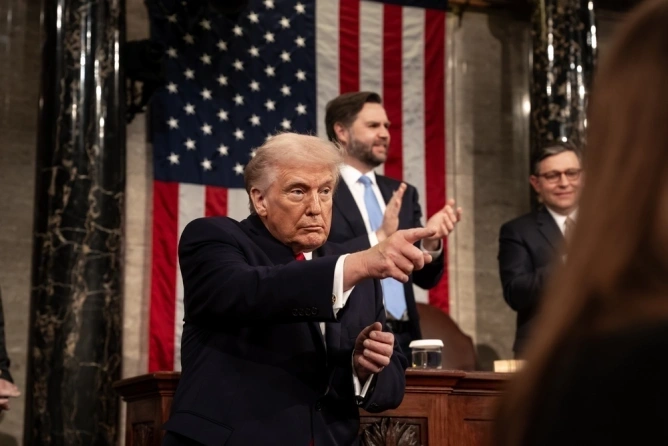
The relationship between Iran and the United States entered, in the last week, a phase in which the statements of President Donald Trump and Secretary of State Marco Rubio clearly outline the limits and pace of negotiations. Trump publicly insisted that there is "no rush" to sign an agreement with Tehran, stating that the negotiations are "constructive," but that "both parties need to take the necessary time to do it right." His message, reiterated on social media, is that Washington will not accelerate the process just to quickly deliver an agreement, even if discussions have reached the drafting phase of a memorandum of understanding regarding the cessation of hostilities and the reopening of the Strait of Hormuz.
At the same time, Trump conveyed that the American blockade on Iranian ships in the Strait of Hormuz "remains in effect until an agreement is reached, certified, and signed," explicitly linking the relaxation of maritime pressure to a concrete outcome of the negotiations. This conditioning reinforces Tehran's perception that sanctions and restrictions are used as a coercive tool and explains why Iran insists that the release of a portion of frozen assets be included even in the first step of a potential memorandum.
On the same hard line, but trying to convey a message of progress, Marco Rubio spoke this week about "significant progress" in discussions regarding Iran, suggesting that "there could be good news soon" if Tehran accepts the proposed framework for the Strait of Hormuz. He reiterated the criteria outlined by Trump for any agreement: Iran must not obtain a nuclear weapon, the strait must be reopened without a taxation system, and stocks of enriched uranium must be handed over or strictly controlled. Additionally, Rubio warned that any potential "breakthrough" depends on "full acceptance and then compliance" with the agreement by Iran, clearly marking that Washington will not relinquish its verification levers.
In his statements this week, Rubio insisted that the Trump administration will not allow Iran to "use American domestic politics to force a bad deal," responding to critics who say that pressure from energy prices and public opinion would push the White House towards concessions. His rhetoric supports the image of a determined president who will not accept an agreement just to calm the markets or reduce pump prices, even if a potential agreement is presented as being in the "final phase" of negotiations.
In this climate, Tehran's "red line," the phased release of frozen assets from the very first step of the memorandum, clashes with Washington's red line, which does not want to relax the blockade and sanctions before a clear commitment regarding Iran's nuclear core and regional behavior. This week has shown that, although both sides talk about "progress" and leave the impression that an agreement is possible, neither Trump nor Rubio are willing to offer signals of weakness: the president asks for time and conditions any relaxation on a "certified and signed" document, while the Secretary of State links any "good news" to Iran's strict compliance.
Repression, executions, and internal control in Iran
The negotiations dossier cannot be detached from the way the Tehran regime simultaneously manages internal dissent. Iranian authorities executed a man identified as Abbas Akbari, convicted of "moharebeh," or "waging war against God," destruction of public property, and opening fire on security forces, in the context of national anti-regime protests. Iranian officials characterized the execution as a response to "foreign-funded revolts" and to internal actions aimed at destabilizing the country.
Portraying Akbari as an agent of an external conspiracy reconfirms Tehran's recurring narrative pattern: any form of street protest is presented not as an expression of internal discontent, but as a product of foreign interference. His execution takes on, in this context, a dual role of message: internally, a warning that the regime does not tolerate violence against state institutions; externally, a demonstration that Iran will not be intimidated by Western pressures, whether they come in the form of sanctions or criticisms regarding human rights.
This internal dynamic is directly linked to the negotiations dossier with the U.S.: states concerned about human rights will use such cases to argue for maintaining or tightening sanctions, while Tehran uses the same "external conspiracy" rhetoric to dismiss criticisms and to strengthen its narrative of resistance against American pressure.
U.S. involvement in the Caucasus: Rubio in Yerevan and the geopolitical signal of the visit
One of the most relevant geopolitical signals of this week comes from the Caucasus: U.S. Secretary of State Marco Rubio is set to visit Armenia, with the visit including the signing of official documents between the two states. Although the exact nature of the agreements is not detailed in the cited source, the mere planning of a visit at the level of Secretary of State, accompanied by the signing of documents, indicates a deliberate intensification of American diplomatic presence in a region with extremely sensitive power geometry.
Armenia is at the intersection of overlapping and conflicting geopolitical interests: Russia, Armenia's traditional security ally through the CSTO structure, has gradually lost credibility after its inability to intervene in the Nagorno-Karabakh conflict; Turkey and Azerbaijan have redefined regional balances in their favor; and the European Union has progressively increased in importance for Armenia through monitoring missions and partnership agreements. Washington, through Rubio's visit and the signing of official documents, conveys that it does not intend to remain a passive actor in this dynamic.
The timing is strategic: Armenia is undergoing a period of repositioning its foreign policy, distancing itself from Moscow and moving closer to the West, and a visit at the level of American Secretary of State consolidates this trajectory, providing Yerevan with a signal that the partnership with Washington gains institutional substance. The signing of official documents, even without publicly available details, is a diplomatic act of significant symbolic and practical weight: it marks a formal commitment and creates a reference framework for bilateral relations.
The theme has direct implications in the broader debate about great power competition in the post-Soviet space. Every step Washington takes towards strengthening partnerships with states that are distancing themselves from Moscow's orbit is interpreted by the Kremlin as a new "front line" of Western pressure. The Caucasus thus becomes, alongside Ukraine and Moldova, one of the theaters where the geopolitical rivalry between the U.S. and Russia plays out not through direct military confrontation, but through diplomatic tools, bilateral agreements, and institutional construction.
The chemical crisis in California: Donald Trump and the test of American federalism in the face of industrial disasters
An industrial crisis has placed, this week, the relationship between the American federal administration and the authorities of the state of California in the spotlight. California authorities requested President Donald Trump to issue a state of emergency declaration following a leak of toxic chemicals at a GKN Aerospace facility in Garden Grove. The incident involves a tank with approximately 26,498 liters of methyl, a volatile and flammable substance that poses an imminent risk of collapse.
The scale of the risk necessitated the preventive evacuation of approximately 50,000 people from the affected area. A potential presidential declaration of a state of emergency would activate the Federal Emergency Management Agency (FEMA), allowing the mobilization of financial and operational resources to cover the costs of evacuation, temporary housing, and medical assistance needed for affected individuals.
The case highlights one of the structural tensions of American federalism: the relationship between state authorities and the federal administration in times of crisis. California, a state with a historically complicated relationship with the Trump administration, is forced to seek federal support from a president with whom it has often been at odds on public policy issues. The fact that the declaration of a state of emergency is a discretionary presidential decision places an essential tool for protecting citizens in a political, not strictly administrative, equation.
Beyond the internal political dimension, the crisis at GKN Aerospace also raises a fundamental question regarding the resilience of American industrial infrastructure and the ability of authorities to manage the risks associated with large chemical facilities located near populated areas. The evacuation of 50,000 people is not a routine event: it is a test of rapid response systems, inter-institutional coordination, and the credibility of the administration in the face of citizens facing a concrete and immediate threat.
Implications for Romania in a global political context
These dossiers are not, for Romania, distant foreign policy subjects. They intersect directly with Bucharest's strategic positioning at a time when NATO's eastern flank remains the most volatile area in the Western security architecture. The deadlock between Washington and Tehran regarding frozen assets and the Iranian nuclear program has immediate consequences for the stability of the Strait of Hormuz, one of the world's busiest energy arteries. Any escalation in this area, whether it comes from a breakdown of negotiations or from military action, a variant that Rubio explicitly left open with the phrase "we must manage it differently," translates into volatility in global energy markets. Romania, as a European state dependent on energy imports and actively engaged in diversifying supply sources, is directly exposed to this type of external shock.
Moreover, Rubio's statement that Israel retains the right to defend itself regardless of any agreement with Iran places an additional risk of regional military escalation on NATO's agenda. If an Israeli action against Iranian nuclear facilities were to trigger an Iranian response in the Strait of Hormuz or through proxy actors in the region, NATO allies, including Romania, would be pressured to quickly clarify their positions and support their American partners in a crisis scenario with far-reaching effects.
The intensification of American diplomatic presence in the Caucasus, materialized in Rubio's visit to Yerevan and in the signing of official documents, is a signal with direct resonance for Romania. Washington is building, step by step, a network of partnerships with states that are distancing themselves from Moscow's orbit, such as Armenia, Moldova, and Ukraine, and Romania is part of the same strategic arc. This logic confirms that the United States treats the eastern flank and the post-Soviet space as an integrated theater of geopolitical competition, not as a series of isolated bilateral dossiers.
For Bucharest, this means that its strategic relevance to Washington is directly proportional to its ability to remain a predictable, institutionally solid, and active partner in the region. Every step Rubio takes in Yerevan reinforces the logic of American military presence on Romanian territory: Romania is not a passive beneficiary of NATO security, but an active node of a deterrence architecture that extends from the Baltic Sea to the Black Sea and further into the Caucasus.
*****Synthesis made with the help of a data monitoring flow provided by the media monitoring platform NewsVibe Romania. The analysis, data, and images presented have been enhanced with the help of Machine Learning and Artificial Intelligence tools.
Latest News
07:11
23:02
22:34
22:03
21:43
See more news
NEWS ON THE SAME TOPICS