ANALYSIS The effect of budget cuts for research by the Trump administration. Opportunities and disadvantages for Romania



Always see our news on Google
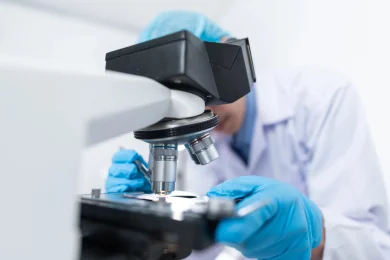
The Trump administration is not only hitting American research: the shockwaves of budget cuts and immigration restrictions are already being felt in laboratories across Europe and, indirectly, in the scientific community in Romania.
What is happening in the USA
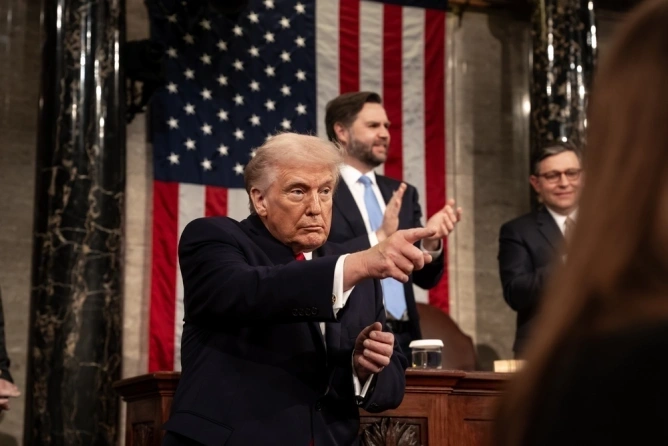
Trump has proposed drastic cuts to major research agencies – NSF, NIH, NASA, EPA – with cuts of up to 40-56% compared to current levels. Some of these plans have been tempered by Congress, but the climate of uncertainty has already led to canceled grants, frozen positions, and thousands of researchers laid off or pushed to other countries.
At the same time, the White House is tightening the visa regime, from H 1B to restrictions for citizens from dozens of "high-risk" countries, making it harder for foreign scientists to access the USA or extend their stay. These two directions – less money and tighter borders – are the basis for global effects.
Effects in Europe
Europe has long been a structural partner of American research, from global health to high-energy physics. When Washington cuts from NIH and other agencies, joint projects suffer: some consortia lose their American partner, others see their clinical studies or vaccine development for rare diseases underfunded.
A calculation cited in an analysis about the impact of cuts at NIH shows the size of the gap: to fully compensate for the lack of American funds, Europe would need to increase research investments by up to 150 billion euros annually – a scenario that neither Brussels nor national capitals consider realistic. In practice, programs like Horizon Europe can redirect some funds to affected themes, but these gestures are described by unions in French research as "derisory and unrealistic" in relation to the scale of the problem.
Collaborations and "big science"
In physics and astronomy, the proposed cuts for large-scale infrastructures put pressure on joint projects like CERN. Trump's budget plans also target American contributions to the Geneva accelerator, fueling the question of whether the USA is still a predictable partner in "big science".
Without American engineers and money, the pace of upgrades to the Large Hadron Collider and future particle machines could slow down, complicating the EU's effort to update its own strategy in particle physics. At the same time, European institutions are beginning to rewrite their internal rules to be more resilient in the face of "Trump-like" shocks at home – from independent evaluations to funding models less dependent on a single government budget.
Europe as a "scientific refuge"
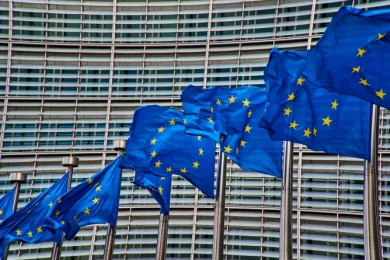
The earthquake in American research has also opened a window of geopolitical opportunity: the EU is trying to present itself as a refuge for scientists dissatisfied with Trump's policies. From Paris to Brussels, officials talk about "scientific asylum" and launch special programs, with dedicated grants and relocation packages for entire research teams.
President Macron, for instance, explicitly invited researchers from the USA to "choose France", and the European Research Council announced the doubling of the relocation budget, up to about 2 million euros for each researcher willing to move to the EU. The UK is also preparing a package of about 50 million pounds to fund grants and relocation costs for teams of scientists, largely from the USA.
However, not all European universities can serve as lifeboats: rectors and academic leaders point out that, under the conditions of "huge cuts" in their own budgets, it is "financially impossible" to accommodate all researchers who would like to flee the USA. The result is a paradox: Europe attracts talent, but many campuses are themselves underfunded.
Romania in the equation of change
Romania is not on the front line of the flow of American researchers seeking refuge, but it is in two sensitive points: as part of the EU and as a talent supplier for the American market. Politically, Romania has been among the countries that signed a letter to the European Commission, requesting funding and a dedicated immigration framework for researchers trying to leave the USA.
This positioning has two stakes: on one hand, strengthening Romania's profile as a state that supports academic freedom and international collaboration; on the other hand, the opportunity to attract Romanian researchers with experience in American laboratories, through instruments like ERC or Marie Skłodowska Curie programs.
The Romanian scientific diaspora and visas
On a human level, changes in the USA also affect Romanians working or studying across the ocean. If in the past the discussion focused on seasonal workers with H 2B visas, ethnographic studies show how the tightening of rules from the Trump era has changed their daily lives, from visa bureaucracy to feelings of insecurity and pressure to return.
In the research segment, the new barriers to H 1B visas and other types of permits, combined with anti-immigration rhetoric, particularly hit foreign PhD students and postdocs – a category in which Romanians are significantly represented. For a young researcher from Cluj or Iași, the European alternative – from Marie Curie programs to ERC grants in pan-European consortia – suddenly becomes more attractive, even if salaries and infrastructure do not yet compete with the best American universities.
What could follow
If the funding cuts of the Trump administration persist, and America becomes less open to foreign talent, Europe, including Romania, has both gains and losses at the same time. Gains – by being able to attract top researchers and strengthen its own collaboration networks; losses – because without American money and infrastructure, many global projects will slow down, from transatlantic clinical studies to particle physics.
For Bucharest, the key question is whether it will remain just a signatory of collective letters from Brussels or will turn the American crisis into a strategic opportunity: "brain repatriation" policies, funding packages for Romanian researchers who want to return from the USA, and a more ambitious participation in European programs that seek to fill the void left by Washington.
Latest News
08:19
08:03
07:40
07:23
07:11
See more news
NEWS ON THE SAME TOPICS