Special Informat.ro / From standard procedure to HiSky panic, triggered by Rogobete. What does the activation of pressurization sensors actually mean?



Always see our news on Google
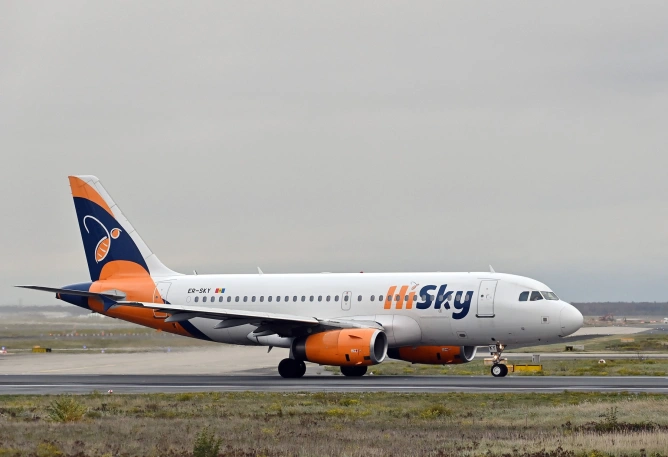
A HiSky plane that returns urgently to Otopeni, a Minister of Health announcing on Facebook "depressurization" and a crisis cell mobilizing hospitals with intensive care beds, a DSU chief stating that there are no injuries and that the landing will be "without problems". Amid public panic and technical reality, the key question remains: what does the activation of pressurization sensors on a passenger plane actually mean and how dangerous is a depressurization really?
The HiSky incident on February 22 - an emergency return to Bucharest after the activation of a pressurization sensor - is a case study on how a normal safety signal, designed to prevent an accident, can become, through alarmist political communication, fuel for fear of flying. Beyond the noise on social media, commercial aviation treats pressurization as a risk: serious depressurizations are rare, there are strict procedures, systems, and pilots who practice the scenario every six months.
The HiSky incident on February 22, when a Bucharest-Hurghada aircraft returned to Otopeni after "the activation of a cabin pressurization sensor", is, technically, a standard safety incident: the pilot decided to return, consumed fuel in the airport area, and landed safely, without casualties or injured passengers, as also stated in the Romanian Air Transport Association's statement on Sunday evening.
From an operational perspective, the activation of a pressurization sensor does not automatically mean "cabin depressurization", but rather a warning that pressure parameters need to be checked and, if necessary, the flight interrupted preventively - exactly the decision made in this case, according to the DSU.
Not every pressurization warning means that all passengers are left without air. In daily practice, sensors are activated more often for trivial reasons: a switch left on "OFF", a system left in manual mode, a component failing, a sensor giving false alarms, or minor weaknesses in the air system of an older aircraft. It is precisely for these situations that early warnings exist: the plane prefers to "turn back" earlier and return the flight than to risk a real depressurization at altitude, with passengers without masks on.
Public panic was fueled less by the actual situation on board and more by communication: Health Minister Alexandru Rogobete announced on Facebook that a plane "that has depressurized and is returning to Otopeni", inventorying ambulances and intensive care beds prepared for "possible multiple victims", although the airline and the airport spoke of a minor technical incident and the application of standard safety procedures.
From the cockpit, the same scene looks completely different. The plane departs normally, climbs to cruising altitude, and at some point, the pressurization system "alerts": a sensor indicates that the cabin pressure is not evolving as it should or that the automatic control mode is not functioning correctly. For the crew, it is not breaking news, but a standard emergency situation: they stop the ascent or descend to a safe altitude, inform the control tower about the emergency situation, turn the aircraft around, and prepare for a rapid but controlled landing.
Pilot Cezar Osiceanu explains for Digi24 simply: depressurization is one of the most serious emergencies on board, because, at high altitudes, the body has very little time before entering hypoxia - approximately 10 seconds at over 14,000 meters, up to a maximum of one minute at lower altitudes. That is why pilots practice every six months, in a simulator, the scenario of "Cabin Altitude Warning or Rapid Depressurization": they immediately put on oxygen masks, initiate emergency descent, and reduce altitude to where passengers can breathe normally.
The Romanian Air Transport Association deemed it "unacceptable" that a minister posts "breaking news" messages listing medical resources and suggesting the imminence of a disaster, in a context where, according to official information, there were no injuries, and the aircraft was set to land safely.
In contrast, DSU chief Raed Arafat publicly stated that there was no information from the pilot regarding injured persons and that "we expect the landing to be without problems", emphasizing that the ISU and SMURD forces mobilized at Otopeni represent a routine preventive measure, not an indication of an ongoing disaster.
Beyond the HiSky episode, the annual safety reports of AIAS (Authority for Investigation and Analysis for Civil Aviation Safety) show that Romania monitors the category "fire, smoke, depressurization and air quality in the cabin" at a systemic level, but does not publish long-term statistics dedicated exclusively to depressurizations; these events appear more as isolated, media-covered cases than as a significant numerical phenomenon.
Examples such as the serious incident of Blue Air in 2017 (the cabin did not pressurize, oxygen masks were deployed, emergency descent was executed), documented in detail by AIAS, show that the investigation system works and generates safety lessons, but also that in recent years there has not been a long string of serious depressurizations that would justify, until now, a specialized Romanian study.
The national safety plan 2022–2026 confirms that depressurization is officially treated as a specific risk and provides for mitigation measures, but the HiSky episode shows a gap between how aviation professionals manage such incidents - as a standard procedure in the "safety first" paradigm - and how some political messages can transform a controlled technical incident into a perceived public crisis.
Analysis conducted with the support of NewsVibe and Perplexity
Latest News
11:08
11:01
11:00
10:53
10:48
See more news
NEWS ON THE SAME TOPICS