Virgil Popescu hopes for an agreement in December on EU energy networks, with funding for interconnections still under discussion



Always see our news on Google
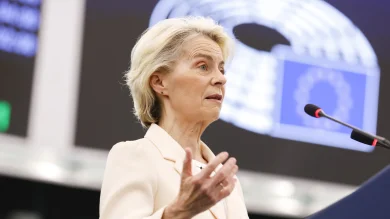
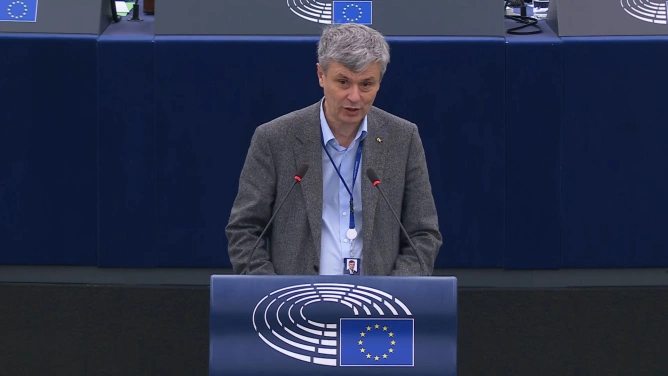
The European Parliament and the Council of the EU have made progress in discussions on planning cross-border energy networks. After the third trilogue on the TEN-E Regulation, negotiators still have to determine what share of congestion revenues can be reserved for projects that reduce bottlenecks between electricity grids.The MEP Virgil Popescu, the EPP shadow rapporteur for the revision of the regulation on trans-European energy infrastructure (TEN-E), said on 16 November that he hoped for an agreement with the Council of the EU in December. According to Agence Europe, Parliament and the Council made progress at the 10 November trilogue on network planning. Technical discussions continue on using congestion revenues to finance cross-border electricity projects.
In brief
1.Parliament and the Council agreed on a timetable for infrastructure planning at the third trilogue, according to Agence Europe. The agency indicates early December for the next round of negotiations.
2.The Council accepted Parliament's proposal for a comprehensive assessment of energy infrastructure. The funding mechanism provided for in that proposal would be addressed in the review clause.
3.In its June mandate, the Council provides for the share of unused congestion revenues that would be reserved for eligible projects to increase from 10% in 2028 to 25% in 2031. The final share remains under discussion.
In a statement published on Facebook and carried by News.ro, Popescu said that a better-interconnected grid would enable electricity to be transported to the regions where it is needed. The compromise he hopes to secure would establish the rules according to which the EU plans networks, selects priority projects and supports cross-border investment.
Parliament proposed that the European executive assess energy infrastructure once every two years, complementing the central scenario for network development up to 2050. The assessment would examine priority corridors, bottlenecks and investment needs. According to Agence Europe, the institutions agreed on the timetable and left the funding mechanism from this proposal for the review clause.
Congestion revenues arise from the allocation of limited electricity transmission capacity between bidding zones. In the mandate adopted in June, the Council proposed reserving a share of unused revenues for cross-border projects that reduce congestion. The share would be 10% from 1 January 2028 and would increase annually by five percentage points, reaching 25% in 2031. The reservation would not apply to revenues from borders between bidding zones within the same country or to those collected before the regulation enters into force. After eight years, remaining unspent funds could be used according to the rules already in force for the electricity market. Agence Europe reports that Parliament wants a target to be set, while the Council prefers flexibility in the use of the funds.
The European Commission proposed the revision in December 2025, as part of the package on European networks. The regulation also covers hydrogen infrastructure and CO₂ transport. Parliament confirmed its negotiating mandate in September, based on the report by MEP Tsvetelina Penkova (S&D, Bulgaria). If negotiators reach a provisional agreement, Parliament and the Council must formally approve it.
Latest News
13:05
12:59
12:58
12:55
12:54
See more news
NEWS ON THE SAME TOPICS