The Trans-Balkan Pipeline enters a new capacity regime in October, while the Energy Community expects more competitive tariffs



Always see our news on Google
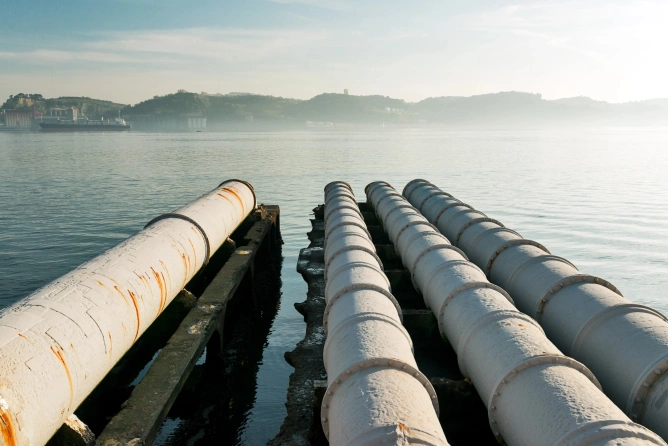
The trans-Balkan route should enter, as of October 1, a stage closer to the operation of an integrated commercial route, with standard capacity products, coordinated rules for reservations and balancing, and tariffs that the Energy Community describes as more competitive. The change aims to make the infrastructure between Greece, Bulgaria, Romania, Moldova, and Ukraine easier to use for alternative gas flows following the reduction in Russian imports.
The announcement does not mean that the transport price will automatically fall by a certain amount for all deliveries, nor that gas transported through the route automatically becomes cheaper for consumers. The cost of a delivery depends on the reserved points, capacity products, the tariffs of the operators on each segment, the price of gas at the source, and the extent to which the new capacity is actually used.
In brief
Since August, EU states have also been applying the European network codes to interconnections with the non-EU parts of the Energy Community, and these have begun introducing reciprocal rules.
The Gas Forum is calling for common rules for capacity reservation and balancing and open access for users along the entire trans-Balkan route.
The Energy Community says more competitive tariffs are expected from October, without publishing in its statement a single reduction amount for the entire route.
Transgaz has already published the tariffs for the gas year October 1, 2026–September 30, 2027, and has put up for auction the capacity for October at Negru Vodă 1, Isaccea 1, Giurgiu–Ruse, and Ungheni.
The route is considered particularly relevant for diversifying the supply of Moldova and Ukraine and for connecting the markets of Southeastern Europe.
The change as of October 1 is the result of an integration process that began before the current forum. European rules on capacity allocation and network operation must be applied by member states also at entry and exit points to third countries, which reduces the difference in regulatory regimes between the segment located in the EU and that in the Energy Community states.
The Secretariat says that the non-EU parties have begun responding through reciprocal measures. The objective is for a trader to be able to use the route under compatible rules for reservation, balancing, and access, instead of managing a chain of different national regimes that can turn physically available infrastructure into a difficult-to-use commercial route.
The trans-Balkan pipeline was built primarily for flows of Russian gas from the north toward the Balkans and Turkey. Following the change in supply routes, the infrastructure can be used in reverse for volumes entering from Greece or other southern sources and moving through Bulgaria and Romania toward Moldova and Ukraine.
In Romania, Transgaz has already published the parameters for the 2026–2027 gas year. The transport tariff based on the quantity actually transported is set at 1.51 lei/MWh, while the costs for capacity reservation are set separately depending on the point, duration, and type of product. This commodity tariff should not be confused with the total cost of transport along the regional route.
In September, the Romanian operator announced auctions for capacity in October at several relevant interconnections, including Negru Vodă 1, Isaccea 1, Giurgiu–Ruse, and Ungheni. Bulgartransgaz separately published the prices and multipliers applicable to firm and interruptible products for the same gas year.
That is why there is no single “trans-Balkan pipeline fee.” A delivery to Moldova or Ukraine crosses several systems and may require successive or grouped reservations, while the reduction in commercial cost depends on the coordination of tariffs and the elimination of overlaps or products that are difficult to use.
Romania had already previously reduced the reservation price for certain products of “Route 1,” while the regional operators sent the Commission a roadmap in March for a longer-term solution. ANRE documentation shows that the operators undertook to offer, as of October 1, standard annual, quarterly, monthly, daily, and within-day products and to integrate the solution’s characteristics into capacity auctions.
The stakes go beyond transport costs. The Energy Community presents the Trans-Balkan Pipeline as a diversification route for Moldova and Ukraine at a time when the EU is preparing to eliminate its dependence on Russian gas, while the Commission is working on a possible adaptation of REPowerEU for the Energy Community parties.
The actual effect can be measured only after the start of the new gas year. The volumes reserved, the differences between the actual tariffs and previous levels, and the physical use of capacity will show whether the change transforms the route from an available technical option into a commercial corridor used consistently.

Latest News
12:18
12:18
12:15
12:07
12:03
See more news
NEWS ON THE SAME TOPICS


.webp)