The European Union opens the first accession cluster for Ukraine and Moldova



Always see our news on Google
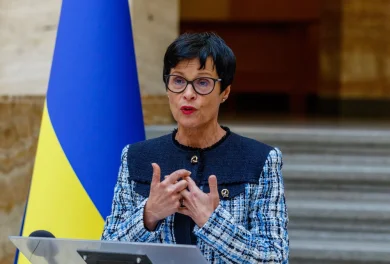
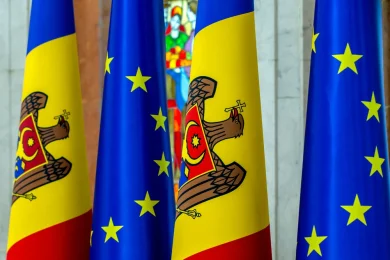
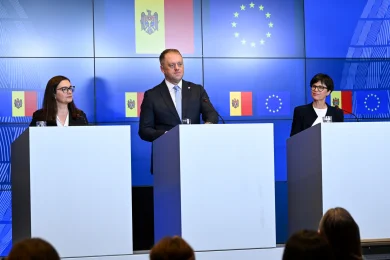
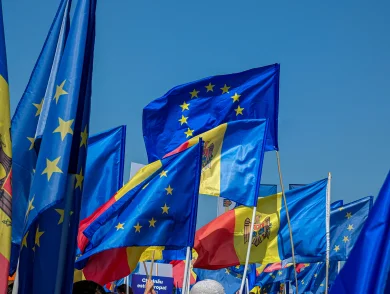
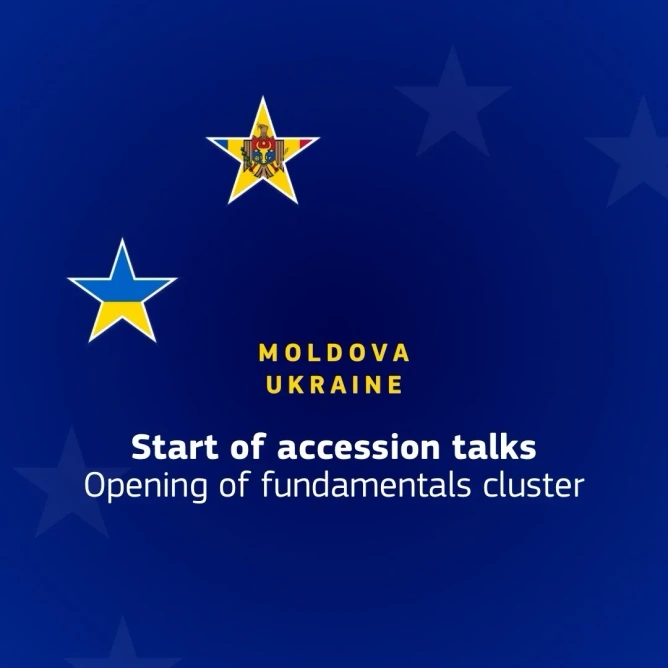
The European Union will open the first negotiation cluster with Ukraine and the Republic of Moldova on Monday, after the agreement of all member states, in a step that transforms the accession negotiations from a formal framework into a substantial process by chapters. The "Fundamentals" cluster is considered the basis of the accession process and covers the rule of law, democratic institutions, and the principles on which the European Union is built.
The President of the European Council, António Costa, stated that all member states agreed to open the first negotiation cluster with Ukraine and the Republic of Moldova. "At the first intergovernmental conference on Monday, we will open the cluster regarding the fundamentals, the backbone of the accession process," Costa conveyed.
In short
1. All member states of the European Union have agreed to open the first negotiation cluster with Ukraine and the Republic of Moldova.
2. The first intergovernmental conference for this cluster will take place on Monday and will focus on the "Fundamentals" of the accession process.
3. The cluster covers the rule of law, democratic institutions, and the core values of the European Union.
4. Roberta Metsola stated that a larger Europe is "a stronger and safer Europe."
5. António Costa and Ursula von der Leyen presented enlargement as a strategic choice and as an investment in peace, security, and prosperity.
The decision marks the first substantial step in the accession negotiations of Ukraine and the Republic of Moldova after the intergovernmental conferences in June 2024, when the negotiations were formally opened. The Council of the European Union mentions that the first accession conference with the Republic of Moldova took place on June 25, 2024, following the European Council's decision in December 2023 and the approval of the negotiation framework in June 2024.
In the case of Ukraine, the Council shows that the first intergovernmental conference also took place on June 25, 2024, formally opening the accession negotiations. Since then, European leaders have repeatedly called for the opening of negotiation clusters, starting with the "Fundamentals," based on the enlargement methodology and the principle of merit.
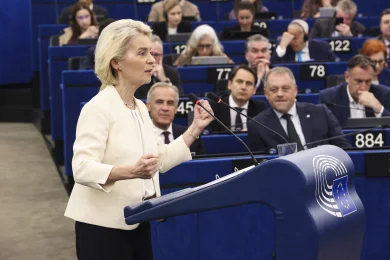
Roberta Metsola, the President of the European Parliament, welcomed the agreement of the member states and linked the decision to the long-supported position of the Parliament. "A larger Europe is a stronger and safer Europe," Metsola conveyed, adding that enlargement is "the strongest geopolitical tool" of the European Union and that Ukraine and the Republic of Moldova "belong to Europe."
António Costa presented the decision as a political signal in an unstable geopolitical context. He stated that the European Union's offer of peace, stability, and opportunity is "unmatched" and that enlargement remains one of the greatest success stories of the European Union.
Ursula von der Leyen conveyed that the opening of the "Fundamentals" cluster recognizes the determination, courage, and work done by Ukraine and the Republic of Moldova for reforms, even under significant pressure. She stated that this cluster covers the core values and principles of the European Union, from the rule of law to strong democratic institutions.
The opening of the first cluster has an important practical stake. In the enlargement methodology, negotiations are organized into thematic groups of chapters, and the "Fundamentals" cluster is the one that sets the pace for the entire process. It concerns the areas where the European Union demands sustainable results before accession can advance: justice, fundamental rights, democratic institutions, public administration, public procurement, statistics, and financial control.
The agreement of the member states comes after a period in which the effective opening of the first cluster was politically blocked. Reuters reported that all member states agreed at the beginning of June on the first step in the accession negotiations with Ukraine and the Republic of Moldova, and the Cypriot Presidency of the Council of the European Union began preparations for the formal opening of the first group of chapters, focused on democratic standards and the rule of law.
The European Parliament had previously called for the rapid opening of negotiation clusters with Ukraine and the Republic of Moldova, starting with the "Fundamentals." In a position from March 2026, MEPs supported that enlargement must remain merit-based and reversible, without shortcuts regarding the fundamental values and principles of the European Union.
For Ukraine, the opening of the cluster takes place in the context of Russia's aggression war and the reforms required for closer ties with the European Union. For the Republic of Moldova, the step occurs in a difficult regional security context, where European integration is linked to strengthening institutions, economic resilience, and reducing vulnerabilities to hostile influences.
The common message from European leaders is that enlargement is no longer presented merely as a technical process of legislative alignment. Through Ukraine and the Republic of Moldova, the opening of the first cluster also becomes a geopolitical signal: the European Union is using its accession policy to bring closer states on the front line of confrontation with Russia and to reduce gray security areas on the continent.

Latest News
23:00
22:55
22:47
22:39
22:33
See more news
NEWS ON THE SAME TOPICS