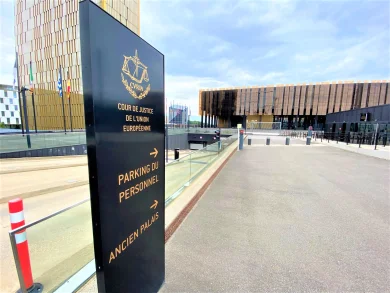
CJEU says that victims of car accidents can sell their claims to companies that then sue the insurers.




Always see our news on Google
People compensated after car accidents can transfer to specialized firms the right to claim in court differences in compensation from insurers, if national legislation allows this, the Court of Justice of the European Union has decided. The ruling concerns a case from Poland, where several individuals whose cars were damaged believed that the amounts received from insurers did not fully cover the material damage.
In short
The CJEU ruled that the European Directive on mandatory car insurance does not prohibit the assignment of a compensation claim to a specialized firm.
The case comes from Poland, where individuals compensated after car accidents sold to professionals the right to claim the difference in compensation from insurers.
The Court states that the firm purchasing the claim is not a "damaged person" in the sense of the European directive.
The directive protects victims of road accidents and their right to direct action against the insurer, but does not regulate the assignment of claims.
National courts remain those that apply national law regarding the validity of assignment contracts and the right of the purchasing firm to go to court.
The case originated from several road accidents in Poland. Owners of damaged vehicles received compensation from the insurers of the individuals responsible for the accidents, but believed that the amounts were too low compared to the actual value of the material damage.
They entered into assignment contracts with firms specialized in purchasing and recovering claims. Through these contracts, the firms took over the right to claim from insurers the difference between the compensation already paid and the estimated value of the full repair or complete damage. In return, the injured parties received a payment from the firms that purchased the claim.
The firms then sued the insurers, in their own name and on their own account. The insurers contested these actions and argued that the compensation initially paid fully covered the damage. They questioned the right of the firms to go to court, citing the disproportion between the amounts paid to the injured parties for the assignment and the amounts subsequently claimed from insurers.
The Polish court in Gdynia asked the Court of Justice to clarify whether Directive 2009/103 on compulsory motor liability insurance opposes such a transfer of claims. The question was important because the European directive aims to protect victims of road accidents and guarantees the existence of mandatory insurance for motor liability.
The Court of Justice responded that EU law does not prohibit this type of assignment. The directive on mandatory car insurance does not regulate the transfer of compensation claims to third parties nor the procedural standing of those who purchase these claims to seek payment before national courts.
The judges distinguished between the person who suffered the damage and the firm that purchases the claim. The accident victim is the person entitled to compensation for the loss or injury caused by the vehicle. The firm that purchases the claim thus acquires the right to seek money not directly from the accident, but from an assignment contract concluded with the injured person.
For this reason, the Court states that a professional who has purchased a compensation claim cannot be considered a "damaged person" in the sense of Directive 2009/103. Their rights do not arise from the applicable civil liability norms concerning the accident, but from the contract through which the victim transferred the claim to them.
This conclusion has implications for the right to direct action provided for by the directive. The directive obliges member states to guarantee injured persons the right to act directly against the insurer of the person responsible for the accident. However, the Court states that this provision refers to the victims of the accident, not to the firms that subsequently purchase their claims.
The ruling does not invalidate the actions brought by recovery firms. The Court states that, since the directive does not regulate the assignment of claims, member states may have national rules that allow the transfer of these rights and the possibility for the purchasing firm to sue the insurer in its own name.
In the Polish case, the national court indicated that, according to Polish law and national jurisprudence, claims resulting from material damages caused in road accidents are not strictly personal and can be assigned. The Court of Justice does not decide the concrete validity of the contracts in the Polish disputes, but the interpretation of European law.
Directive 2009/103 establishes the obligation of member states to ensure that civil liability for vehicles is covered by insurance. It also aims for victims of car accidents to receive comparable treatment in the European Union, regardless of where the accident occurs. The specific level of compensation and the rules of civil liability remain, to a large extent, in national law.
The Court reminds that the directive does not harmonize all rules regarding civil liability for road accidents. Member states remain free to determine what damages must be compensated, the extent of the right to compensation, and the persons entitled to compensation, within the limits of the minimum requirements imposed by EU law.
For injured persons, the ruling confirms that European law does not block the possibility of selling a remaining claim against the insurer to a specialized firm, where national law allows this. Such an assignment can bring a quick payment for the injured person, but it can also mean that the firm purchases the claim at a lower price than the amount it will later demand in court.
For insurers, the ruling maintains the possibility of contesting the amounts claimed by purchasing firms before national courts. They can argue that the compensation initially paid covered the damage or can invoke national law reasons regarding the assignment contract, if such reasons exist in the applicable legislation.
For firms specialized in debt recovery, the decision confirms that the Directive on mandatory car insurance does not exclude them from the national mechanism through which they can take over claims and enforce them in court. Their right to action does not come from the status of accident victim, but from national law that allows assignment and from the contract concluded with the injured person.
The CJEU ruling leaves the case in the hands of the Polish court. The national tribunal must resolve the disputes in accordance with the interpretation given by the Court, and that same interpretation is binding for other national courts facing similar issues.
The ruling was pronounced on June 25, 2026, in case C-277/25, Helpfind Funding and Others. The case concerns the interpretation of Directive 2009/103 on motor liability insurance and the obligation to insure vehicles. The referral was made by the Sąd Rejonowy w Gdyni, a court in Poland, in disputes between firms that purchased compensation claims and several insurance companies.
Latest News
14:53
14:47
14:43
14:41
14:36
See more news
NEWS ON THE SAME TOPICS