The European Commission is looking for founding members for the EU-Ukraine Alliance for Drones



Always see our news on Google
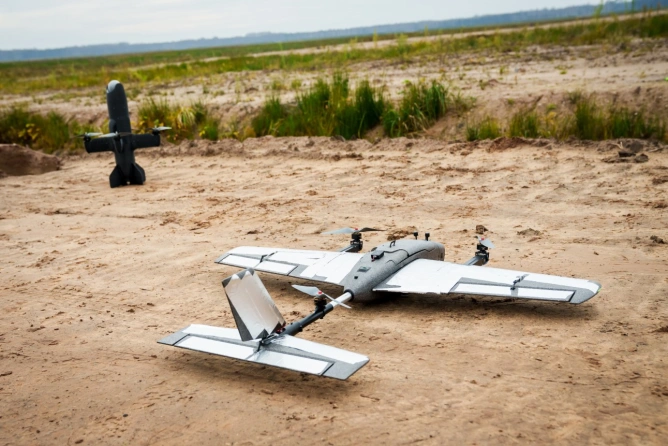
The European Commission has launched the call for the selection of founding members of the EU-Ukraine Alliance for Drones, an industrial initiative that will support the development of a European and Ukrainian ecosystem of drones and anti-drone systems, in a context where defense against unmanned aerial vehicles has become a security priority for the EU.
In short The European Commission launched on May 5, 2026, the call for founding members of the EU-Ukraine Alliance for Drones.
The call is open until May 25, 2026, at 23:59 CEST, and aims to select members who will form the first council of the alliance.
The alliance will bring together entities from the EU, EEA EFTA states, and Ukraine with experience in the drone and anti-drone ecosystem for defense.
The initiative aims to leverage research and development for production, support scalable production, and capitalize on Ukraine's lessons regarding drones in wartime conditions.
Selected members must be eligible entities, not controlled by third countries, and must comply with EU restrictive measures.
The European Commission has launched a call for expressions of interest aimed at selecting the founding members of the EU-Ukraine Alliance for Drones. The initiative will be industry-led and will bring together system manufacturers, innovators, startups, scale-ups, and end-users from the European Union, EEA EFTA states, and Ukraine, with the aim of contributing to the development of a comprehensive European drone and anti-drone capability.
The call was published on May 5, 2026, by the Directorate-General for Defence Industry and Space of the European Commission, DG DEFIS. The deadline for submitting applications is May 25, 2026, at 23:59 CEST, and the procedure is organized in a single stage.
The objective of the first call is to select the founding members of the alliance. They will form the first council of the EU-Ukraine Alliance for Drones and will have a direct role in defining the activities and priorities of the initiative in the launch phase.
The Commission points out that repeated violations of the airspace of EU member states have highlighted the urgency of creating a flexible, agile, and modern European capability to counter unmanned aerial vehicles. Drones and anti-drone systems are one of the priority capability areas identified and agreed upon by member states.
The initiative is part of the Defence Readiness Roadmap 2030, which emphasized the need to treat drones and anti-drone systems as a priority, considering the level of threats and the need for a coordinated approach in the interest of EU security. Efforts to strengthen European capability in this area are also linked to the proposed European Drone Defence Initiative within the same roadmap.
The Commission states that member states have already begun working on drones and anti-drone capabilities in a dedicated coalition, and its role is to intensify support for these efforts, including by facilitating dialogue with industry and strengthening cooperation with Ukraine.
The alliance is built on the idea that a stronger European capability in the field of drones and anti-drone systems must leverage the lessons learned by Ukraine regarding innovative ecosystems, the link between research and development and production, scalable production capacity, and ongoing technological development.
According to the draft terms of reference, the EU-Ukraine Alliance for Drones aims to connect industrial actors so that they can learn from each other, especially from Ukraine's adaptation in wartime conditions on a large scale, and to jointly build drone and anti-drone capabilities.
The alliance is expected to closely interact with the Priority Capability Coalition led by member states and focused on drones and anti-drone systems. Synergies will be sought especially with working groups on common procurement and technology hubs for drones.
In the short term, by 2026, the alliance should facilitate connections between industrial actors in the EU, EEA EFTA states, and Ukraine and government entities working in the coalition for drones and anti-drones. The goal is a better mutual understanding of the needs of member states, EEA EFTA states, and Ukraine.
Also in 2026, the alliance aims to contribute to strengthening supply security and supply chains by identifying vulnerabilities and dependencies on components. It should enhance understanding of European industrial cooperation in the field of defense, including European defense industrial programs.
The alliance will facilitate the exchange of best practices with Ukraine regarding increasing production, sharing know-how, and access to testing facilities, including in Ukraine. These elements could enable a faster connection between innovation, testing, and the production necessary for defense capabilities.
In the medium term, in 2026 and 2027, the alliance should facilitate cooperation and industrial integration between the EU and Ukraine, including through the creation of joint ventures. It will also encourage the industry to propose technological roadmaps and possible standards for interoperability.
The draft terms of reference also provides for identifying ways to accelerate production, including through mutual recognition of qualification and certification processes. In the long term, in the next multiannual financial framework, the alliance could pave the way for larger-scale initiatives in the field of drones and anti-drones.
To be eligible as members, legal entities must be established and have a management structure in the EU, EEA EFTA states, or Ukraine. They must not be subject to the control of a third country or an entity from a third country and must contribute to the European ecosystem, including the Ukrainian one, of drones for defense.
Public entities wishing to participate as public partners must be established in the EU, EEA EFTA states, or Ukraine and must contribute, or have plans to contribute, to the European ecosystem of drones for defense. Candidates must not be subject to restrictive measures or EU sanctions and must fully comply with these measures.
The evaluation of applications will take into account experience and expertise in the defense drone ecosystem, including proven experience in the battlefield, alignment of the candidate's expectations with the objectives of the alliance, and commitment to active participation. Candidates may be contacted for further clarifications if necessary.
The first council of the alliance will be formed by founding members, the European Commission, and the Ukrainian side, for a period of two years. The council will be co-chaired by the Commission and Ukraine, and the Commission will provide the secretariat for the council in the initial phase.
After the initial period, the council will include the Commission and up to 15 members elected by the alliance members for a three-year term. At least five members of the council must be representatives of small and medium-sized enterprises or a startup.
The Commission and Ukraine will have veto rights over decisions that affect the overall strategy, roadmap, and objectives of the alliance. This right will apply, among other things, to the selection or removal of participants, inviting guests, and updating the terms of reference.
The alliance will be able to create working groups on specific themes or horizontal issues. These can organize workshops, experience exchanges, exercises, training, technical documents, studies, guidelines, product testing in Ukraine, procurement sessions, and meetings for establishing partnerships.
Public partners will be able to contribute to the activities of the alliance by articulating the needs and priorities of the public sector in the field of drones and anti-drones. They can share information regarding the capability objectives of member states, identified needs, and planned or ongoing collaborative initiatives.
The draft terms of reference establishes that only unclassified information will be managed within the framework of the alliance. Participants must adhere to information sharing rules, use Traffic Light Protocol markings, and sign a confidentiality agreement.
The document also provides rules regarding intellectual property. Pre-existing rights over information, products, or services made available within the alliance remain with the participant who owns them, and no participant receives exclusive rights based on the terms of reference.
Participation in the alliance is not compensated by the Commission, and travel and subsistence expenses of participants cannot be reimbursed by the Commission. All participants must comply with applicable legislation, including EU competition rules, and the exchange of competitively sensitive information or trade secrets is prohibited.
Personal data collected in the selection process will be managed by the Commission through DG DEFIS, unit A.1, for the selection of participants, validation of eligibility criteria, and the functioning of the council, working groups, and secretariat. The Commission specifies that the data will not be used for automated decisions or profiling.
The EU-Ukraine Alliance for Drones follows the announcement made by the President of the European Commission, Ursula von der Leyen, in the 2025 State of the Union address, in which she presented measures to counter the growing threat posed by drone warfare.
The initiative is part of European efforts to strengthen defense preparedness by 2030 and the Commission's plans regarding drone security and anti-drone systems. It comes at a time when Ukraine's experience has become relevant for the rapid development, testing, and scaling of drone-based defense technologies.
The European Commission and Ukraine will support and facilitate the establishment and operation of the alliance. The terms of reference are still in draft form and will be finalized by the founding members of the EU-Ukraine Alliance for Drones.
Latest News
14:53
14:47
14:43
14:41
14:36
See more news