The EU supports 68 projects with 105.2 million euros for the safe connection and reuse of medical data.
Liviu Brăteanu


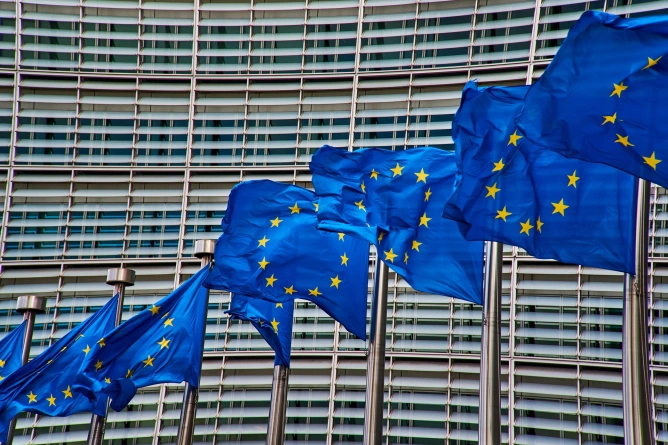
EU
Foto: Pixabay

Always see our news on Google
The European Union supports 68 projects with a total funding of 105.2 million euros for the preparation of the European health data space, including cross-border access to medical records and the safe reuse of information for research. Other EU-funded projects have developed platforms through which factories can adapt production in times of disruptions, and data centers can coordinate energy consumption with network operators and renewable energy suppliers.
In short, the European health data space must allow patients and professionals to access and share electronic medical records, including when treatment takes place in another member state. The 68 projects benefit from 105.2 million euros through the EU4Health program. Three main initiatives work on the interoperability of medical records, data reuse, and testing cross-border exchange. The QUANTUM project has developed a common standard and a free tool through which organizations can assess the quality of medical data before it is used in research or in the development of public policies. The industrial project Flex4Res has created a platform for the secure exchange of data, digital models of factories, and production planning with the help of artificial intelligence. The BEGONIA project has analyzed how data centers can adjust computing loads, utilize energy storage, and provide residual heat, in coordination with electrical networks and local heating systems.
Common European data spaces are infrastructures and rules through which organizations can share information without automatically relinquishing control over it. A hospital, a company, a public institution, or a citizen can authorize the use of certain data for a specific purpose, under the conditions set by European legislation and the governance mechanisms of each sector.
The goal is not to create a single European database where all information is gathered in one place. Data can remain in the systems of the organizations that hold them, and access can be granted through connected infrastructures, common rules, and formats that allow systems to understand each other.
Such a model seeks to solve a common problem in Europe: organizations collect large amounts of data, but these are kept in incompatible systems, described differently, or difficult to access by an authorized user from another institution or another state.
European legislation establishes the general framework. The Data Governance Regulation aims to create trust mechanisms for reuse and intermediation, while the Data Regulation establishes rules regarding access to information generated by connected products and services.
Each sectoral space has its own requirements. Medical data requires stricter protections than information about the operation of an industrial machine, and the exchange of energy data must take into account the security of infrastructure and the functioning of networks.
Common features include open participation of eligible organizations, secured infrastructures, protection of privacy, and transparent, proportional, and non-discriminatory access rules.
The data holder can determine what information is provided, to whom, for what purpose, and under what conditions. Depending on the situation, reuse may be free or may involve compensation.
In health, the primary use of data concerns patient care. A doctor must be able to consult relevant information for diagnosis and treatment, and the patient must be able to access and control the medical data that concerns them.
Cross-border exchange is important for people who live, work, travel, or receive treatment in another member state. Information such as electronic networks, medical history, test results, or medical letters must be able to be transmitted in a format that the system in the other country can interpret.
The second use concerns research, innovation, public health, policy development, and regulatory authority activities. Data from a large number of patients can help study diseases, evaluate treatments, and identify trends that information from a single hospital could not show.
Reuse does not mean free access to individual records. The applicant must meet the applicable conditions, justify the purpose, and use the data in an environment that limits access, copying, and identification of individuals.
The European health data space also aims to develop a common market for electronic health record systems. Producers must provide products capable of exchanging information through common formats and interfaces, so that data does not remain locked in a single program.
The European Health and Digital Executive Agency supports implementation through 68 projects funded with 105.2 million euros from EU4Health. The portfolio includes three central initiatives and 65 direct grants awarded to the states and organizations involved.
The Xt-EHR initiative works on the interoperability of electronic health record systems and the requirements necessary for the exchange of medical information. TEHDAS2 supports the preparation for secondary use of data, while EHDS2 Pilot tests the infrastructure and procedures for cross-border access.
The 65 direct grants help states develop MyHealth@EU services, national infrastructures, and semantic interoperability.
Technical interoperability allows systems to connect and transmit files. Semantic interoperability aims for the same information to have the same meaning in different systems and countries.
For example, a code used for a disease, a medication, or a laboratory result must be correctly interpreted by the system receiving the data. Without common definitions and terminologies, the file can be transmitted, but the information may be understood incorrectly.
A European center dedicated to the exchange format of medical records provides support to organizations that need to adopt common specifications. Other actions fund the strengthening of administrative capacity, technical assistance, and informing participants.
Data quality represents a separate issue from access. A set of information may be legally and technically available but may contain missing fields, inconsistent classifications, or data collected through methods that make it unsuitable for a specific research.
The QUANTUM project has developed a standard for assessing the quality and utility of data used through the HealthData@EU infrastructure. The specification examines both the characteristics of the dataset and the maturity of the organization managing it.
The project has created a free and open-source tool through which data holders can assess their data and their own procedures. Guidelines for reporting results, training materials, and a format for including the quality label in the European catalog have been developed.
After implementation, users should be able to see a common label that helps them identify suitable datasets for research and decision-making.
The label does not guarantee that a dataset is suitable for any project. A registry may be of high quality for analyzing a disease and insufficient for research requiring a different category of patients or a longer observation period.
For this reason, QUANTUM has also formulated recommendations for assessing suitability for a specific purpose. The user who accessed and analyzed the data can provide a factual assessment of their utility for their research question.
Industrial data spaces address another problem: the ability of companies to respond to disruptions in supply chains and production.
A factory may depend on materials, components, and equipment supplied by multiple companies. A delay, an unplanned shutdown, or the lack of a component can affect the entire production schedule.
The Flex4Res project, funded through Horizon Europe, has created an industrial data space through which organizations can connect systems and share verified information along production chains.
The platform uses technologies and principles developed through Gaia-X and International Data Spaces. The goal is for participants to be able to exchange data without a single company taking control of all information and without each connection requiring a solution built from scratch.
The project has developed a standardized digital twin of the production network. This is a virtual model that reproduces factories, equipment, capacities, and the connections between them.
The company can test in the digital environment a change before applying it in the factory. It can analyze what happens if a supplier no longer delivers, a line is stopped, or production needs to be moved to another unit.
Standardization allows participants to describe machinery, processes, and capacities in a common way. In the absence of such vocabulary, the same information can be expressed differently by each company and cannot be used automatically.
The platform allows real-time monitoring and automatic identification of production assets and capacities. It can detect inefficiencies such as unplanned stops and tool changes that reduce effective working time.
An artificial intelligence-based tool uses current data to recalculate production schedules. If a resource becomes unavailable, the system can propose a new sequence of operations or the use of another capacity.
Flex4Res has also created tools for assessing resilience and planning reconfiguration and has tested the solution in four industrial situations with different types of production.
The material does not identify the participating companies, the savings obtained, or the time with which the stops were reduced. The project demonstrates the functioning of the solutions without announcing their automatic application across the entire European industry.
In energy and transport, the problem is the exchange of data between systems that have been developed separately but increasingly depend on each other.
The BEGONIA project, funded through the Connecting Europe Facility, has analyzed cross-border operational digital platforms through which participants from multiple sectors and states can coordinate their activities.
The concept combines European data infrastructures, cloud, edge computing, and connectivity. The goal is for information to be able to flow between organizations and domains through compatible standards and interfaces.
One of the tested situations concerns data centers. These are large consumers of electricity, and their activity is usually associated with a constant demand that the energy system must cover.
BEGONIA has analyzed the possibility of transforming them into more flexible participants. The center can provide information to the network operator and can adjust certain computing tasks to periods when more energy is available.
Not all processes can be postponed or moved. Some services must respond immediately, while other computing tasks can be scheduled for another interval or transferred to another location.
The exchange of data between the data center, the network operator, and renewable energy producers can allow for better correlation of consumption with production from variable sources.
Energy storage can reduce consumption from the grid during peak periods, and electricity can be stored when supply is higher or prices are lower.
Data centers also generate significant amounts of heat. Connecting them to local heating networks can allow for the reuse of some of the energy that would otherwise be released into the atmosphere.
For this, information about temperature and the volume of available heat, local network demand, and the infrastructure's capacity to transport and utilize it is needed.
The project does not claim that all data centers will be able to operate in this way. Feasibility depends on location, connection to energy networks, the type of computing tasks, and the necessary investments.
The three areas show that data spaces are not identical products applied uniformly. In health, the priority is to protect personal data and authorized access. In industry, the focus is on controlling commercial information and adapting production. In energy, the exchange must support the coordination of infrastructures.
The common element is the possibility of using data without unconditional transfer of control over them. Participants must know who requests access, for what purpose, and based on what rules.
A data space does not eliminate intellectual property rights, trade secrets, data protection, and competition rules. Access must be built within the limits of these rules.
Openness to organizations and individuals does not mean anonymous or unlimited access. Participants may be subject to identity verification, technical conditions, contracts, and security obligations.
The infrastructure must allow tracking how data is used and withdrawing or limiting access when conditions are no longer met.
Compensation for the data holder can encourage the provision of information, but costs and conditions must remain proportional and non-discriminatory.
European spaces also aim to reduce dependence on private platforms that can impose their own formats and conditions. The goal is for European companies and institutions to be able to use data from multiple sources without being locked into a single technological ecosystem.
This does not exclude the participation of private companies or international providers. They can participate if they comply with the applicable rules, standards, and governance mechanisms.
The HaDEA document does not announce a new single funding package for all data spaces. It brings together projects funded through different programs and at different stages of development and implementation.
The 105.2 million euros represent the funding for the 68 projects for the preparation of the European health data space, without automatically including the budgets of Flex4Res and BEGONIA.
The material does not provide the funding value of the two projects, their duration, the complete list of partners, or the timeline for the commercial introduction of the solutions.
Results can later be taken up by states, institutions, and companies, but their publication does not automatically obligate organizations to adopt the developed tools.
The European data strategy was adopted in February 2020 and launched the development of common spaces in sectors considered strategic, including health, industry, energy, and mobility.
The projects presented by HaDEA show how practical infrastructure is built: interoperable medical records, quality standards, digital models of factories, and platforms through which digital and energy infrastructures can coordinate consumption and operations.
In short, the European health data space must allow patients and professionals to access and share electronic medical records, including when treatment takes place in another member state. The 68 projects benefit from 105.2 million euros through the EU4Health program. Three main initiatives work on the interoperability of medical records, data reuse, and testing cross-border exchange. The QUANTUM project has developed a common standard and a free tool through which organizations can assess the quality of medical data before it is used in research or in the development of public policies. The industrial project Flex4Res has created a platform for the secure exchange of data, digital models of factories, and production planning with the help of artificial intelligence. The BEGONIA project has analyzed how data centers can adjust computing loads, utilize energy storage, and provide residual heat, in coordination with electrical networks and local heating systems.
Common European data spaces are infrastructures and rules through which organizations can share information without automatically relinquishing control over it. A hospital, a company, a public institution, or a citizen can authorize the use of certain data for a specific purpose, under the conditions set by European legislation and the governance mechanisms of each sector.
The goal is not to create a single European database where all information is gathered in one place. Data can remain in the systems of the organizations that hold them, and access can be granted through connected infrastructures, common rules, and formats that allow systems to understand each other.
Such a model seeks to solve a common problem in Europe: organizations collect large amounts of data, but these are kept in incompatible systems, described differently, or difficult to access by an authorized user from another institution or another state.
European legislation establishes the general framework. The Data Governance Regulation aims to create trust mechanisms for reuse and intermediation, while the Data Regulation establishes rules regarding access to information generated by connected products and services.
Each sectoral space has its own requirements. Medical data requires stricter protections than information about the operation of an industrial machine, and the exchange of energy data must take into account the security of infrastructure and the functioning of networks.
Common features include open participation of eligible organizations, secured infrastructures, protection of privacy, and transparent, proportional, and non-discriminatory access rules.
The data holder can determine what information is provided, to whom, for what purpose, and under what conditions. Depending on the situation, reuse may be free or may involve compensation.
In health, the primary use of data concerns patient care. A doctor must be able to consult relevant information for diagnosis and treatment, and the patient must be able to access and control the medical data that concerns them.
Cross-border exchange is important for people who live, work, travel, or receive treatment in another member state. Information such as electronic networks, medical history, test results, or medical letters must be able to be transmitted in a format that the system in the other country can interpret.
The second use concerns research, innovation, public health, policy development, and regulatory authority activities. Data from a large number of patients can help study diseases, evaluate treatments, and identify trends that information from a single hospital could not show.
Reuse does not mean free access to individual records. The applicant must meet the applicable conditions, justify the purpose, and use the data in an environment that limits access, copying, and identification of individuals.
The European health data space also aims to develop a common market for electronic health record systems. Producers must provide products capable of exchanging information through common formats and interfaces, so that data does not remain locked in a single program.
The European Health and Digital Executive Agency supports implementation through 68 projects funded with 105.2 million euros from EU4Health. The portfolio includes three central initiatives and 65 direct grants awarded to the states and organizations involved.
The Xt-EHR initiative works on the interoperability of electronic health record systems and the requirements necessary for the exchange of medical information. TEHDAS2 supports the preparation for secondary use of data, while EHDS2 Pilot tests the infrastructure and procedures for cross-border access.
The 65 direct grants help states develop MyHealth@EU services, national infrastructures, and semantic interoperability.
Technical interoperability allows systems to connect and transmit files. Semantic interoperability aims for the same information to have the same meaning in different systems and countries.
For example, a code used for a disease, a medication, or a laboratory result must be correctly interpreted by the system receiving the data. Without common definitions and terminologies, the file can be transmitted, but the information may be understood incorrectly.
A European center dedicated to the exchange format of medical records provides support to organizations that need to adopt common specifications. Other actions fund the strengthening of administrative capacity, technical assistance, and informing participants.
Data quality represents a separate issue from access. A set of information may be legally and technically available but may contain missing fields, inconsistent classifications, or data collected through methods that make it unsuitable for a specific research.
The QUANTUM project has developed a standard for assessing the quality and utility of data used through the HealthData@EU infrastructure. The specification examines both the characteristics of the dataset and the maturity of the organization managing it.
The project has created a free and open-source tool through which data holders can assess their data and their own procedures. Guidelines for reporting results, training materials, and a format for including the quality label in the European catalog have been developed.
After implementation, users should be able to see a common label that helps them identify suitable datasets for research and decision-making.
The label does not guarantee that a dataset is suitable for any project. A registry may be of high quality for analyzing a disease and insufficient for research requiring a different category of patients or a longer observation period.
For this reason, QUANTUM has also formulated recommendations for assessing suitability for a specific purpose. The user who accessed and analyzed the data can provide a factual assessment of their utility for their research question.
Industrial data spaces address another problem: the ability of companies to respond to disruptions in supply chains and production.
A factory may depend on materials, components, and equipment supplied by multiple companies. A delay, an unplanned shutdown, or the lack of a component can affect the entire production schedule.
The Flex4Res project, funded through Horizon Europe, has created an industrial data space through which organizations can connect systems and share verified information along production chains.
The platform uses technologies and principles developed through Gaia-X and International Data Spaces. The goal is for participants to be able to exchange data without a single company taking control of all information and without each connection requiring a solution built from scratch.
The project has developed a standardized digital twin of the production network. This is a virtual model that reproduces factories, equipment, capacities, and the connections between them.
The company can test in the digital environment a change before applying it in the factory. It can analyze what happens if a supplier no longer delivers, a line is stopped, or production needs to be moved to another unit.
Standardization allows participants to describe machinery, processes, and capacities in a common way. In the absence of such vocabulary, the same information can be expressed differently by each company and cannot be used automatically.
The platform allows real-time monitoring and automatic identification of production assets and capacities. It can detect inefficiencies such as unplanned stops and tool changes that reduce effective working time.
An artificial intelligence-based tool uses current data to recalculate production schedules. If a resource becomes unavailable, the system can propose a new sequence of operations or the use of another capacity.
Flex4Res has also created tools for assessing resilience and planning reconfiguration and has tested the solution in four industrial situations with different types of production.
The material does not identify the participating companies, the savings obtained, or the time with which the stops were reduced. The project demonstrates the functioning of the solutions without announcing their automatic application across the entire European industry.
In energy and transport, the problem is the exchange of data between systems that have been developed separately but increasingly depend on each other.
The BEGONIA project, funded through the Connecting Europe Facility, has analyzed cross-border operational digital platforms through which participants from multiple sectors and states can coordinate their activities.
The concept combines European data infrastructures, cloud, edge computing, and connectivity. The goal is for information to be able to flow between organizations and domains through compatible standards and interfaces.
One of the tested situations concerns data centers. These are large consumers of electricity, and their activity is usually associated with a constant demand that the energy system must cover.
BEGONIA has analyzed the possibility of transforming them into more flexible participants. The center can provide information to the network operator and can adjust certain computing tasks to periods when more energy is available.
Not all processes can be postponed or moved. Some services must respond immediately, while other computing tasks can be scheduled for another interval or transferred to another location.
The exchange of data between the data center, the network operator, and renewable energy producers can allow for better correlation of consumption with production from variable sources.
Energy storage can reduce consumption from the grid during peak periods, and electricity can be stored when supply is higher or prices are lower.
Data centers also generate significant amounts of heat. Connecting them to local heating networks can allow for the reuse of some of the energy that would otherwise be released into the atmosphere.
For this, information about temperature and the volume of available heat, local network demand, and the infrastructure's capacity to transport and utilize it is needed.
The project does not claim that all data centers will be able to operate in this way. Feasibility depends on location, connection to energy networks, the type of computing tasks, and the necessary investments.
The three areas show that data spaces are not identical products applied uniformly. In health, the priority is to protect personal data and authorized access. In industry, the focus is on controlling commercial information and adapting production. In energy, the exchange must support the coordination of infrastructures.
The common element is the possibility of using data without unconditional transfer of control over them. Participants must know who requests access, for what purpose, and based on what rules.
A data space does not eliminate intellectual property rights, trade secrets, data protection, and competition rules. Access must be built within the limits of these rules.
Openness to organizations and individuals does not mean anonymous or unlimited access. Participants may be subject to identity verification, technical conditions, contracts, and security obligations.
The infrastructure must allow tracking how data is used and withdrawing or limiting access when conditions are no longer met.
Compensation for the data holder can encourage the provision of information, but costs and conditions must remain proportional and non-discriminatory.
European spaces also aim to reduce dependence on private platforms that can impose their own formats and conditions. The goal is for European companies and institutions to be able to use data from multiple sources without being locked into a single technological ecosystem.
This does not exclude the participation of private companies or international providers. They can participate if they comply with the applicable rules, standards, and governance mechanisms.
The HaDEA document does not announce a new single funding package for all data spaces. It brings together projects funded through different programs and at different stages of development and implementation.
The 105.2 million euros represent the funding for the 68 projects for the preparation of the European health data space, without automatically including the budgets of Flex4Res and BEGONIA.
The material does not provide the funding value of the two projects, their duration, the complete list of partners, or the timeline for the commercial introduction of the solutions.
Results can later be taken up by states, institutions, and companies, but their publication does not automatically obligate organizations to adopt the developed tools.
The European data strategy was adopted in February 2020 and launched the development of common spaces in sectors considered strategic, including health, industry, energy, and mobility.
The projects presented by HaDEA show how practical infrastructure is built: interoperable medical records, quality standards, digital models of factories, and platforms through which digital and energy infrastructures can coordinate consumption and operations.

Latest News
23:02
Ukraine’s first reaction after Donald Trump called for President Volodymyr Zelenskyy to be replaced: “There are two leaders in the world calling for Ukraine to have a new president: the first is President Trump, and the second is dictator Putin”
22:34
Volodymyr Zelenskyy, after the Trump–Putin agreement: “Russia expressed its gratitude for the lifting of sanctions on diesel fuel exports by launching five glide bombs at residential buildings in Zaporizhzhia”
22:03
Donald Trump states that it is time for Ukraine “to have a new leader who can reach an agreement” with Russia
21:43
Inter Milan return to the top of Serie A after a clear victory over Parma
21:24
Luca Niculescu, details about the governing program: “We are working intensively to finalize the governing program. We aim to identify solutions for increasing incomes, with priority given to pensioners with low pensions”
See more news
NEWS ON THE SAME TOPICS



.webp)

Personalized news feed, AI-powered search, and notifications in a more interactive experience.