The EU finances an electric car engine that reduces dependence on rare metals



Always see our news on Google
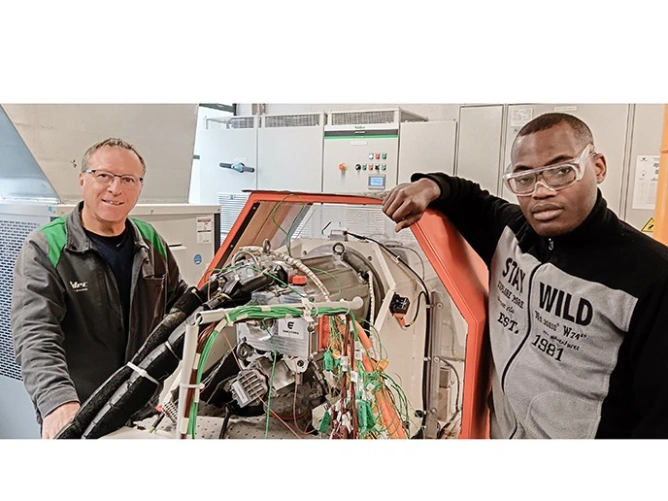
The European MAXIMA project develops an axial electric motor for the automotive industry, designed to be more accessible, more efficient, and easier to recycle, while simultaneously reducing the use of critical raw materials, especially rare metals used in permanent magnets. In short MAXIMA develops a modular axial electric motor for electric vehicles, aimed at a more sustainable automotive electrification.
The project aims to reduce costs, carbon footprint, and dependence on critical rare metals.
Researchers have created a digital design and analysis platform that integrates electromagnetic, structural, and thermal performance, as well as recyclability.
MAXIMA has developed a recycling process through which neodymium-iron-boron magnets are recovered, purified, and refurbished for reuse.
By 2027, the project intends to test several prototypes under realistic automotive conditions. The transition of the European automotive industry to electric vehicles depends on accessible, energy-efficient, recyclable components with a low environmental impact. The MAXIMA project, launched in 2023, addresses this issue by developing a cost-effective and adaptable axial electric motor. MAXIMA, an acronym for Modular AXIal flux Motor for Automotive, aims to create a scalable electrification solution for the automotive industry. The motor is designed for better performance, reduced environmental impact, and lower dependence on rare and critical materials, especially those used for permanent magnets. Stéphane Clénet from Arts et Métiers ParisTech, the project coordinator, says that MAXIMA has created a design and analysis platform that integrates multiple technical dimensions right from the first phase of development. "MAXIMA has established a pioneering multifysics design and analysis platform that allows manufacturers and engineers to take into account electromagnetic, structural, and thermal performance, as well as recyclability, from day one," said Stéphane Clénet. Integrating circularity as a design constraint allows for the optimization of efficiency, production capacity, modularity, and disassembly. The project aims not only to develop a high-performance motor but also to reduce the difficulties of recycling and reusing components. MAXIMA also uses a multifysics digital twin, which enables real-time monitoring of the system, predictive maintenance, and adaptive control. These features can contribute to increasing performance, reliability, and lifespan of the system under real automotive operating conditions. On the materials and production side, the project aims to deliver tested prototypes that combine soft magnetic composites and advanced electrical steels. These materials are optimized to reduce losses and facilitate production. "These process innovations are already reducing the CO₂ footprint and costs for the production of new electric motors," said Clénet. An important progress targets end-of-life strategies for permanent magnets. MAXIMA researchers have developed a recycling process through which neodymium-iron-boron magnets are recovered, purified, and refurbished for reuse. The process retains most of the original properties of the magnets, even after contamination and wear. This is important for reusing high-value materials and reducing pressure on critical raw material supply chains. "This closes an essential loop for high-value critical raw materials and indicates the direction for a change across the entire sector," stated Clénet. The next step is to use the technologies developed so far to build and test several motor prototypes in realistic automotive environments. The project will expand recycling tests, increase prototype production, and refine life cycle assessment models with data from real conditions. By 2027, MAXIMA aims to make a concrete contribution to the transition of the automotive industry towards circularity, strategic autonomy, and climate neutrality. "By doing so, it will strengthen Europe's global leadership in sustainable electrification technologies, creating long-term industrial, environmental, and social benefits," said Clénet. Electrification of road transport is one of the central directions of the European climate transition, but it depends on complex supply chains for batteries, motors, permanent magnets, and critical materials. Electric motors often use permanent magnets that include rare metals, such as neodymium. These materials can create supply risks and raise issues of cost, sustainability, and strategic dependence. Projects like MAXIMA seek to address these vulnerabilities through circular design, recycling, optimized materials, and digital technologies that can reduce losses, costs, and dependence on critical resources.

Latest News
23:00
22:55
22:47
22:39
22:33
See more news