The EU accelerates the construction of the single data market through major sectoral projects.
2eu.brussels


EU
Foto: https://hadea.ec.europa.eu/

Always see our news on Google
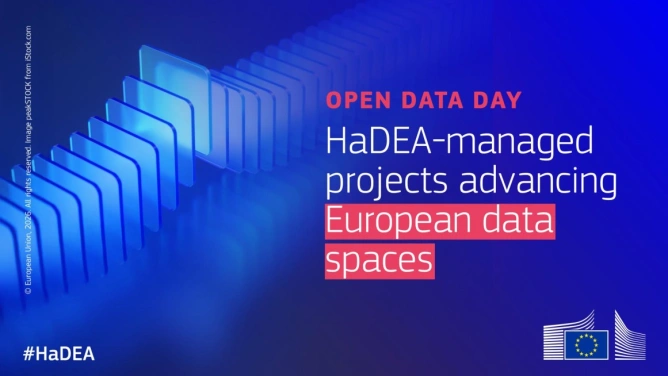
The European Health and Digital Executive Agency, HaDEA, presents a series of projects that develop common European data spaces, one of the pillars of the European data strategy, through which the European Union aims to create a single market where data can flow freely between member states and across sectors.
In short
The European Union is developing common European data spaces to support the single data market. The Digital Europe Programme finances the implementation of such projects in various sectors. The examples presented focus on tourism, cultural heritage, skills, industry, and health. The emphasis is on interoperability, open standards, data sovereignty, and secure data exchange. The goal is to develop ecosystems where data-driven products, services, and solutions can emerge.
Open Data Day highlights the role of open data and data exchange in the development of society. In this context, the European Union aims, through the implementation of the European data strategy, to create a single data market. The common European data spaces establish specific design principles based on interoperability and interconnection within this single market.
The Data Union Strategy, adopted in November 2025, proposed further expansion of these data spaces. The main funding instrument for their implementation is the Digital Europe Programme, which supports sectoral initiatives aimed at addressing the needs of specific fields. Some of these spaces are implemented through projects managed by HaDEA.
In tourism, the European data space for tourism is being developed through the Deploytour project, implemented by a consortium of 43 partners from over 13 countries. The project has a duration of three years and uses common open standards and protocols to maximize compatibility both within the tourism sector and with other data spaces, while maintaining data sovereignty at the same time. The project includes five pilot projects in five European countries, aimed at demonstrating the concrete advantages and viability of the data space, as well as its impact on European tourism. These pilot projects focus on increasing sustainability, optimizing processes, and strengthening the resilience of the sector through digitalization and data-driven solutions.
In the field of cultural heritage, the common European data space is coordinated by the Europeana Foundation together with a consortium of 18 partners from new member states of the European Union. This data space allows cultural heritage institutions and citizens to access, use, and reuse data related to cultural heritage. The system gradually expands the volume of high-quality, usable, and accessible data and aims to diversify the data offering. Interoperability is one of its core features and is supported by open-source solutions and the Europeana data model. Several projects, including 5DCulture, Eureka3D, and RCtoDC, have aggregated data and added new applications and training activities.
In the field of skills, the DS4SKILLS project plays an important role in implementing the common European data space for skills. The project brings together 22 key stakeholders from Europe to enhance digital skills, improve employment opportunities, and provide practical benefits to both organizations and individuals. Eight sustainable use cases are focused on challenges such as lifelong learning, professional development, and employee retention.
In industry, the CircPlastX project contributes to the expansion of the implementation and use of the data space for production. Its goal is to achieve a critical mass of industrial enterprises to share data and improve the operations of companies and value chains. The project aims to leverage data exchange along the plastic value chain to accelerate circular economy practices, support compliance with regulatory requirements, including digital product passports, the Corporate Sustainability Reporting Directive, and REACH, to enable trust-based and interoperable data exchanges, to promote reuse, recycling, and design for circularity, and to support innovation and new data-driven services. The text emphasizes that data among designers, manufacturers, and recyclers are currently rarely shared, and the project aims to change this situation.
In health, the European Health Data Space Regulation, EHDS, came into force on March 26, 2025, and aims to establish a common framework for the use and exchange of electronic health data across the European Union. EHDS seeks to enable individuals to access, control, and share their electronic health data cross-border for the provision of medical services, to allow safe and reliable reuse of data for research, innovation, policy-making, and regulatory activities, and to support a single market for electronic health record systems.
Overall, the common European data spaces are presented as tools that can facilitate the secure aggregation and sharing of data through appropriate governance structures and mechanisms for concluding data sharing agreements. This framework is designed to address challenges such as the lack of trust among participants and interoperability issues. By increasing the accessibility and use of data, these spaces are presented as the foundation for dynamic ecosystems where innovative data-driven products, services, and solutions can emerge.
The Digital Europe Programme has a total budget of 8.1 billion euros, of which 0.8 billion euros are managed by HaDEA. The programme supports investments in high-performance computing, artificial intelligence, cybersecurity and trust, advanced digital skills, optimal use of digital capacities and interoperability, as well as in semiconductors. HaDEA manages projects in the fields of artificial intelligence, advanced digital skills, and optimal use of digital capacities and interoperability.
The Data Union Strategy is presented as a response to the need for high-quality data in Europe and aims to leverage the underutilized potential of data and complete the single market for data. In this architecture, the common European data spaces must make more data available for access and reuse, in a safe and trusted environment, for the benefit of European businesses and citizens.
In short
The European Union is developing common European data spaces to support the single data market. The Digital Europe Programme finances the implementation of such projects in various sectors. The examples presented focus on tourism, cultural heritage, skills, industry, and health. The emphasis is on interoperability, open standards, data sovereignty, and secure data exchange. The goal is to develop ecosystems where data-driven products, services, and solutions can emerge.
Open Data Day highlights the role of open data and data exchange in the development of society. In this context, the European Union aims, through the implementation of the European data strategy, to create a single data market. The common European data spaces establish specific design principles based on interoperability and interconnection within this single market.
The Data Union Strategy, adopted in November 2025, proposed further expansion of these data spaces. The main funding instrument for their implementation is the Digital Europe Programme, which supports sectoral initiatives aimed at addressing the needs of specific fields. Some of these spaces are implemented through projects managed by HaDEA.
In tourism, the European data space for tourism is being developed through the Deploytour project, implemented by a consortium of 43 partners from over 13 countries. The project has a duration of three years and uses common open standards and protocols to maximize compatibility both within the tourism sector and with other data spaces, while maintaining data sovereignty at the same time. The project includes five pilot projects in five European countries, aimed at demonstrating the concrete advantages and viability of the data space, as well as its impact on European tourism. These pilot projects focus on increasing sustainability, optimizing processes, and strengthening the resilience of the sector through digitalization and data-driven solutions.
In the field of cultural heritage, the common European data space is coordinated by the Europeana Foundation together with a consortium of 18 partners from new member states of the European Union. This data space allows cultural heritage institutions and citizens to access, use, and reuse data related to cultural heritage. The system gradually expands the volume of high-quality, usable, and accessible data and aims to diversify the data offering. Interoperability is one of its core features and is supported by open-source solutions and the Europeana data model. Several projects, including 5DCulture, Eureka3D, and RCtoDC, have aggregated data and added new applications and training activities.
In the field of skills, the DS4SKILLS project plays an important role in implementing the common European data space for skills. The project brings together 22 key stakeholders from Europe to enhance digital skills, improve employment opportunities, and provide practical benefits to both organizations and individuals. Eight sustainable use cases are focused on challenges such as lifelong learning, professional development, and employee retention.
In industry, the CircPlastX project contributes to the expansion of the implementation and use of the data space for production. Its goal is to achieve a critical mass of industrial enterprises to share data and improve the operations of companies and value chains. The project aims to leverage data exchange along the plastic value chain to accelerate circular economy practices, support compliance with regulatory requirements, including digital product passports, the Corporate Sustainability Reporting Directive, and REACH, to enable trust-based and interoperable data exchanges, to promote reuse, recycling, and design for circularity, and to support innovation and new data-driven services. The text emphasizes that data among designers, manufacturers, and recyclers are currently rarely shared, and the project aims to change this situation.
In health, the European Health Data Space Regulation, EHDS, came into force on March 26, 2025, and aims to establish a common framework for the use and exchange of electronic health data across the European Union. EHDS seeks to enable individuals to access, control, and share their electronic health data cross-border for the provision of medical services, to allow safe and reliable reuse of data for research, innovation, policy-making, and regulatory activities, and to support a single market for electronic health record systems.
Overall, the common European data spaces are presented as tools that can facilitate the secure aggregation and sharing of data through appropriate governance structures and mechanisms for concluding data sharing agreements. This framework is designed to address challenges such as the lack of trust among participants and interoperability issues. By increasing the accessibility and use of data, these spaces are presented as the foundation for dynamic ecosystems where innovative data-driven products, services, and solutions can emerge.
The Digital Europe Programme has a total budget of 8.1 billion euros, of which 0.8 billion euros are managed by HaDEA. The programme supports investments in high-performance computing, artificial intelligence, cybersecurity and trust, advanced digital skills, optimal use of digital capacities and interoperability, as well as in semiconductors. HaDEA manages projects in the fields of artificial intelligence, advanced digital skills, and optimal use of digital capacities and interoperability.
The Data Union Strategy is presented as a response to the need for high-quality data in Europe and aims to leverage the underutilized potential of data and complete the single market for data. In this architecture, the common European data spaces must make more data available for access and reuse, in a safe and trusted environment, for the benefit of European businesses and citizens.

Latest News
22:52
Bogdan Ivan accuses coordinated attacks against PSD leaders who criticize the measures of Ilie Bolojan and the USR
22:51
Emmanuel Macron announces the detention of the oil tanker DF Peak. It is suspected of illegally transporting fuel and having links to Russia’s shadow fleet.
22:27
Police in Cologne, Germany, are investigating two young men suspected of using a robot to sexually harass a 16-year-old girl
22:24
Saudi Arabia intercepted a ballistic missile launched toward Riyadh, following explosions and an air-raid alert issued to residents
22:23
Two Turkish nationals have been detained in Germany / Poland accuses them of sabotaging a Starlink station on Russia’s orders
See more news
NEWS ON THE SAME TOPICS




Personalized news feed, AI-powered search, and notifications in a more interactive experience.