The Commission proposes that the EU become a founding member of the International Compensation Commission for Ukraine




Always see our news on Google
The European Commission has adopted a proposal for the European Union to become a founding member of the International Compensation Commission for Ukraine, an entity under the auspices of the Council of Europe that will analyze claims, assess damages, and determine the amount of compensation for the damages, losses, and injuries caused by Russia, with the proposal to be adopted in the Council and approved by the European Parliament.
In short
The European Commission proposes that the EU become a founding member of the International Compensation Commission for Ukraine, after adoption in the Council and approval in the European Parliament. The Compensation Commission will operate under the auspices of the Council of Europe and will decide the value of compensations for each claim. The compensation mechanism is based on the Damage Register created in May 2023, through which claims can already be submitted for categories such as death, serious injuries, sexual violence, loss of housing, and the deportation of children. Kaja Kallas states in a statement that "If you start a war, you pay the bill," and that Russia must pay for the damages caused after the end of the war. In parallel, the EU describes financial instruments related to Russian assets immobilized in the EU, including the windfall contribution model and the G7 ERA loan scheme.
The European Commission has adopted a proposal for the European Union to become a founding member of the International Compensation Commission for Ukraine, an institution tasked with establishing compensations for the victims of Russia's aggressive war against Ukraine. The proposal is to be adopted by the member states in the Council and approved by the European Parliament, after which the EU would become a founding member of the Commission.
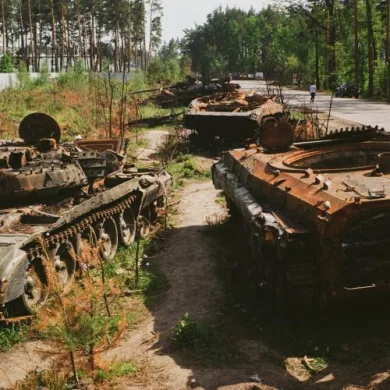
The Compensation Commission will operate under the auspices of the Council of Europe and will have the mandate to examine, assess, and decide on claims for compensation for the damages, losses, and injuries caused by Russia in Ukraine and to the Ukrainian population, as well as to determine the amount owed in each case.
Kaja Kallas, High Representative and Vice President of the Commission, stated that "If you start a war, you pay the bill. And as the large-scale invasion of Ukraine enters its fifth year, the price of Russia's aggression is rising. Hundreds of billions will be needed to rebuild homes and infrastructure in Ukraine and to clear unexploded ordnance throughout the country. Every Ukrainian citizen can already register claims for compensation for damages, losses, or injuries due to the Compensation Commission. And when the war ends, Russia must pay for the damages it has caused."
Michael McGrath, Commissioner for Democracy, Justice, the Rule of Law, and Consumer Protection, stated that "Peace without accountability is no peace at all, and accountability demands reparation. The International Compensation Commission will document the real cost of Russia's aggression and ensure fair compensation is established. The European Union will continue to stand by Ukraine and ensure justice for its people."
The Commission specifies that by December 2025, the EU signed the Convention for the Establishment of the Compensation Commission, along with 35 countries, and committed to contribute up to 1 million euros to support its establishment within the Council of Europe.
The compensation mechanism is being built in stages and must be differentiated from criminal tracks. The Damage Register, created within the Council of Europe, serves to register eligible compensation claims, while the International Compensation Commission is to judge the registered claims and establish the value of compensations owed by Russia. Separately, the EU describes support for investigation and prosecution mechanisms, including through Eurojust and dedicated structures for the crime of aggression.
On the financial dimension, the Commission indicates that over 210 billion euros of the assets of the Central Bank of Russia are immobilized in the EU and that the Union adopted in 2024 the windfall contribution model to use the extraordinary revenues generated by these assets in support of Ukraine. Additionally, the EU has adopted the necessary acts for the implementation of the G7 ERA loan model, through which extraordinary revenues are used to repay a 45 billion euro loan granted to Ukraine by G7 partners, and the EU's contribution to this mechanism is indicated at 18.1 billion euros.

Latest News
19:18
19:16
19:06
19:05
18:59
See more news
NEWS ON THE SAME TOPICS