September 2026 was the second warmest on record globally. Record-low flows also affected parts of the Danube.



Always see our news on Google
The global average temperature reached 16.27°C in September, 1.63°C above the estimated pre-industrial level, according to Copernicus. Europe recorded its third-warmest September in the ERA5 series, while prolonged drought lowered river flows to record lows for the month in parts of the Rhine, Danube, Vistula and Garonne-Dordogne systems.
September 2026 was the second-warmest September recorded worldwide, while accumulated summer drought continued to reduce flows in several major European rivers. The Copernicus Climate Change Service calculated a global average temperature of 16.27°C, 0.82°C above the 1991-2020 average and approximately 1.63°C above the estimated pre-industrial level for 1850-1900.
In brief
The global average temperature in September was 16.27°C, 0.82°C above the 1991-2020 average.
The month was 1.63°C above the estimated pre-industrial level and was the second-warmest September in the ERA5 series, after September 2023.
Europe had its third-warmest September on record, with an average land temperature of 16.26°C, 1.54°C above the 1991-2020 average.
Copernicus reports record-low September flows in parts of the Rhine, Danube, Vistula and Garonne-Dordogne systems.
The flow figures are the result of simulations by the European Flood Awareness System. The reference to the Danube does not allow the record to be automatically attributed to Romania or the Republic of Moldova without locating the affected sections.
Globally, September was 0.11°C cooler than the record set in the same month in 2023. It was nevertheless the second consecutive month in 2026, after August, in which the global monthly average was more than 1.5°C above the estimated pre-industrial level.
The monthly series does not mean that the 1.5°C threshold set by the Paris Agreement was exceeded in terms of the long-term climate objective. The agreement concerns global warming over extended periods, while Copernicus data describe the temperature of a single month.
In Europe, the average land-surface temperature was 16.26°C, 1.54°C above the September average for the 1991-2020 reference period. It was the third-warmest September in the Copernicus series, while western Europe equalled the regional record from September 2023, with an anomaly of 2.51°C.
The heat continued after an exceptionally warm and dry summer in many European regions. Dry conditions persisted across much of western and central Europe and in some eastern areas, while in September they expanded or intensified in the Iberian Peninsula, France, Italy, the western Balkans and Greece.
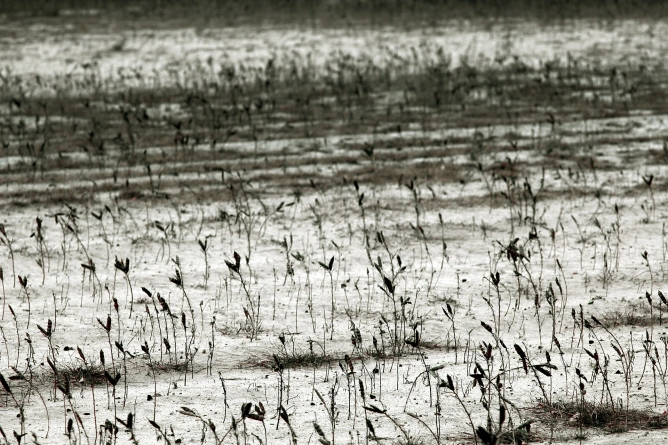
The effects also appear in river-flow data. The European Flood Awareness System, a component of the European Copernicus emergency management service, simulated record-low September flows in parts of the Rhine, Danube, Vistula and Garonne-Dordogne systems.
Copernicus reports that low flows continued to affect navigation, water supplies and agriculture in several European countries. Rainfall late in the month brought local improvement in some areas, without reversing the general drought pattern accumulated after the summer.
River-flow data should be interpreted differently from temperature observations. Hydrological values are produced through EFAS simulations, and the maps published by Copernicus compare estimated flows with their historical distribution. The reference to “parts of the Danube” indicates sections of the basin, not the entire river.
In this wording, the bulletin does not identify Romania or the Republic of Moldova as countries where a record low was automatically recorded. The Danube basin crosses or drains territory in numerous European countries, and its exact location must be determined from hydrological data and maps, not inferred from the river’s name.
The situation in September continues the pattern observed throughout the summer. Copernicus had already reported below-average flows across much of Europe, with exceptionally low conditions along extensive stretches of the Rhine, Danube and Vistula. In July and August, reduced levels were associated with problems for navigation, power generation, irrigation and other water uses.
In northern and northeastern Europe, the September picture was different. Some regions received above-average precipitation, while above-normal flows were concentrated mainly in the north of the continent and in Türkiye. Towards the end of the month, heavy rainfall caused flooding in areas of France and Spain as well.
Another anomaly was recorded at the ocean surface. The average sea-surface temperature between 60°S and 60°N reached 21.05°C, the highest value recorded for a September. The previous record, 20.92°C, was set in 2023.
Copernicus also links the very high ocean temperatures to the intensification of El Niño conditions in the equatorial Pacific. The Niño 3.4 region, used to monitor the phenomenon, reached a monthly average temperature of 29.70°C in September, above the peaks recorded during previous very strong El Niño episodes mentioned by the European service.
Around Europe, record September temperatures were recorded along the Atlantic coast and in the western Mediterranean. High sea temperatures also contributed to maintaining unusually warm conditions on land in neighbouring regions.
Copernicus data come mainly from ERA5, the climate reanalysis produced by ECMWF. The reanalysis combines observations from satellites, weather stations and other measurement systems with a numerical model of the atmosphere to build a consistent record of climate conditions dating back to 1940.
For monthly comparisons, C3S uses the 1991-2020 period as the climatological reference. The difference of 1.63°C from the 1850-1900 period is a separate estimate used to report current temperatures relative to the pre-industrial level.
September thus concludes another month in which intense global heat and a lack of water occurred simultaneously in Europe. For European rivers, developments in the coming months will depend on the recovery of rainfall and water reserves after the drought accumulated during the summer and early autumn.
https://2eu.brussels/ro/news/septembrie-2026-al-doilea-cel-mai-cald-din-lume-debite-minime-record-au-afectat-si-parti-ale-dunarii
Latest News
22:57
22:55
22:54
22:45
22:43
See more news
NEWS ON THE SAME TOPICS