OLAF and Eurofisc warn that e-commerce fuels VAT and customs fraud in the European Union



Always see our news on Google
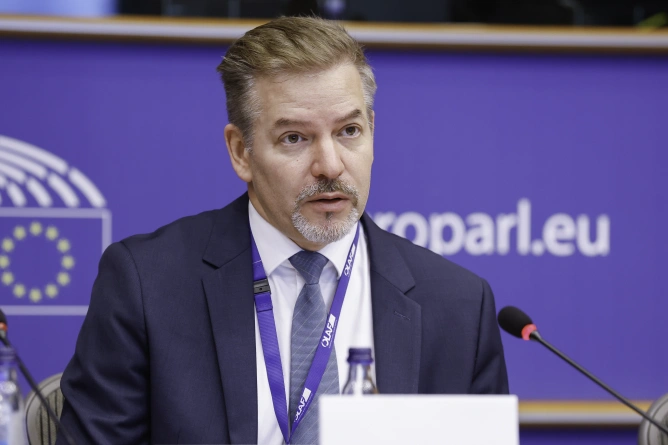
Peter Clement, the Director General of OLAF, and Marina Marinelli, the representative of the Eurofisc network, warned in the European Parliament that VAT and customs fraud is increasingly shifting through online trade, undervalued imports, and networks that exploit the differences between member states to avoid taxes. In a joint hearing of the Subcommittee on Tax Matters and the Budgetary Control Committee, the two described a rapid, digitized, and cross-border fraud, in which parcels, online platforms, intermediary companies, and incomplete data can cause major losses for public budgets.
In short 1. Peter Clement stated that a false customs declaration can lead to losses both in customs duties and in VAT on imports.
2. The Director General of OLAF presented a case regarding imported parcels sold online, in which 66 million euros in evaded customs duties and 133 million euros in evaded VAT were identified.
3. Marina Marinelli said that VAT fraud is no longer limited to a single member state or even the EU, but involves chains that can cross through third countries.
4. The Transaction Network Analysis tool, used by Eurofisc, detected 15.1 billion euros in fraudulent transactions in 2025.
5. The speakers called for faster data exchange, stronger IT tools, cooperation between tax, customs, and judicial authorities, and quicker responses to suspicious VAT numbers.
For consumers, e-commerce means quickly ordered products, international deliveries, and seemingly low prices. For tax and customs authorities, the same system can become a gateway for fraud when goods are undervalued, when the real recipient is hidden, or when companies use quick transactions to avoid paying VAT and customs duties.
Peter Clement explained that customs fraud and VAT fraud are often linked. When a product enters the EU market, VAT is calculated based on the declared value, to which customs duties and, if applicable, anti-dumping duties are added. If the declared value is too low, if the origin is false, or if the goods are not declared correctly, losses can simultaneously affect both customs duties and VAT on imports.
"A single false customs declaration can generate losses both in customs duties and in VAT on imports," said Clement. He insisted that early detection is essential, as fraud that begins at the entry of goods into the EU can become the starting point for broader VAT fraud schemes.
The most concrete example presented by the Director General of OLAF concerns imported parcels sold online to consumers, with a declared value below 150 euros. This threshold is important because, for such shipments, no customs duties are due, and VAT must be paid through simplified mechanisms. According to Clement, OLAF's cooperation with national authorities identified a network of economic operators who would have declared lower values for goods and sent them to companies, not to final consumers.
Clement stated that OLAF established, in that case, approximately 66 million euros in evaded customs duties and 133 million euros in evaded VAT. The agency urged member states to take precautionary measures and recover these amounts through administrative means, and the case was reported to the European Public Prosecutor's Office for possible criminal investigations.
This type of fraud is relevant to the single market because it affects competition. Traders who correctly declare the value of goods and pay the taxes owed compete with operators who can display lower prices by not complying with the rules. The loss is not only budgetary but also economic, for companies that comply with the law.
Marina Marinelli described the same problem from the perspective of rapid risk detection. The Eurofisc network, created in 2010, allows member states to quickly exchange information related to cross-border VAT fraud. It functions as an early warning mechanism, not as a penal body, and relies on the participation of tax authorities from the 27 member states.
Marinelli explained that Eurofisc has three main operational fields. The first deals with missing trader fraud and intra-community fraud, including abuse of customs procedure 42. The second targets VAT fraud related to means of transport, such as cars, boats, and airplanes. The third focuses on e-commerce and online transactions between businesses and consumers.
In e-commerce, Eurofisc is supported by the central electronic payment information system, CESOP. This stores data about cross-border payments to help authorities detect abuses of the VAT system in online transactions. In an economy where sales quickly pass through platforms, payment processors, and accounts from multiple jurisdictions, access to such data becomes essential.
Marinelli also presented the role of the Transaction Network Analysis tool, TNA, which automates the collection of information from the VIES system and visualizes suspicious networks without manual intervention. She stated that TNA has become indispensable for anti-fraud experts, as it accelerates the identification of fraud chains and the exchange of information between member states.
In 2025, according to data presented by Marinelli, TNA detected fraudulent transactions amounting to 15.1 billion euros. Through TNA, over 4,500 deregistered traders were identified, classified as fraudulent by member states or considered involved in fraudulent activities.
These figures show that digitization helps authorities see networks better, but does not solve the problem on its own. VAT fraud has high speed, high volume, and adaptability. Marinelli stated that fraud is no longer limited to a single member state or even the European Union. Fraudulent chains can exit the EU and re-enter, frequently involving third countries.
A major difficulty is the volume of imports. Customs procedure 42, imports, dropshipping, and e-commerce transactions create a huge burden for control authorities. At the same time, services play an increasingly important role in fraud networks, and these are harder to track than classic goods flows.
Marinelli also warned about administrative limits. As an administrative network, Eurofisc can detect risks, exchange information, and alert member states, but cannot dismantle sophisticated criminal groups on its own. When VAT fraud is used for criminal profit and money laundering, cooperation with judicial authorities, the European Public Prosecutor's Office, OLAF, tax police, and other structures becomes essential.
Another problem is the speed of response. Marinelli stated that when suspicion of fraud arises, the rapid suspension of the VAT number is crucial to stop activity before losses increase. However, deregistration or invalidation of the VAT number varies between member states, and delays allow networks to continue.
Even after the deregistration of a company, the remaining infrastructure can still be used. Active bank accounts, storage spaces, transport vehicles, or fake invoices can support fraudulent activity. Therefore, the Eurofisc representative argued that measures must be comprehensive, from blocking the VAT number to blocking funds and confiscations.
Digitization of the ViDA package and the expansion of electronic invoicing can help transmit information more quickly. But the speakers emphasized that criminals adapt. If transactions are not declared at all, digital systems may have difficulties detecting them. If data exists but is not analyzed quickly or does not circulate between institutions, fraud can continue.
Clement insisted on the need for rapid access to reliable information. He stated that OLAF has access to more trade and customs data than an individual member state and has experts and specialized tools for analyzing this data. In his opinion, additional investments in OLAF would be effective for protecting EU revenues.
The Director General of OLAF welcomed the support of the European Parliament for the revision of Regulation 904/2010, so that OLAF and the European Public Prosecutor's Office can have access to Eurofisc data regarding VAT and customs. Faster data exchange can help connect fraud patterns that, viewed only from a national perspective, seem limited or unclear.
In practice, the fight against VAT and customs fraud requires a combination of tools. Tax authorities need to detect risk, customs must track imports and the value of goods, OLAF can connect trade and customs data between states, Eurofisc can quickly alert the administrative network, and the European Public Prosecutor's Office can open criminal investigations when there are suspicions of crimes affecting the financial interests of the EU.
The message of the hearing was that e-commerce and imports can no longer be treated merely as commercial or logistical files. In a digital market where millions of transactions are made quickly, VAT and customs fraud can become a public budget issue, unfair competition, and organized crime. For the EU, the question is whether administrative, digital, and judicial tools can function quickly enough to stop networks before the money disappears.

Latest News
08:19
08:03
07:40
07:23
07:11
See more news
NEWS ON THE SAME TOPICS