Prior to the launch of the G7 network for counter-narcotics cooperation in ports, the European Union technically connected the civilian and military maritime surveillance networks: CISE (for civilian authorities) and MARSUR (for military cooperation). The technical connection has been in place since October 2024, and regular information exchanges between the two systems are targeted for the end of 2026, as the existing link does not yet amount to a permanent data flow.
G7, EU, Brazil and South Korea launch port network to combat drug trafficking
2eu.brussels


EU
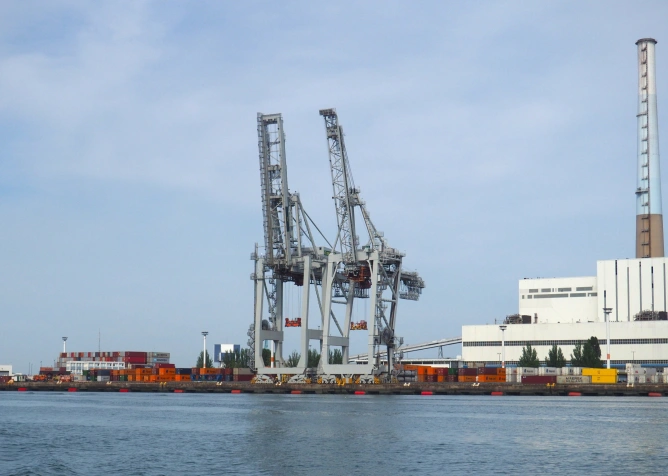
Macarale și containere în portul Le Havre, Franța / foto: 2eu.brussels

Always see our news on Google
Ports and authorities in the participating countries will cooperate and exchange information to combat drug trafficking by sea. The network’s first meeting took place in Marseille on November 9 and 10. South Korea designated the port of Busan and listed Hamburg, Houston, and London Gateway among the participants.
The G7 foreign ministers and the representative of the European Union confirmed the launch of a cooperation network against drug trafficking through seaports, together with Brazil and South Korea. The G7+ network will facilitate information sharing and collaboration between ports and the relevant authorities, according to the joint statement published on November 11, following the ministerial meeting in Paris.
In briefThe network’s first meeting took place in Marseille on November 9 and 10, in parallel with the G7 foreign ministers’ meeting in Paris. G7 leaders had announced the initiative in June, in Évian.South Korea designated the port of Busan. Its communiqué mentions, among other participating ports, Marseille, Le Havre, Dunkirk, Hamburg, Genoa, Houston, and London GatewayThe network will coordinate information sharing and cooperation between ports with existing initiatives, including the European Ports Alliance. The United Nations Office on Drugs and Crime is among the organizations that will support the initiative.
At the network’s first meeting, organized in Marseille on November 9 and 10 by the French G7 presidency, delegations discussed how to strengthen port security and organize cooperation. South Korea’s Ministry of Foreign Affairs and customs authority sent representatives to Marseille, while the Busan Port Authority participated by videoconference. Representatives of the United Nations Office on Drugs and Crime, the World Customs Organization, Interpol, and the International Maritime Organization also attended the meeting, according to Seoul.
South Korea designated Busan, a major transshipment hub in Northeast Asia, as a participating port. In the same communiqué, Seoul listed Marseille, Le Havre, Dunkirk, Hamburg, Genoa, Houston, and London Gateway among the ports in the network. The ministerial statement does not publish a complete list and does not specify the budget or timetable for joint operations.
At the summit in Évian on June 17, G7 leaders committed to creating the network by November. The document identified maritime transport as the main route for the international trafficking of drugs and chemical precursors and called for closer cooperation between port authorities, law enforcement agencies, and private operators. The leaders also proposed an inventory of best practices, as well as possible joint visits to port and law enforcement authorities. In November, the ministers agreed that the network would cooperate with existing initiatives, including the European Ports Alliance, the European Coalition against Drugs, and the Maritime Safety Committee.
The European Ports Alliance, launched by the Commission and the Belgian presidency of the Council of the EU in January 2024, brings together customs authorities, police, port administrations, and private operators. At the alliance’s launch, the Commission announced EUR 200 million for customs control equipment, including container scanning. The funding concerns EU customs controls. The Paris declaration does not announce an allocation for the G7+ network.
Context: EU prepares closer maritime surveillance data exchanges between civilian and military systems
Sources

Latest News
11:11
The High Court upheld the final acquittals in the RCS&RDS case after rejecting the DNA appeal concerning the alleged €3.1 million bribe
11:08
Siegfried Mureșan: “Sorin Grindeanu leads the ‘Apologies and Regrets’ Government”
11:05
Ilie Bolojan and the head of the Constitutional Court, summoned nine times to hearings in the Senate investigation into the meeting in Mircea Abrudean’s office. Neither of them showed up / What are the conclusions of the investigative committee’s report
11:03
ANM announces torrential rains, strong winds, and a sudden drop in temperatures over the weekend / On Sunday, temperatures will not exceed 12 degrees nationwide
11:02
The condition of the Romanian injured in the pile-up in Bulgaria has worsened / The man is in serious condition
See more news
NEWS ON THE SAME TOPICS



Personalized news feed, AI-powered search, and notifications in a more interactive experience.