European Parliament supports around 99 million additional free ETS allowances for certain industries in 2026–2030



Always see our news on Google
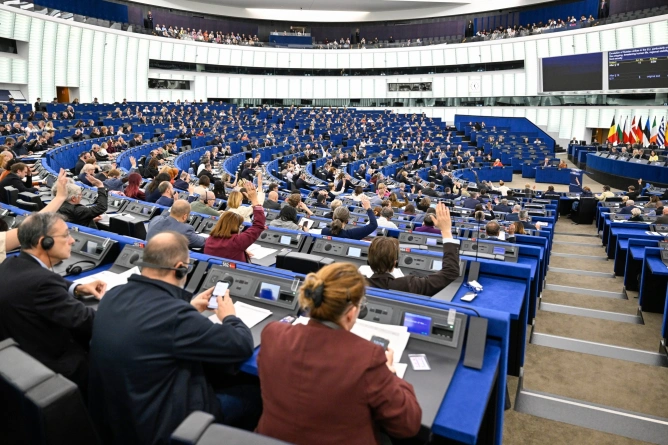
Certain European industrial installations could receive approximately 99 million additional free ETS allowances for the 2026–2030 period, according to the formula supported by the European Parliament plenary on Thursday, 22 October 2026. The measure concerns allocations calculated on the basis of heat and fuel benchmarks and aims to reduce compliance costs and the risk of production relocating outside the EU. Parliament approved the proposal with amendments and referred the file back to the ENVI committee for negotiations with the Council; no definitive legislative act has yet been adopted.
In brief, Parliament’s plenary approved the proposal with amendments on 22 October, by 474 votes to 82, with 28 abstentions, and then referred the file back to the ENVI committee for negotiations with the Council. The vote does not conclude the adoption of the legislation. The formula supported by Parliament would allow around 99 million additional free ETS allowances for certain installations in 2026–2030: approximately 88 million available allowances, plus around 11 million from another pool of allowances. The 11 million represent one third of approximately 33 million allowances that would not be allocated in 2026–2030 as a result of applying the ETS conditions. One third would be auctioned, with the revenues transferred to the Modernisation Fund; the final third would go to the Innovation Fund. The Council proposes using the entire pool of around 33 million for additional free allocations, alongside the 88 million. The indicative total of 121 million and the destination of the allowances must be negotiated. Parliament also calls for sectoral sub-benchmarks for fuels, with priority for refractory products and ceramic tiles and slabs. The general increase would not apply to certain oil and gas extraction, refining and pipeline transport activities. The estimate of around €6 billion in savings, cited by the Council based on Commission data, concerns the 88 million allowances. It is neither a grant nor an assessment of the entire package supported by Parliament. Companies do not receive additional allowances as a result of this vote. Legislative approval and application of the rules to eligible installations are required; the proposal provides for the 2026 supplement to be made available together with the 2027 allocation.
The vote on the proposal was 474 in favour, 82 against and 28 abstentions. The plenary adopted the five amendments of the Committee on the Environment, Climate and Food Safety (ENVI), which had approved its report on 19 October. The rapporteur, Polish MEP Adam Jarubas of the European People’s Party Group, then requested that the file be referred back to the committee for interinstitutional negotiations, a request approved by the plenary. This step must be distinguished from the conclusion of the first reading and the definitive adoption of the new rules.
The change concerns how certain industrial installations receive emissions allowances free of charge. In the ETS, one allowance corresponds to the right to emit one tonne of carbon dioxide equivalent. Companies must surrender allowances corresponding to their verified emissions, but some installations receive part of them free of charge to limit the risk of production relocating to countries with less stringent climate policies. Allocation is based on benchmarks reflecting the performance of efficient installations and updated periodically.
Heat and fuel benchmarks are used where no product-specific benchmark exists. The increase would concern only the portion of the allocation calculated using these benchmarks under the ETS. The general increase excludes the oil and gas extraction, refined petroleum products manufacturing and pipeline transport activities specified in the proposal. For these activities, the existing maximum rate of benchmark reduction would continue to apply.
The need for the change arose after the benchmarks for 2026–2030 were updated in June 2026. According to an analysis by the European Parliament Research Service (EPRS), the new values would reduce free allocation by more than 16% on average in 2026 compared with 2021, while the heat and fuel benchmark values would each fall by approximately 34%. On 17 July, the Commission presented a separate adjustment for these two categories. Its initial proposal referred to around 80 million available allowances; subsequent Parliament and Council texts use the estimate of approximately 88 million.
Parliament supports using the approximately 88 million available allowances for free allocation, to which it would add around 11 million. The latter represent one third of an estimated pool of approximately 33 million allowances that would not be allocated during 2026–2030 as a result of reductions applied to installations that fail to meet the ETS conditions on energy efficiency and climate-neutrality plans. The mechanism does not mean the automatic return of allowances to installations that failed to meet the conditions.
From the same pool of around 33 million, Parliament proposes auctioning another third and transferring the revenues to the Modernisation Fund, including for investments in the modernisation of district heating systems. The final third would be transferred to the Innovation Fund. These two thirds have different destinations and are not added to the approximately 99 million free allowances intended for the installations concerned.
The negotiating mandate agreed by the ambassadors of the member states on 16 September provides for a different formula: approximately 88 million available allowances, plus the entire estimated pool of 33 million allowances that would not be allocated as a result of applying the ETS conditions. The indicative total would be approximately 121 million for increasing free allocations. The negotiations must resolve both the difference in volume and the destination of the allowances.
The Council cited a European Commission estimate that using the approximately 88 million allowances would represent cost savings of around €6 billion for the sectors concerned. This amount is not budgetary funding granted directly to companies and cannot automatically be attributed to the entire package of approximately 99 million allowances proposed by Parliament. Actual benefits depend on allowance prices, individual allocations and the installations’ compliance obligations.
Parliament also proposes sectoral sub-benchmarks for fuels where the Commission identifies significant and well-documented discrepancies between the common benchmark and the emissions performance of certain industrial processes. Priority would be given to the production of refractory products and ceramic tiles and slabs. The values would be calculated on the basis of the average emissions intensity of the top 10% of the sector’s most efficient installations, using the same reference period, data and methodology as for the general fuel benchmark.
The text voted on calls for the criteria and definitions for these sub-benchmarks to be established within no more than three months of the publication of the future regulation, and for the corresponding values to be set within six months. These are proposed deadlines for an act that is still under negotiation, not obligations that already apply.
For installations in Romania, the impact would depend on the current allocation calculation method, activity levels and compliance with the ETS conditions. The additional quantities for each operator would result from the final rules and individual allocation decisions; Parliament’s vote does not itself grant allowances to Romanian companies.
The proposed adjustment concerns the existing ETS, which applies mainly to industrial installations and certain energy activities, and must be distinguished from ETS2, the separate system intended to cover emissions from fuels used in buildings and road transport. Changing free allocation under the existing ETS does not automatically amount to an increase in the overall emissions cap. It changes the distribution of compliance costs within the mechanism, under conditions that the co-legislators have yet to establish definitively.
The Commission proposal provides for the values to be adjusted for the 2027–2030 period, with the supplement for 2026 to be made available together with the 2027 allocation. The Council’s mandate maintains this approach. The change is designed not to trigger the cross-sectoral correction factor, which would proportionally reduce allocations to other installations.
The next step is negotiation of a common text between Parliament and the Council, followed by formal approvals and publication of the final act. The outcome will determine the additional volume available to eligible installations and the resources allocated to the Modernisation and Innovation Funds. Effective implementation will also require updating the benchmark values and allocations within the ETS mechanism.
ومnot valid?

Latest News
11:36
11:28
11:10
10:56
10:52
See more news
NEWS ON THE SAME TOPICS
.webp)