European Environment Agency identifies six directions that could strengthen EU competitiveness by 2040



Always see our news on Google
The competitiveness of the European Union in the coming decades will also depend on its ability to use resources more efficiently, protect infrastructure and production from climate risks, and preserve the natural capital on which economic activities depend, according to the “Competitive by nature” report published by the European Environment Agency. The forward-looking analysis extends to 2040 and identifies six directions that the EEA considers useful across a wide range of scenarios, without assuming that it can anticipate a single trajectory for the European economy.
In brief, the EEA proposes that circularity and resource efficiency be treated as tools for reducing the EU’s economic and strategic vulnerabilities. Climate adaptation, resilient infrastructure and nature-based solutions are presented as investments that can protect productive capacity. Developing European capabilities in advanced computing, artificial intelligence and next-generation biotechnology is one of the six directions identified. Skills, education, social cohesion, public trust and effective institutions are treated as economic factors, not merely social ones. The report is a foresight exercise extending to 2040. It does not set a single forecast, establish a new budget or create obligations for states and companies.
The EEA starts from a broader definition of competitiveness than a comparison of costs, productivity and investment. In its analysis, an economy’s ability to remain competitive over the long term also depends on the natural, social and institutional foundations that allow production and investment to continue amid climate change, environmental degradation, competition for resources and geopolitical fragmentation. Advantages gained through the accelerated consumption of resources or by shifting environmental costs may improve short-term indicators, but can reduce the economy’s resilience over time.
The report examines this issue through four mutually influencing dimensions: circularity and resource efficiency, decarbonisation and electrification, climate adaptation and resilience, and the protection and restoration of nature. The EEA’s rationale is that these areas should not be analysed separately from industrial policy and the competitiveness agenda, because they affect access to materials, costs, production continuity, investment and the economy’s ability to withstand shocks.
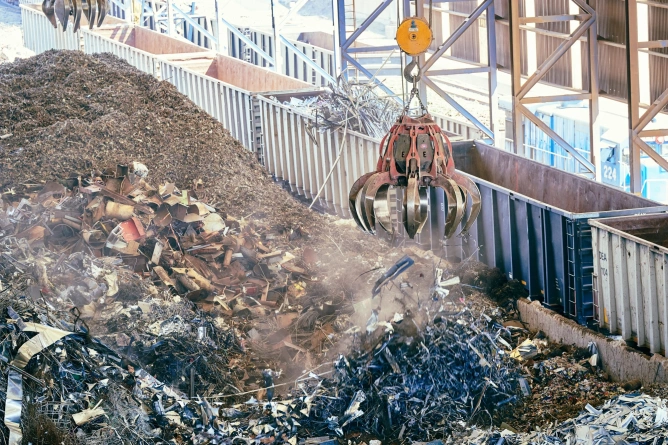
The first of the six directions identified is expanding the circular economy and improving resource efficiency. For industry, circularity means keeping materials and products in the economy for longer, reducing the need for primary resources and recovering a larger share of the value already invested in goods and infrastructure. From a competitiveness perspective, the aim also includes reducing exposure to fluctuations in raw-material prices and disruptions to external supply chains.
The second direction combines climate adaptation, nature-based solutions and resilient infrastructure. The report treats the effects of climate change as an economic risk that can affect assets, infrastructure, production and the continuity of activities. Investment in resilience is presented not only as environmental protection spending, but also as a way to reduce losses and keep the productive base functioning in the face of future shocks.
The EEA brings the protection and restoration of natural capital into the same discussion. Soils, water, ecosystems and other natural resources provide services on which agriculture, industry, energy, cities and infrastructure depend. Their degradation can transfer costs to the economy, while their restoration can support resilience. However, the report does not quantify a single economic gain that would automatically result from investments in nature.
The third direction concerns developing European capabilities in advanced computing, artificial intelligence and next-generation biotechnology. In this way, the EEA places technology within the same framework as resources and resilience. Technological capacity can support monitoring, energy and materials management, and the emergence of new products and processes, but the final effects depend on how the technologies are developed and used.
The fourth direction is investment in skills, education and lifelong learning. Industrial, energy and digital transformations require qualifications that cannot be created through investment in equipment alone. Without people able to adopt new technologies and operate different infrastructures, material investments may produce results below their potential.
The fifth direction shifts the focus to social cohesion, public trust and effective regulatory frameworks. The EEA considers that the predictability of rules and institutions’ ability to implement policies can influence investment, while a lack of trust and the uneven distribution of transition costs can reduce support for the necessary economic changes. Competitiveness is therefore also linked to the ability of the political and social system to implement transformations over long periods.
The last of the six directions is maintaining an active EU role in setting international standards and in multilateral institutions. European standards can influence the conditions under which products and technologies circulate in international markets, while cooperation can help diversify economic relations and supply chains.
However, the report warns that these directions cannot be treated as a list in which every measure automatically produces benefits. Policies can support one another, but they can also create trade-offs between objectives. An intervention that resolves a vulnerability in one sector may shift pressure to other resources, regions or generations. For this reason, the EEA calls for effects to be assessed together and for policy design to avoid simply transferring risks.
The EEA calls the six directions “no-regret” options, meaning that they could remain useful across a variety of economic and geopolitical developments. This does not mean that every measure is cost-free or that outcomes are guaranteed. The report is structured as a forward-looking analysis and seeks to identify robust directions in an environment in which technology, climate, geopolitics and markets may evolve differently by 2040.
The EEA considers that the EU already has an important policy base in many of these areas. The challenge is to connect and implement them at a sufficient scale, while maintaining coherence between industrial policy, environmental objectives, investment and social policies. However, the report does not open a new funding line or establish amounts that must be spent on the six directions.
For Romania or the Republic of Moldova, the available documentation likewise does not establish a distinct economic effect or an amount associated with the recommendations. The report’s conclusion is European: long-term competitiveness cannot be judged solely by today’s costs and productivity, because the ability to use resources, absorb shocks and preserve the natural and social foundations of the economy may itself become a competitive advantage.
`,Sources

Latest News
07:50
07:35
07:19
23:01
22:57
See more news
NEWS ON THE SAME TOPICS