ECHR finds degrading treatment in the prolonged solitary confinement of two former Turkish judges



Always see our news on Google
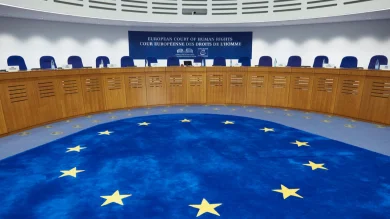
The European Court of Human Rights (ECHR) found that Türkiye subjected two former judges to degrading treatment through prolonged restrictions on contact with other detainees, maintained without sufficiently individualised justifications. In its Chamber judgment delivered on 3 November 2026 in the case of Gökçe and Others v. Türkiye, the Court found a violation of Article 3 of the Convention in respect of former judge Süleyman Kul and former prosecutor İlhan Akıllı. It found no such violation in respect of the other two applicants, whose detention regimes allowed different contacts and activities. The judgment is not final.
In brief
1. Süleyman Kul, a former judge at the Court of Cassation, spent six years and eight months in an individual cell, approximately the first 19 months without contact with other detainees. The restrictions were subsequently eased, but the Court found that their necessity had not been reassessed throughout the period.
2. İlhan Akıllı, a former prosecutor, was isolated for approximately one year and five months. The Court established that, during the first eight months, he was allowed only 30 minutes of outdoor time each day, alone, and did not benefit from social, sports or educational activities during the period examined.
3. In respect of Musa Gökçe and Eşref Köse, the Court found no violation of Article 3, having regard to the contacts and activities maintained. The decision in respect of Köse was adopted by six votes to one and is challenged in a separate opinion.
4. Kul was awarded EUR 7,000 for non-pecuniary damage, and Akıllı EUR 3,000, plus EUR 1,500 each for costs and expenses. The three-month payment period begins when the judgment becomes final.
5. The Chamber judgment is not final. The finding concerns the cumulative effects of the conditions applied to each person; being housed alone in a cell does not, in itself, constitute degrading treatment.
All four applicants had held public office and had been arrested on suspicion of belonging to the organisation which the Turkish authorities designate as FETÖ/PDY, in the security context following the attempted coup of July 2016. Their transfer from shared cells to individual cells was carried out by decisions of the prison administrations. The Government argued that this did not constitute disciplinary solitary confinement and that the detainees had retained their visits, telephone calls and access to facilities such as books or television. The Court accepted that certain restrictions could, in principle, be justified by prison security and the prevention of renewed contacts within the organisation.
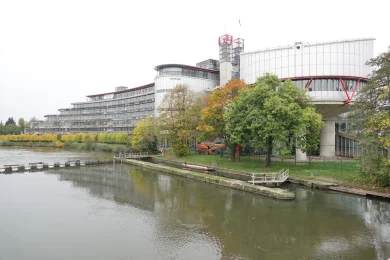
The Court examined the actual conditions of detention, beyond the administrative classification of the measure. Article 3 prohibits torture and inhuman or degrading treatment, including in the context of combating terrorism. Being housed alone at night does not, in itself, breach the Convention; the judges examined how restrictive the regimes actually applied were, how long they had lasted, what purpose they served and what effects they had on each person. Visits and telephone calls were taken into account in the assessment, without automatically offsetting the other restrictions. The ECHR is the court of the Council of Europe, distinct from the Court of Justice of the European Union.
In the case of Süleyman Kul, a former judge at the Court of Cassation, the period examined began on 8 October 2016 and ended with his conditional release on 7 June 2023. During the first approximately 19 months, he went into the yard alone for one hour a day and had no contact with other detainees. From 9 May 2018, he was able to spend two hours outdoors each day together with two other detainees, and from 2019 he also had access to the football pitch for 45 minutes per week. The Court took this easing into account, but assessed the regime over the entire period, together with the other restrictions.
Kul also complained of permanent artificial lighting at night and hourly checks that interrupted his sleep. The Government did not submit evidence contradicting this account, which the Court accepted, noting the effects on his rest and the physical and mental fatigue. In November 2018, a psychiatrist had noted difficulties associated with staying in an individual cell, diagnosed an adjustment disorder and prescribed medication. Although access to medical care had not been restricted, the Court observed that the administration did not appear to have assessed his ability to endure prolonged isolation or its effects on his mental health.
The justifications for maintaining the regime remained general, without an examination of his conduct or individual situation. The Court found that the authorities had not reassessed whether the restrictions remained necessary over the six years and eight months. The duration, the initial lack of contact with other detainees, the disruption of sleep, the demonstrated psychological impact and the absence of reassessment had, taken together, caused suffering exceeding the inevitable level associated with detention. The finding of degrading treatment was therefore not based solely on the number of years spent in an individual cell.
In respect of İlhan Akıllı, a former prosecutor in Eskişehir, the period examined was 19 September 2016 to 6 February 2018. One of the factual disputes concerned the time spent outdoors. The Government maintained that he had one hour daily, but the prison administration’s documents initially confirmed only 30 minutes. A request to extend this to one hour had been approved in February 2017, but, according to the account accepted by the Court, the change was not implemented until 6 May. The judges established that, until then, the 30-minute daily outings took place alone; subsequently, he could spend one hour with one or two detainees.
Akıllı had no opportunity to participate in social, sports or educational activities during the period examined. The justifications for continuing the separation referred to security, but did not analyse his specific conduct in prison, and the domestic courts had not carried out a substantive review of the measure. The Court assessed these elements cumulatively, alongside the duration of the regime and the lack of contact with other detainees during the first eight months, and unanimously found a violation of Article 3. The same conclusion had also been unanimous in Kul’s case.
The outcome was different for Musa Gökçe, a former official of the banking regulation and supervision authority. Although he spent approximately two years and three months in an individual cell, he could go out daily for three hours together with other detainees. The Court also took into account his family ties, books, sports activities and medical care, finding that he had retained sufficient human contact and physical and mental stimulation. It found no violation of Article 3.
Eşref Köse, a former prosecutor, spent approximately two years and 11 months alone in cells at Bolu Prison. He had 90 minutes daily in the yard with another detainee, and from May 2018 his opportunities to participate in social, sports and conversation activities were expanded. In autumn 2018, participation in group programmes was restricted again, but a domestic court annulled the measure in November. The ECHR majority considered these contacts, activities, outside relationships and medical care sufficient overall. A separate complaint concerning an earlier period at Samsun Prison was declared inadmissible for failure to exhaust domestic remedies, without examining the merits of that period.
The decision concerning Bolu was adopted by six votes to one. In her separate opinion, Judge Oddný Mjöll Arnardóttir considered that the majority had not given sufficient weight to the duration and intensity of Köse’s isolation or to the lack of an individualised reassessment. She challenged the idea that occasional visits, books and television could compensate for insufficient daily human contact, referring also to the standard of at least two hours of meaningful human contact recommended by the European Prison Rules, revised in 2020, for persons separated for security reasons.
The standards of the European Committee for the Prevention of Torture, published in 2011, require long-term administrative solitary confinement to be subject to rigorous controls and to include an individual plan aimed at returning the person to the ordinary regime. These preventive standards provide additional context for the judgment, without being confused with an automatic finding of a violation of the Convention. In the four cases, the Court applied an individual assessment of the cumulative effects of the conditions of detention.
For non-pecuniary damage, the Court awarded Kul EUR 7,000 and Akıllı EUR 3,000; each was awarded a further EUR 1,500 for costs and expenses. The sums must be paid within three months of the judgment becoming final. The Convention allows the parties to request, within three months of delivery and under the conditions of Article 43, that the case be referred to the Grand Chamber. The execution of final judgments is supervised by the Committee of Ministers of the Council of Europe.
Sources

Latest News
11:44
11:34
11:29
11:17
10:59
See more news
NEWS ON THE SAME TOPICS