EU institutions sign declaration to commemorate workplace accident victims on 8 August from 2027



Always see our news on Google
The European Parliament, the Council of the European Union and the European Commission signed in Strasbourg a joint declaration establishing a European day of remembrance for victims of workplace accidents. The first commemoration will take place on 8 August 2027, a date chosen in memory of the 1956 Marcinelle mining disaster. The initiative aims to link remembrance of the victims with the prevention of occupational risks, in a European Union where Eurostat recorded 3,367 fatal workplace accidents in 2024.
Key points The three European institutions signed the joint declaration in Strasbourg, completing the interinstitutional process to establish the commemorative day, after the Council approved the document on 16 November. The first European commemoration will take place on 8 August 2027, 71 years after the Marcinelle mining disaster, in which 262 miners of 12 nationalities died. Eurostat recorded 3,367 fatal workplace accidents and approximately 2.78 million non-fatal accidents in the EU in 2024. The number of deaths increased by 1.4% compared with the previous year. The declaration links remembrance of the victims to the European objective of eliminating work-related deaths and promoting safe and healthy working conditions. The new European day is commemorative in nature. The document does not establish a legal public holiday and does not directly change the obligations of employers or national authorities.
The declaration was signed by Irish Minister of State at the Department of Culture, Communications and Sport Charlie McConalogue, on behalf of the Council of the EU; Li Andersson, chair of the European Parliament’s Committee on Employment and Social Affairs (EMPL); and Roxana Mînzatu, Executive Vice-President of the European Commission for Social Rights, Skills, Quality Jobs and Preparedness.
By signing the document, the three institutions completed the formalisation stage of the initiative. They agreed to establish the European day, set an annual calendar of commemorations and cooperate to promote safety and health at work.
“Earning a living must never cost a life,” Roxana Mînzatu said, stressing that remembrance of the victims must be reflected in the protection of today’s workers.
Li Andersson highlighted the consequences of workplace accidents for families and communities, while Charlie McConalogue presented the initiative as a commitment to protecting workers’ health during Ireland’s presidency of the Council of the EU.
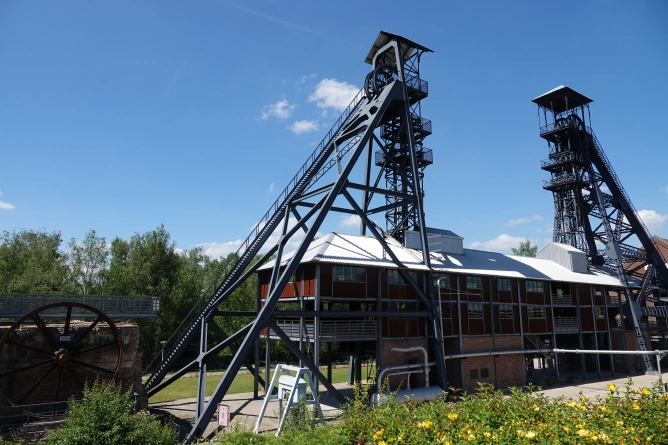
8 August was chosen in memory of the victims of the fire that broke out in 1956 at the Bois du Cazier coal mine in Marcinelle, near Charleroi, Belgium. The tragedy caused the deaths of 262 miners of 12 nationalities, many of whom were workers from other European countries. Commemoration at Union level gives this tragedy in Belgium’s industrial history a European dimension, linked both to worker protection and labour mobility.
The establishment of the European day comes amid a context in which serious workplace accidents continue to be a significant problem. According to data published by Eurostat on 25 September 2026, 3,367 fatal accidents were recorded in the EU in 2024, 45 more than in 2023. The number of non-fatal accidents fell by 1.5%, however, to approximately 2.78 million.
Construction recorded 776 deaths, accounting for almost a quarter of the European total. The transport and storage sector reported 537 fatal accidents, while manufacturing reported 466. These figures represent the absolute number of accidents, not occupational risk rates calculated according to the number of workers in each sector.
European statistics on non-fatal accidents include cases resulting in at least four full calendar days of absence from work. An accident is classified as fatal when death occurs within one year of its occurrence.
Accidents account for only part of mortality associated with work. The Council’s press release cites an estimate by the European Agency for Safety and Health at Work that work-related diseases cause more than 170,000 deaths annually in the EU. This estimate must be distinguished from the number of fatal accidents statistically recorded in a given year.
The initiative forms part of the European strategic framework on health and safety at work for 2021–2027, which seeks to reduce occupational risks and achieve the “Vision Zero” objective, namely eliminating work-related deaths. The declaration also refers to Principle 10 of the European Pillar of Social Rights, concerning workers’ right to a healthy, safe and well-adapted working environment.
The European Parliament had called for the establishment of the commemorative day in its resolution of 21 May 2026, mentioned in the signed declaration. The Council approved the joint declaration on 16 November, while its signing by the three institutions on 24 November marks the next stage in this process.
Unlike a regulation or directive, the declaration signed in Strasbourg does not introduce new binding occupational safety standards. Any changes to European legislation, employers’ obligations or national inspection systems would require separate legal measures.
The European day will complement, from the perspective of EU social policies and rights, World Day for Safety and Health at Work, promoted by the International Labour Organization and observed annually on 28 April.
The first European commemoration is scheduled for 8 August 2027. However, the joint declaration does not set out the specific programme of events or require ceremonies to be organised in every Member State.

Latest News
17:19
17:07
16:56
16:47
16:36
See more news
NEWS ON THE SAME TOPICS
.webp)