[EXPLANATORY] Why the European Union is transforming humanitarian aid into a strategic tool



Always see our news on Google
The European Union is redefining humanitarian aid policy at a time when global needs are increasing, funding is decreasing, humanitarian workers are increasingly exposed, and crises in Gaza, Ukraine, Sudan, and other regions show the limits of the classic model of emergency intervention. The new communication from the European Commission and the High Representative shifts the focus towards humanitarian diplomacy, more efficient logistics chains, local actors, cash assistance, common data, and a closer link between aid, development, peace, and resilience.
The European Union is not just updating a public policy document. The European Commission and the High Representative are trying to redefine how the EU operates within a global humanitarian system under severe pressure. The new communication on humanitarian aid, presented on May 27, 2026, starts from a clear observation: the current model can no longer respond proportionally to the scale of global crises.
According to the Commission, 239 million people will need humanitarian assistance in 2026, compared to 31 million in 2006. Current global funding can support less than half of those in need, while the number of forcibly displaced persons or those seeking asylum has reached 117.3 million in 2025.
In short
The EU wants to remain a major humanitarian donor but recognizes that money is no longer sufficient. Crises are multiplying, lasting longer, and becoming harder to finance.
Humanitarian diplomacy is becoming central. The Commission and the High Representative want the EU to use political dialogues, diplomatic efforts, external missions, and international pressure to ensure humanitarian access and respect for international humanitarian law.
The safety of humanitarian workers has become a major concern. In 2025, according to the Commission's document, 334 people were killed, 192 injured, 109 kidnapped, and 45 held illegally while carrying out humanitarian activities, most of whom were local staff.
Logistics is becoming a reform area. Supply chains account for 60-80% of global humanitarian spending, which explains the emphasis on common procurement, shared warehouses, pre-positioned stocks, and interoperable data.
The communication does not guarantee additional funds. Humanitarian aid funding is decided annually by the European Parliament and Council through the budgetary procedure.
Why is this strategy emerging now
The new communication comes five years after the previous EU document on humanitarian action, published in 2021. In the meantime, the international environment has changed significantly. The Commission points to Russia's war against Ukraine, the humanitarian situation in Gaza and Sudan, severe funding cuts, and attacks on humanitarian workers as reasons for the new approach. In the working document that accompanies the communication, the Commission describes the global humanitarian system as being close to a breaking point. Conflicts and climate-related disasters are pushing needs to record levels, while financial resources and operational space are shrinking. The document refers to approximately 130 active conflicts worldwide, more than double the number 15 years ago, and shows that these conflicts generate about 70% of global humanitarian needs.
This means that the issue is no longer just how much aid the EU can provide. It is also whether aid can effectively reach people, whether humanitarian workers can operate safely, whether logistics systems are efficient enough, and whether emergency assistance can be linked to longer-term stability.
What does the European Commission say it wants to do
The Commission and the High Representative structure the new approach around three ideas: protection, performance, and partnership. In practical terms, this means defending humanitarian access and field personnel, using available funds more effectively, and building broader alliances with member states, financial institutions, international organizations, the private sector, philanthropic organizations, and local actors.
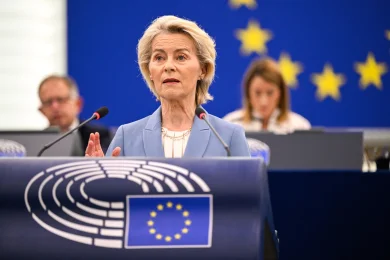
European Commission President Ursula von der Leyen stated that the European Union, as the world's leading humanitarian donor, continues to defend the dignity of those in need and those who risk their lives to help them. She added that the package aims for more efficient delivery of vital aid, including in the most difficult environments, and building resilience to reduce dependence on aid.
High Representative Kaja Kallas linked the new approach to the EU's foreign policy. She said that in a humanitarian system affected by cuts and funding shortages, the EU and member states remain the largest and most reliable donors, and the new approach to humanitarian diplomacy should help protect the delivery of aid, humanitarian access, civilians, and international humanitarian law.
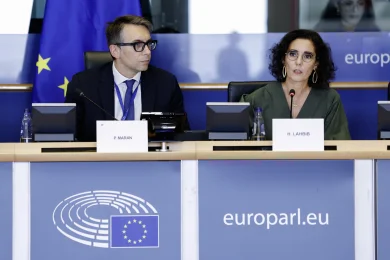
Commissioner Hadja Lahbib framed the issue more directly. Humanitarian needs have increased eightfold in 20 years, humanitarian workers are being attacked, civilians are being used as weapons of war, and the principles that should guide humanitarian action are being undermined.
The Commission's message is that humanitarian policy can no longer be treated as a separate emergency intervention file. It now touches on foreign policy, security, development, logistics, funding, climate resilience, and the role of the EU in the international order.
What does humanitarian diplomacy mean
Humanitarian diplomacy is the most political part of the new package. The Commission defines it as the use of the EU's humanitarian, political, economic, security, and diplomatic tools to engage decision-makers, conflict parties, and sponsors or actors influencing them. The goal is to prevent, limit, or resolve humanitarian crises, improve respect for international humanitarian law, and facilitate rapid and unhindered access for humanitarian actors.
In practice, this can mean diplomatic efforts, political dialogues, human rights dialogues, mediation, peace efforts, missions, and operations within the framework of common security and defense policy, action in multilateral forums, and coordination between the Commission, the European External Action Service, EU special representatives, EU delegations, and member states.
The reason is simple. Many crises are not blocked solely by a lack of funding. Aid may exist on paper, but it may not reach people because roads are unsafe, armed actors block access, civilians are caught in combat zones, and hospitals, schools, water networks, or energy infrastructure are attacked.
The working document on humanitarian diplomacy explicitly states that obstacles to humanitarian action require political solutions. This marks an important shift. European humanitarian aid remains formally guided by humanity, neutrality, impartiality, and independence. At the same time, the Commission states that humanitarian diplomacy must be part of external action and the EU's foreign policy.
This approach creates a difficult balance. The EU wants to use its political weight to defend humanitarian access and international humanitarian law, but it must avoid turning aid into a political tool. If aid is perceived as part of a geopolitical agenda, humanitarian organizations may lose trust or access on the ground. If diplomatic pressure is too weak, the EU may fail to protect civilians and humanitarian workers. If it is too visible, it may increase risks for those delivering assistance.
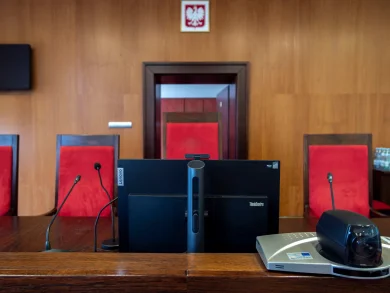
The new humanitarian approach of the European Union emphasizes coordination, diplomacy, and planning for access in crisis-affected areas. Displays information of the image
Why does the safety of humanitarian workers matter
One of the harshest parts of the package concerns attacks on humanitarian personnel. The Commission states that violence against humanitarian workers has reached unprecedented levels. In 2025, 334 people were killed, 192 injured, 109 kidnapped, and 45 held illegally while carrying out humanitarian activities, most of whom were national staff.
These figures must be placed in a broader context. The Aid Worker Security Database, one of the main global databases on incidents affecting humanitarian workers, shows that 2024 was a record year, with 383 humanitarian workers killed in violent incidents, 308 seriously injured, and 125 kidnapped. The report identifies Gaza, Sudan, Lebanon, Ethiopia, and Syria among the most severe contexts.
The Humanitarian Outcomes report also shows an important trend: almost all humanitarian workers killed in 2024, 97%, were citizens of the country affected by the crisis in which they worked. In other words, the risk is borne primarily by local staff, not by expatriates or more visible international staff in public communication.
That is why the Commission talks about expanding the "Protect Aid Workers" program, which is intended to provide support, care, and prevention capacity for victims and survivors of attacks. Lahbib stated that humanitarian workers are not expendable and must be protected through financial support, capacity building, and security training, especially for local workers.
This issue changes how humanitarian policy must be understood. It is not just about how much money the EU provides. It is also about the ability of the people delivering aid to survive, work safely, and continue to operate in areas where civilians depend on them.
Why is logistics becoming a political issue
In a humanitarian crisis, logistics is not an administrative detail. It determines whether aid arrives on time, in the right place, and at an acceptable cost. The Commission's document on supply chains shows that they account for 60-80% of total global humanitarian spending, from procurement to final delivery.
The Commission argues that humanitarian organizations have developed, over time, parallel supply chains that operate largely separately. This fragmentation can create duplications, higher costs, slower delivery, incompatible digital systems, limited visibility over aggregated demand, and storage or transport organized in parallel. The proposed response is a model shift: common procurement, shared transport and storage, mutual recognition of procurement procedures, pre-positioned stocks before crises, shared logistics platforms, interoperable data, and a greater role for local actors.
Lahbib explained the logic in simple terms: every euro saved by reducing logistical waste is a euro that can go towards bread or a vaccine for a child. She cited the example of Panama, where the EU and the UN use common warehouses, a model that helped with rapid deliveries when Hurricane Melissa hit Jamaica.
The practical importance is clear. If humanitarian logistics become more efficient, the same amount of public money can be transformed into more food, medicine, shelter, water, medical care, and protection. If it remains fragmented, limited funding risks being absorbed by duplicate systems, slow delivery, and avoidable costs.
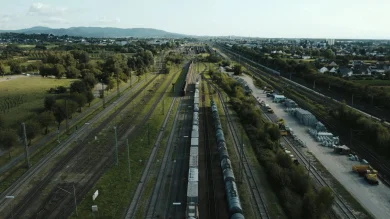
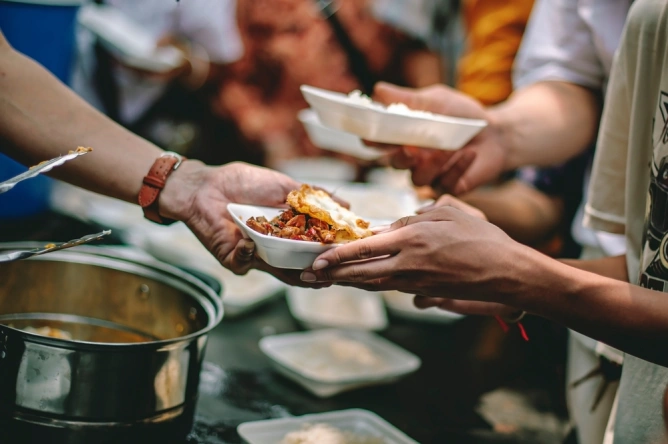
Illustrative image. Reforming supply chains is one of the stakes of the new European humanitarian strategy, from common procurement and pre-positioned stocks to rapid delivery of aid.
Why cash assistance is becoming more important
The Commission wants to expand forms of funding that it considers more efficient and flexible, including cash assistance, multiannual funding, pooled funds, anticipatory action, and support for local actors. The joint communication states that these modalities should represent at least two-thirds of the Commission's humanitarian funding.
Cash assistance means providing money or vouchers instead of directly distributing goods. It has two central advantages in the Commission's logic. First, it can reach more people with the same funding. Second, it allows affected individuals to decide what they need, rather than receiving a standard package designed from a distance.
Lahbib stated that at the same level of funding, cash assistance can reach 30% more people than aid in goods. She presented this form of support as being more efficient, more dignified, and more useful for the local economy.
However, cash assistance is not a universal solution. It works well where local markets can still provide goods and services. In situations of siege, total market collapse, or physical inaccessibility, money cannot replace the actual delivery of food, water, medicine, or shelter.
This distinction is important. Cash assistance can make humanitarian aid more flexible and respectful of people's choices, but it depends on functional markets, access, security, and the availability of basic goods.
Modern humanitarian assistance emphasizes direct support, dignity, and the involvement of local communities in identifying real needs.
Why local actors are becoming central
Localization means transferring more resources, responsibilities, and decisions to local organizations and communities. The Commission states that local actors have an essential role and that EU humanitarian funding reaching them has increased from 6% to 11% by the end of 2024. In 2025, the Commission reinforced this direction with a roadmap on localization.
Lahbib announced a 25% target for localization by 2027, more than double last year's level. In the new approach, international partners will need to explain in funding proposals how they involve local actors and affected communities in the design and delivery of assistance.
This change has both a practical and a moral justification. The practical reason is that local organizations often arrive first and remain last. They know the language, the terrain, the social dynamics, and the risks. The moral reason is that people affected by crises should not be treated merely as passive beneficiaries but as actors who can decide what type of support meets real needs.
There is also a risk. Localization can transfer more danger to local organizations, especially in conflict areas. The Humanitarian Outcomes report shows that risk and victimization are increasingly shifting to local organizations, especially where international presence is limited, state or armed actor hostility increases, and funding decreases.
Therefore, localization cannot just mean transferring burdens. It must include real funding, security, insurance, training, psychological support, access to data, administrative capacity, and political protection.
Why is the EU talking about fragility
One of the most important parts of the package is the integrated approach to fragility. The Commission's working document states that approximately 2 billion people, or 25% of the global population, live in situations of high fragility. These contexts host 72% of people living in extreme poverty, and by 2040, over 90% of the world's poorest people are expected to live in situations of high or extreme fragility.
Fragility means a combination of exposure to risk and insufficient capacity of the state, system, or communities to manage, absorb, or limit those risks. The Commission states that the roots of fragility cannot be addressed solely through emergency humanitarian aid but require resilience, stability, peace, and sustainable development.
Here lies the link between humanitarian aid, development, and peace. In practice, the idea is that the EU should not deliver emergency aid for years on end in the same place without also supporting solutions that reduce the need for aid: basic services, livelihoods, functional institutions, the return of refugees, local development, stabilization, and peace.
Lahbib cited Syria as an example, stating that the country has depended for years on humanitarian aid but now needs to function as a state, moving from emergency assistance to real recovery and development. She said that many Syrians in refugee camps want to return but have no homes, jobs, schools, or security to return to.
For the EU, fragility is not just a matter of solidarity. The Commission's document states that fragility can be instrumentalized by competing actors for geopolitical gain, can undermine global norms, can affect access to services and livelihoods, can disrupt markets and supply chains, and can amplify migration and displacement.
This is the strategic core of the new approach. Humanitarian aid is no longer described merely as a policy of compassion. It is also presented as part of a broader effort to support stability, security, and resilience in a more fragmented international order.
What the new communication does not solve
The communication does not automatically solve the funding problem. The Commission's Q&A clearly states that the document does not set the level of humanitarian funding. The annual budget is decided by the European Parliament and Council through the budgetary procedure, and the level of ambition for the next seven years will depend on the future multiannual financial framework.
In 2026, the EU's humanitarian budget started at approximately 1.9 billion euros and, after mobilizing 345 million euros from additional reserves, reached approximately 2.3 billion euros. The EU and member states together provided about 34% of global humanitarian funding in 2025, according to the Commission's Q&A.
This is the political limit of the package. The Commission can propose reforms, can demand efficiency, can promote humanitarian diplomacy, and can encourage broader partnerships. But without sufficient funding, the reform risks becoming primarily a strategy for prioritizing limited resources.
The Aid Worker Security Report 2025 places this issue in a harsher global context. The report shows that the tightening and reduction of humanitarian contributions from the US government in 2025 eliminated about a third of the sector's global resources, forcing organizations to cut programs, personnel, and security capacities.
This explains why the Commission places such a high emphasis on efficiency, supply chains, cash assistance, local actors, and partnerships. The new approach is not just an administrative reform. It is also a response to a global financial contraction.
The broader global context
Current humanitarian crises are driven by four overlapping dynamics: conflict, climate, institutional fragility, and the shrinking humanitarian space.
The first dynamic is conflict. The Commission states that approximately 70% of humanitarian needs arise from armed conflicts, and the document on humanitarian diplomacy refers to more intense, harder-to-resolve, and prolonged conflicts.
The second dynamic is climate. The communication states that climate change and environmental degradation increase the frequency of natural hazards, disproportionately affecting communities in the most fragile contexts. The effects include displacement, food insecurity, lack of water, epidemics, and the collapse of livelihoods.
The third dynamic is fragility. In many states, institutions lack the capacity to manage multiple risks, from conflict and poverty to climate shocks or migratory pressures. The Commission's document on fragility states that 40% of people living in situations of high or extreme fragility are in conflict-affected contexts.
The fourth dynamic is the shrinking humanitarian space. Humanitarian workers are attacked, access is blocked, misinformation undermines trust in aid organizations, and international humanitarian law is frequently violated. The Commission's document also refers to the increasing manipulation of information and hate speech against humanitarian organizations and medical personnel.
These four dynamics explain why the EU can no longer treat humanitarian aid as an isolated policy. It is now linked to diplomacy, security, development, climate, migration, logistics, and the EU's ability to act in a more fragmented international order.
What is at stake for the European Union
For the European Union, humanitarian aid is a policy of solidarity, but also a component of its global profile. In a world where international actors compete for influence and multilateralism is contested, the EU's ability to deliver aid quickly, based on principles and with efficiency, becomes part of its external credibility.
The new communication tries to maintain a difficult line. On the one hand, the EU states that humanitarian aid must remain needs-based, non-discriminatory, and guided by humanitarian principles. On the other hand, the documents clearly show that aid is increasingly integrated into external action, diplomacy, stabilization, and response to fragility.
This can make European humanitarian policy more effective, but it can also create risks. If aid is perceived as a political tool, humanitarian actors may lose access or trust on the ground. If diplomacy is too discreet, the EU may be accused of not sufficiently defending international humanitarian law. If it is too public, it may increase risks for those delivering aid.
Therefore, the real value of the new communication will not be measured solely by documents, meetings, or statements. It will be measured by better access in conflict areas, greater protection for civilians and humanitarian workers, reduced logistical waste, more predictable funding, and the EU's ability to help fragile states emerge from permanent dependence on emergency assistance.
Latest News
20:33
20:14
19:58
19:51
19:47
See more news
NEWS ON THE SAME TOPICS