



The European Union is testing the response to cyber attacks on railway and maritime networks.



Always see our news on Google
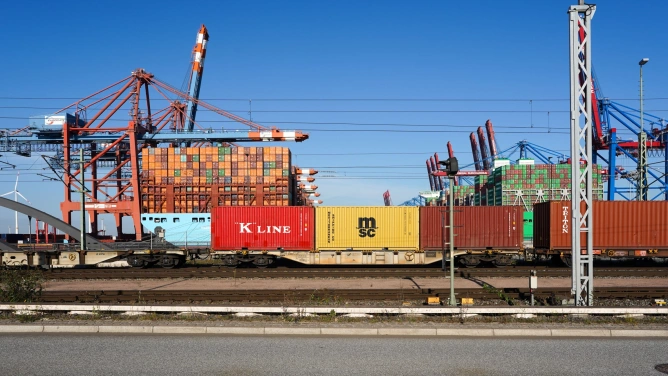
Approximately 5,000 experts participated in Cyber Europe 2026, an exercise at the European Union level that simulated a cyber attack on railway and maritime infrastructure. The exercise tested for the first time the new EU Cyber Blueprint from 2025 and Europe's ability to coordinate the response to a major cyber crisis affecting transport, trade, military mobility, and emergency response.
Approximately 5,000 experts participated on June 10 and 11 in a cyber exercise at the European Union level that tested Europe's response to attacks on critical transport infrastructure. Cyber Europe 2026 simulated an attack on railway and maritime networks, with severe operational disruptions and escalation into a major cyber crisis.
In short
1. Cyber Europe 2026 brought together approximately 5,000 experts from the public sector, private sector, European institutions, industry, and partner countries.
2. The exercise tested a cyber attack scenario on European railway and maritime networks.
3. It was the first large-scale test of the EU Cyber Blueprint from 2025, the framework that clarifies roles and responsibilities in a cyber crisis.
4. Close partners of the European Union also participated, including the United Kingdom, Norway, Switzerland, and Ukraine.
5. The exercise also tested the Cybersecurity Reserve, created through the Cyber Solidarity Act to support the response to cyber incidents.
The exercise was organized by the European Union Agency for Cybersecurity, ENISA, and focused on a scenario where digital attacks affect essential infrastructures for the movement of people, goods, and equipment. Participants included cybersecurity specialists from the public and private sectors, policymakers, European Union institutions, industry representatives, and experts from partner countries.
The stakes of the exercise went beyond the functioning of railway and maritime transport. In a crisis scenario, the blockage of ports or railways can affect supply chains, trade, military mobility, and the ability of authorities to respond quickly to other emergencies.
Henna Virkkunen, Executive Vice President of the European Commission for technological sovereignty, security, and democracy, stated that transport is essential for the economy and daily life, but it also represents a vulnerability to cyber threats. "When ports or railways are hit, the effects can go far beyond transport, disrupting trade, military mobility, and crisis response," she said.
Virkkunen linked the exercise to hybrid risks affecting civil and military infrastructures. She stated that as hybrid threats blur the separation between these infrastructures, preparation "is not optional," and Europe must be able to act quickly, together with its closest partners.
Cyber Europe 2026 was also the first test at the European Union level of the EU Cyber Blueprint adopted in 2025. This framework establishes the roles and responsibilities of the actors involved in a cyber crisis, so that institutions, member states, and operational structures can respond in a coordinated manner.
The exercise also tested the Cybersecurity Reserve, a mechanism created through the Cyber Solidarity Act to support the response to cybersecurity incidents. The reserve is designed as a support tool for situations where an attack exceeds the usual response capacity of an organization or a member state.
The conclusions of Cyber Europe 2026 will be used to strengthen the EU Cyber Blueprint and to integrate the management of cyber crises into the broader framework of the European Union for preparedness and emergency response. The test confirms that the cybersecurity of critical infrastructures is becoming part of Europe's economic and operational defense, not just a technical issue for IT specialists.
Latest News
11:15
11:12
11:04
11:02
10:58
See more news
NEWS ON THE SAME TOPICS

.webp)
















.webp)


